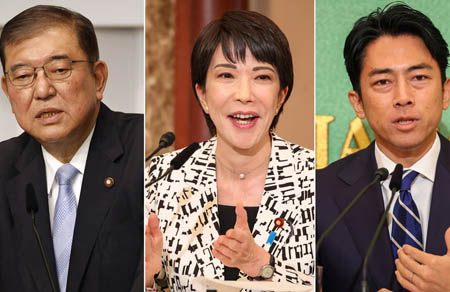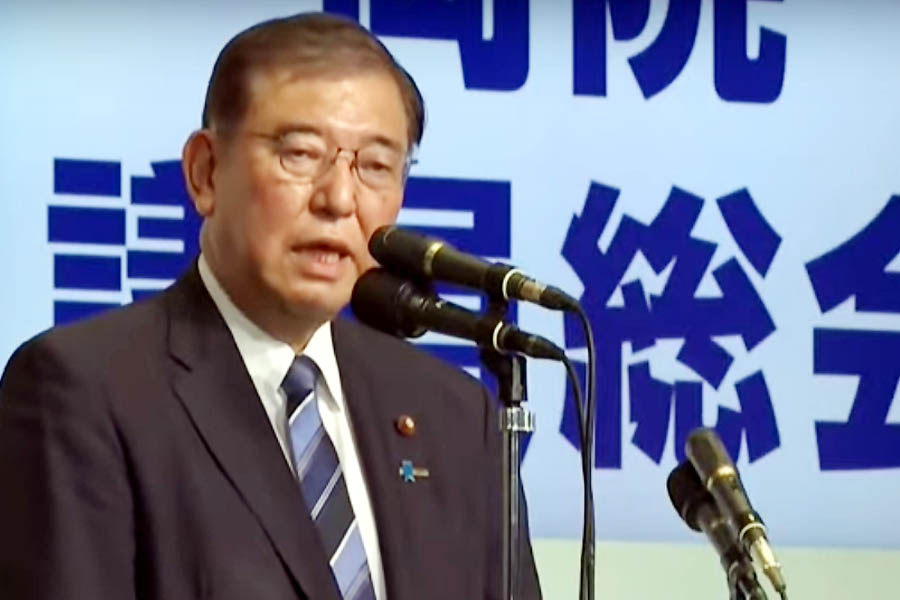
Shigeru Ishiba Officially Appointed as Japan's Prime Minister: A New Era Begins with Snap Election Call for October 27
Tokyo, Japan – Shigeru Ishiba, the former defense minister and five-time Liberal Democratic Party (LDP) leadership contender, was officially appointed as Japan's 102nd Prime Minister on October 1, 2024. His ascension marks a significant political shift for the world's third-largest economy, as Ishiba brings a reputation for outspokenness, defense expertise, and a vision for economic reform that some analysts have dubbed the "Ishiba Shock."
Ishiba's victory in the LDP leadership election on September 27, where he defeated economic security minister Sanae Takaichi in a runoff, was described by political observers as a surprise triumph. His win reflects the party's urgent need to restore public trust following a series of political scandals that eroded confidence in the previous administration under Fumio Kishida. Within hours of his appointment, Ishiba announced a snap election for October 27, 2024—a bold gambit to secure a fresh public mandate while opposition parties remain disorganized.
A Political Outsider Turned Leader
Ishiba, 67, has long been known as a "party gadfly" — a maverick willing to challenge party orthodoxy. He has served as defense minister, agriculture minister, and secretary-general of the LDP, yet he has often been sidelined by the party establishment. His criticism of former Prime Minister Shinzo Abe's economic policies, particularly the aggressive monetary easing known as "Abenomics," has made him a controversial figure within LDP ranks.
Despite his outsider status, Ishiba enjoys strong public approval ratings. Polls consistently show him as one of the most trusted politicians in Japan, largely due to his plain-spoken style and willingness to admit past mistakes. His reputation for integrity, combined with his defense credentials, has positioned him as a leader capable of navigating both domestic reform and regional security challenges.
The "Ishiba Shock" — Economic Policy Shift on the Horizon
Perhaps the most anticipated aspect of Ishiba's leadership is his economic policy stance, particularly his views on monetary policy and the yen. Ishiba has long advocated for higher interest rates and a stronger yen, breaking from the Bank of Japan's decade-long ultra-loose monetary policy. Analysts suggest that under Ishiba, the BOJ may accelerate its exit from negative interest rates, potentially triggering a significant yen rally.
Market watchers have already begun using the term "Ishiba shock" to describe the potential market realignment. Some projections suggest the yen could strengthen to 125 against the US dollar — a dramatic shift from recent trading levels around 145-150. For Japanese consumers, a stronger yen would lower import costs for energy and food, easing inflationary pressures that have squeezed household budgets. However, export-heavy industries, including Toyota, Sony, and Nintendo, may face headwinds as Japanese products become more expensive overseas.
Ishiba has also pledged to address Japan's declining rural regions and aging population, proposing a "regional revitalization 2.0" plan that includes tax incentives for businesses relocating to depopulated areas and increased funding for digital infrastructure in the countryside.
Snap Election 2024 — A Gamble for a Fresh Mandate
The decision to dissolve the lower house just days after taking office is characteristic of Ishiba's bold political style. The snap election, scheduled for October 27, will test whether the LDP can maintain its parliamentary majority amid public frustration over rising living costs and a previous slush-fund scandal that damaged the party's reputation.
Opposition parties, led by Yoshihiko Noda of the Constitutional Democratic Party of Japan, have criticized the snap election as a self-serving tactic. However, Ishiba counters that he needs a direct mandate from voters to pursue his reform agenda. "The people of Japan must decide the direction of our nation," Ishiba said in his first press conference as Prime Minister. "I am not afraid of their judgment."
Political analysts suggest the LDP could lose some seats but is unlikely to lose power entirely. The more consequential question is whether Ishiba will secure a sufficiently large majority to overcome internal party opposition to his more liberal social policies, including his support for allowing married couples to maintain separate surnames — a stance that has drawn criticism from conservative LDP factions.
Regional Security: Toward an "Asian NATO"?
As a self-described "defense geek," Ishiba has authored multiple books on military strategy and is known for his detailed knowledge of Japan's defense capabilities. He has proposed the creation of an "Asian NATO" — a collective security framework involving Japan, South Korea, Australia, India, and the United States to counterbalance China's growing military influence.
While such a proposal would face significant diplomatic hurdles, including China's likely fierce opposition, it signals Ishiba's determination to strengthen Japan's security posture. He has also called for revising the U.S.-Japan Status of Forces Agreement to create a more equal alliance and has advocated for Japan to consider acquiring counterstrike capabilities against enemy missile bases — a significant shift from Japan's postwar pacifist constitution.
At the same time, Ishiba has emphasized the importance of maintaining dialogue with Beijing. "Deterrence without diplomacy is reckless," he has stated, suggesting a balanced approach that combines military readiness with continued engagement.
Challenges Ahead: Party Unity and Public Trust
Ishiba's greatest challenge may come not from opposition parties but from within his own LDP. His long history of clashing with party elders has left him with relatively few loyal allies. The powerful factions led by Taro Aso and Hirofumi Yoshimura could pose obstacles to his legislative agenda if they feel sidelined.
Additionally, Ishiba will need to address Japan's demographic crisis. With the population declining and over 29% of Japanese citizens aged 65 or older, pension and healthcare costs are ballooning. Ishiba has proposed a "social security reform for all generations," but the details remain vague. Success or failure on this front could determine his political longevity.
As October 27 approaches, all eyes are on Japan. Whether Ishiba's unorthodox leadership ushers in a new era of reform or is cut short by internal resistance remains to be seen. For now, the nation stands at a crossroads, and Shigeru Ishiba has taken the helm with characteristic confidence and a clear sense of purpose.
Related Coverage: For more on Japan's political transformation, explore Japan's Leadership and Business Revolution and Japan's Next Prime Minister: Leadership Race Analysis.
Global Post Headline — independent coverage of Asian politics and global affairs. globalpostheadline.com | Follow Japan updates: Asian Daily News

Authentic Nepali crafts, pashmina, singing bowls — worldwide shipping.