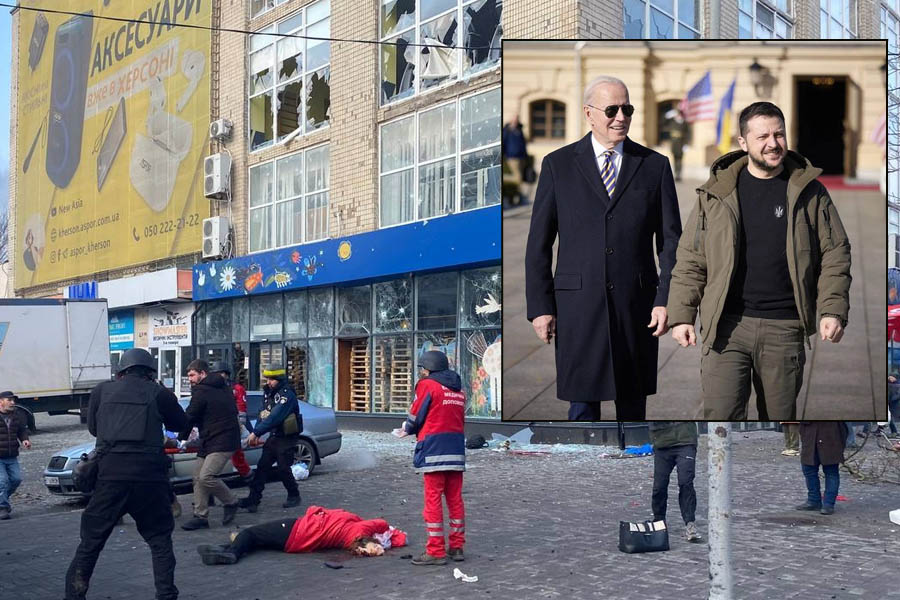
Ukraine's Struggle for Manpower: The Challenges of Recruitment and Mobilization — Can Ukraine Find Enough Soldiers to Fight?
The enduring conflict between Ukraine and Russia has not only tested the resilience of the Ukrainian armed forces but has also exposed critical challenges in recruiting and mobilizing troops. As the war enters its third year, Ukraine faces a manpower crisis that could determine the outcome of the conflict. This article aims to illuminate the complexities faced by Ukraine's military, the impact on the quality of recruits, and the contrasting scenario in Russia. Additionally, it explores the evolving dynamics of international support from key players like the UK, Germany, and the US, while shedding light on growing concerns about war fatigue and demographic collapse.
Ukraine has already mobilized hundreds of thousands of soldiers, but sustaining those numbers is becoming increasingly difficult. The pool of willing volunteers has dried up, and the government has been forced to rely on conscription — a process plagued by corruption, evasion, and declining morale.
📋 Recruitment Challenges: A "Deployment Lottery"
The recruitment process in Ukraine is marred by severe setbacks, with new recruits often finding themselves thrust into the most perilous sections of the front line with little to no training. Described as a "deployment lottery," this approach has strained the system, resulting in a misalignment of skills and roles. Desperation to fill positions has led to unconventional conscription raids in gyms, shopping centers, and even movie theaters — tactics that have alienated the public and damaged morale.
Recruits describe being assigned to units with no regard for their civilian skills or medical conditions. A former IT professional may find himself as an infantryman; a man with a heart condition may be sent to the trenches. The result has been a high rate of desertion and self-inflicted injuries as soldiers seek to escape impossible situations. The Ukrainian military has prosecuted thousands of deserters, but the problem persists.
Compounding the issue is the lack of rotation. Many soldiers have been fighting since the first days of the full-scale invasion without a break. Exhaustion, trauma, and declining morale are widespread. Soldiers report that replacement troops are often undertrained, forcing veterans to stay at the front even longer.
🔄 Mobilization Reforms: A Step in the Right Direction
Acknowledging these challenges, Ukraine's defense ministry initiated a new mobilization strategy in September 2023. The reforms strive to provide recruits with more choices in terms of specific positions, utilizing a digital register to enhance understanding of manpower resources. The introduction of a clearer system for rest and rotations aims to transition towards mobilizing volunteers for finite periods, mitigating the burden of indefinite service that has worn down the existing force.
The new system, called "Reserve+," is a digital platform that allows potential recruits to see available positions, sign up for specific roles, and receive basic training before deployment. The goal is to match soldiers' skills with appropriate military specialties — an accountant might serve in logistics, a mechanic in vehicle repair, a computer programmer in cyber defense. The system also includes provisions for demobilization after 36 months of service, offering a light at the end of the tunnel for exhausted veterans.
However, the reforms are still in their early stages, and implementation has been uneven. Critics argue that the digital register is not yet functional across all regions and that the government has not allocated sufficient resources for training and equipment. The success of the reforms will depend on political will and international support.
⭐ Success Stories and Persistent Challenges
While units like the 3rd Assault Brigade (formed from veterans of the Azov regiment) have successfully attracted volunteers through strategic recruitment campaigns, the overall situation remains arduous. The 3rd Brigade has become a model for modern military recruitment, using social media, targeted advertising, and a reputation for professionalism to attract motivated soldiers. But not every unit has the same appeal; many are forced to rely on conscripts who would rather be elsewhere.
Russia, too, grapples with mobilization challenges, but its larger pool of potential soldiers — roughly three times that of Ukraine — places Ukraine at a disadvantage in the long run. Russia has successfully mobilized hundreds of thousands of additional troops without triggering widespread domestic unrest, and has been able to rotate units in and out of the front lines. Ukraine, by contrast, faces a demographic crisis: its male population of fighting age is far smaller, and the country has already lost a significant number of soldiers killed, wounded, or fled abroad.
The recruitment process in Ukraine must be refined to ensure a steady influx of capable and motivated individuals. But even the best recruitment strategy cannot overcome a fundamental shortage of manpower. Ukraine's birth rate has collapsed, and hundreds of thousands of men of fighting age have left the country to avoid conscription. The military is scraping the bottom of the barrel.
🌍 International Support: Allies Step Up
International backing plays a crucial role in Ukraine's defense efforts. Recent developments involving the UK signing a Naval Security Pact and Germany increasing its arms commitment reflect the solidarity of Western nations. The UK has pledged to provide naval support in the Black Sea, while Germany has committed an additional 1.3 billion euros in military aid, including air defense systems and artillery ammunition.
However, concerns arise over depleting arms stockpiles and the difficulties in acquiring new weapons, exemplified by Taiwan's struggles to receive long-overdue military equipment from the US. The United States, Ukraine's largest military donor, has seen its aid packages stalled in Congress due to political infighting. European nations have stepped up, but they cannot fully replace American military assistance, particularly for advanced weapons systems like ATACMS missiles and F-16 fighter jets.
Even with weapons, Ukraine needs soldiers to use them. The manpower shortage cannot be solved by Western aid alone. Without sufficient troops to hold the line, advanced weapons are of limited value.
⚖️ Ukrainian President's Dilemma: The 500,000 Question
President Volodymyr Zelensky grapples with a delicate situation as the military requests up to 500,000 more troops to sustain the war effort through 2024. Balancing the imperative need for manpower against political considerations and public sentiment poses a significant challenge. Zelensky's decision-making will play a pivotal role in shaping the nation's defense strategy — and his own political future.
Mobilizing an additional half-million soldiers would require lowering the draft age (already reduced from 27 to 25), tightening medical exemptions, and cracking down on draft evasion. These measures are deeply unpopular and could trigger social unrest. Opinion polls show that a majority of Ukrainians support mobilization in principle, but support drops sharply when respondents are asked if they themselves are willing to serve.
Zelensky has hesitated to sign the mobilization bill, fearing a political backlash that could undermine his presidency. But military commanders warn that without additional troops, the front lines could collapse. "We are holding on by our fingernails," one general told the president, according to leaked documents. "We need people — not just weapons."
🗣️ Concerns and Criticisms: "Pretending to Mobilize"
Internal critics argue that the Ukrainian government might be "pretending to mobilize," exposing the nation to potential risks if Russia intensifies its mobilization efforts post the upcoming Russian presidential election. Vladimir Putin, who secured another term in March 2024, has announced plans to increase the size of the Russian military to 1.5 million active personnel — the second largest in the world. Russia is already outproducing Ukraine in artillery shells, drones, and missiles.
An internal debate within Ukraine revolves around the necessity for more assertive measures to ensure the nation's defense and deter potential aggression. Some officials advocate for a total mobilization of all men of fighting age, with no exemptions. Others argue for a more targeted approach that focuses on volunteers and offers financial incentives. The debate remains unresolved, and time is running out.
Compounding the problem is corruption. Despite Zelensky's anti-corruption drive, reports persist of wealthy men bribing their way out of conscription, while poorer Ukrainians are disproportionately drafted. The perception of unfairness has fueled resentment and undermined the legitimacy of the mobilization effort.
🌐 Broader International Dynamics: NATO's Own Recruitment Crisis
The challenges faced by Ukraine are mirrored, in miniature, by NATO members themselves. Germany, for example, is struggling to recruit new personnel for its own military, the Bundeswehr. The German army is smaller today than at any time since the 1960s, and its readiness is questionable. Political shifts in Germany, marked by the rise of right-wing parties opposed to military spending, add complexity to the situation. The same dynamic is playing out across Europe, where decades of peace have led to atrophied defense capabilities.
These global dynamics underscore the interconnectedness of geopolitical events and their impact on Ukraine's struggle for military strength. A Europe that cannot defend itself cannot be expected to defend Ukraine indefinitely. The outcome of the war in Ukraine will depend not only on Ukrainian resolve but on the willingness of Western societies to pay the costs of rearmament.
As Ukraine grapples with the ongoing conflict and the imperative to fortify its armed forces, the challenges in recruitment and mobilization loom large. Strategic and comprehensive reforms are crucial to address these issues, ensuring the nation's security and stability in the face of external threats. The international community's support remains instrumental in bolstering Ukraine's defense capabilities and maintaining regional stability. But ultimately, Ukraine must find its own soldiers to fight its own war.
Related Coverage: For more on Ukraine's military challenges, visit Ukraine's Draft Dodgers Crisis and Ukraine's Military Admits Setbacks as Russia Advances.
Global Post Headline — independent coverage of the Russia-Ukraine war. globalpostheadline.com | Follow updates: War News | Politics

Experience the Himalayas with expert Sherpa guides. Trekking, expeditions, and cultural tours in Nepal, Tibet & Bhutan.
Plan Your Nepal Trip →
Authentic Nepali crafts, pashmina, singing bowls — worldwide shipping.