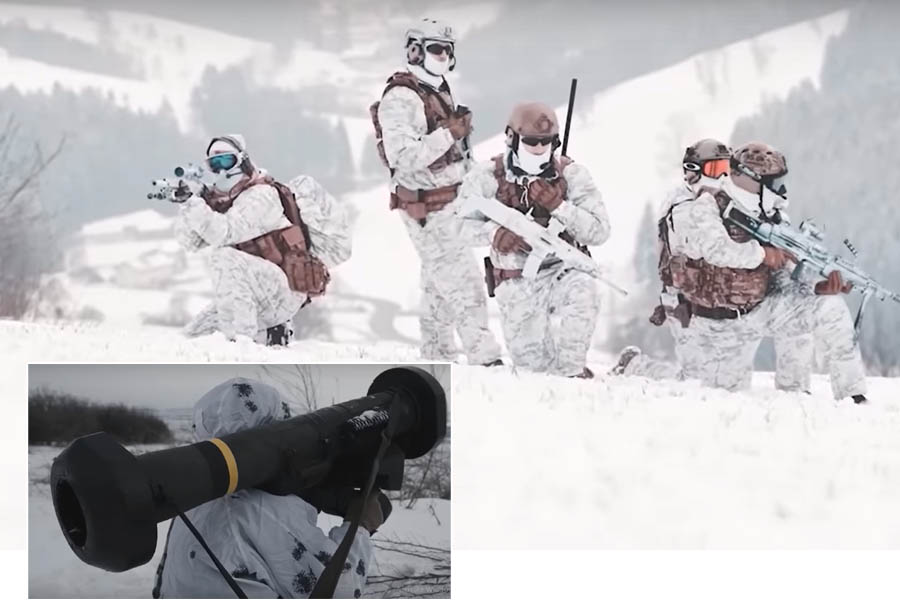
Ukraine's Winter Crisis: Navigating the Fallout of Damaged Power Infrastructure, Shifting Alliances, and Dwindling Aid — A Nation at a Crossroads
Ukraine and Russia stand at a crossroads as winter looms over the battlefields of Eastern Europe. Recent data spanning from October 2022 to March 2023 reveals a staggering 60% damage to Ukraine's power generation capacity and 43% damage to its high voltage capacity, with an estimated repair cost of $10 billion. Nearly 12 million people in Ukraine are now grappling with limited or no access to energy as temperatures drop below freezing. The coming months will test the resilience of the Ukrainian people, the capacity of its energy workers, and the commitment of its Western allies.
Despite substantial bilateral aid from the United States, totaling $76.8 billion from January 2022 to July 2023, concerns arise as political turmoil in the US Congress and the impending elections hint at a potential reduction in ongoing support. The geopolitical landscape is evolving, marked by a reassessment of Western strategies towards Ukraine and a growing realization that a military victory may be elusive — or at least far more distant than previously hoped. In this context, the recent influx of aid highlights the precarious position Ukraine occupies: heavily dependent on foreign support that is no longer guaranteed.
💰 Bilateral Aid and Shifting Alliances: The $76.8 Billion Question
The United States has been a significant contributor to Ukraine's aid, with a substantial $76.8 billion provided from January 2022 to July 2023 — including military equipment, direct budget support, and humanitarian assistance. However, recent political turmoil in the U.S. and the upcoming elections raise concerns about the continuity of this support. Hard-right Republicans in the House have made further aid conditional on policy changes at the US-Mexico border, a demand Democrats reject.
Despite President Joe Biden's reassurances in the Washington Post and Defense Secretary Lloyd Austin's pledge of an additional $100 million in military aid during his visit to Kyiv, doubts persist about the sustainability of such assistance. The $60 billion supplemental request submitted by the Biden administration remains stalled in Congress, with no clear path to passage. European allies have stepped up — the EU recently approved a €50 billion aid package — but they cannot fully replace American military assistance, particularly for advanced air defense systems and long-range missiles.
Germany, too, has committed a substantial 1.3 billion euros in a new support package, emphasizing defensive equipment — including air defense systems, artillery ammunition, and armored vehicles. This marks a shift in Western focus towards sustaining Ukraine's defense against Russian aggression, contrary to President Zelensky's optimism about a potential military victory. The consensus among Western officials appears to be shifting from "winning" to "not losing" — a subtle but significant change in strategic outlook.
⚔️ Challenges and Realities on the Ground: A War of Attrition
Key figures in Ukraine, including Commander-in-Chief Valerii Zaluzhnyi, have acknowledged the complexity of the situation, casting doubts on the feasibility of a decisive breakthrough. In a November 2023 interview with The Economist, Zaluzhnyi famously described the conflict as a "stalemate" — a word that sparked controversy in Kyiv but reflected the reality of static front lines and attritional warfare. Western capitals, notably General Mark Milley (Chairman of the Joint Chiefs of Staff) and NATO officials, have expressed skepticism about the duration and intensity of Ukraine's counteroffensive.
Signs of a reset in Western strategy are evident, with mounting pressure on Ukraine to consider a peace deal with Russia, possibly involving territorial concessions. The underlying premise is the acknowledgment that the conflict's resolution may be protracted, necessitating a focus on sustaining the status quo rather than pursuing total victory. While officially rejecting any negotiation that would legitimize Russian occupation of Ukrainian territory, Western officials have begun to discuss post-war security arrangements — a tacit admission that the war will not end soon.
Ukraine's summer 2023 counteroffensive failed to achieve a breakthrough, advancing only a few kilometers at significant human and material cost. Russian defensive lines — consisting of minefields, dragon's teeth anti-tank obstacles, and trench networks — proved far more formidable than anticipated. Western-supplied equipment, including Leopard 2 tanks and Bradley infantry fighting vehicles, suffered heavy losses. The failure has led to a reassessment of Ukraine's military strategy and Western expectations.
🕊️ A Stalemate as a Path to Stability: The Emerging Consensus
Efforts to anchor Ukraine more firmly in the West without provoking Russia's ire include credible bilateral security guarantees from major Western powers. This approach aims to assure Ukraine of ongoing support without committing to NATO membership, thereby avoiding a direct confrontation with Russia. The G7 joint declaration of July 2023 laid the groundwork for such guarantees, and bilateral negotiations are ongoing with the United States, United Kingdom, Germany, France, and others.
While this strategy may offer a semblance of stability, it is contingent on both Moscow and Kyiv accepting a prolonged stalemate. Factors such as upcoming elections in Russia (March 2024), the United States (November 2024), and potentially Ukraine (scheduled for March 2024 but postponed due to martial law) complicate the trajectory. Despite periodic escalations — including Russian winter attacks on energy infrastructure and Ukrainian drone strikes on Russian territory — a realization on all sides seems to be emerging that a stable status quo serves everyone's interests, at least temporarily.
President Zelensky continues to insist on the restoration of Ukraine's 1991 borders, including Crimea, as the only acceptable outcome. But Western officials have begun to quietly suggest that territorial concessions may be necessary for peace — a position that infuriates Kyiv but reflects geopolitical realities. The coming months will test whether Ukraine can sustain its war effort without alienating its most important supporters.
📉 Economic Impacts and Energy Challenges: Sanctions and Survival
On the economic front, Russia's ability to circumvent the western-imposed oil price cap underscores the limitations of sanctions. Despite the G7's $60 per barrel price cap, Russia has successfully redirected oil exports to China, India, Turkey, and other non-Western markets, often at prices above the cap using a "shadow fleet" of tankers. Europe's largest fund manager, Amundi, predicts Russia's economy to outpace the eurozone in 2024, emphasizing the ineffectiveness of sanctions in crippling Moscow's financial capabilities. Russia's GDP grew by 3.5% in 2023, while Germany's economy contracted.
Meanwhile, Ukraine's energy crisis is exacerbating, with a deficit in electricity production leading to appeals for emergency assistance from neighboring EU countries. The energy infrastructure, ravaged by Russian strikes last winter, remains vulnerable, and efforts to bolster air defense systems reflect Ukraine's concerns about potential renewed attacks on critical facilities. Ukrainians have been urged to conserve electricity, and rolling blackouts have been implemented in several regions.
The winter of 2023-2024 is expected to be even more challenging than the previous year. While Ukraine has stockpiled diesel generators, repair equipment, and spare parts, it lacks sufficient air defense systems to protect all critical infrastructure. Russia has stockpiled missiles for a renewed winter campaign, and Western intelligence suggests that Moscow intends to replicate the strategy that caused widespread blackouts in 2022-2023. The difference this year is that Ukraine's air defenses have improved — but they are still insufficient to cover the entire country.
🔮 A Nation at a Crossroads
As Ukraine grapples with the aftermath of extensive power infrastructure damage, shifting geopolitical alliances, and an evolving Western strategy, the road ahead remains uncertain. The delicate balance between sustaining the status quo and pursuing a just and lasting peace underscores the complexity of the situation. The coming months, marked by elections and geopolitical developments, will play a pivotal role in determining the fate of Ukraine and the resolution of the conflict with Russia.
For millions of Ukrainians, the immediate priority is survival: staying warm, finding food, and keeping the lights on. For Western leaders, the priority is sustaining Ukraine without escalating into direct conflict with Russia. For Russia, the priority is grinding down Ukrainian resistance and waiting for Western support to falter. Each side has its own timeline, its own constraints, and its own vision of the endgame.
What is clear is that the war is entering a new phase — one defined not by dramatic breakthroughs but by attrition, exhaustion, and the slow erosion of will. Ukraine's winter crisis is not just about damaged power lines; it is a test of whether a democratic nation can withstand a prolonged assault on its infrastructure, its economy, and its spirit. The answer will determine not only Ukraine's future but the future of European security.
Related Coverage: For more on the Russia-Ukraine war and energy crisis, visit Russia-Ukraine War Hub and Ukraine-Russia War: A Dramatic Prelude to Change.
Global Post Headline — independent coverage of the Russia-Ukraine war and global geopolitics. globalpostheadline.com | Follow updates: War News | Politics

Experience the Himalayas with expert Sherpa guides. Trekking, expeditions, and cultural tours in Nepal, Tibet & Bhutan.
Plan Your Nepal Trip →
Authentic Nepali crafts, pashmina, singing bowls — worldwide shipping.