Yanagi Soetsu and the Enduring Legacy of Mingei: Finding Beauty in the Everyday
In a world where aesthetics often overshadow functionality, Yanagi Soetsu's philosophy of Mingei, the celebration of everyday crafts, continues to inspire. At the heart of his vision lies a profound appreciation for the unnoticed objects that fill our daily lives. These objects, Yanagi believed, epitomize the essence of Japanese arts and crafts, transcending mere utility to become works of art in their own right.
🏛️ The Mingeikan: Japan Folk Crafts Museum
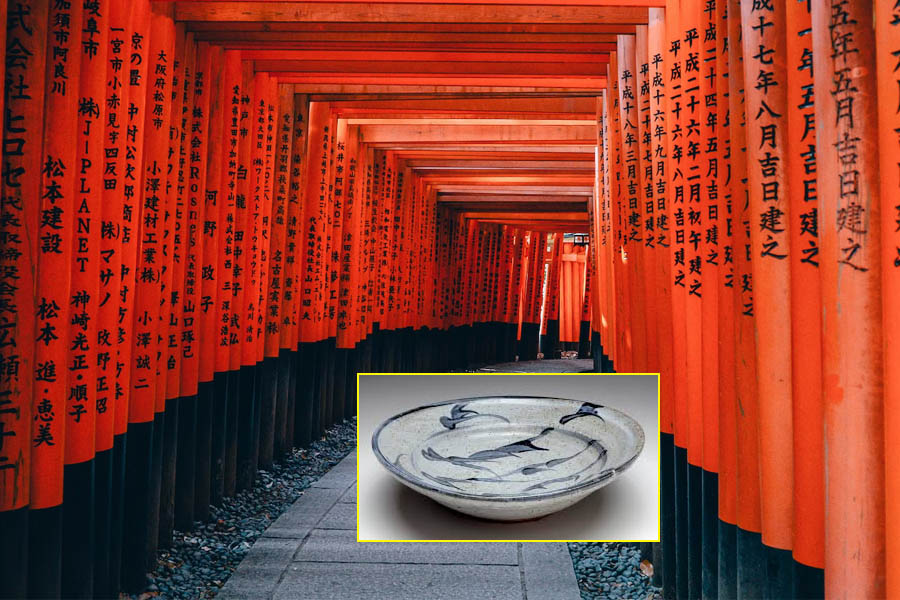
The Mingeikan (Japan Folk Crafts Museum) in Tokyo, founded by Yanagi Soetsu, houses a treasure trove of ceramics, textiles, and crafts that exemplify this philosophy. The museum's unadorned presentation allows visitors to immerse themselves in the sheer beauty of these objects without distractions. It's a testament to Yanagi's belief that the true essence of artistry resides in simplicity.
A Treasure Trove of Folk Crafts
- 🍶 Ceramics — Everyday pottery and tea bowls
- 🧵 Textiles — Kimono fabrics and indigo dyeing
- 🪑 Furniture — Simple, functional designs
- 📜 Stationery — Washi paper and calligraphy tools
🎨 What is Mingei? The Beauty of Everyday Crafts
Yanagi's concept of Mingei encompasses a wide array of everyday items, from clothing and furniture to utensils and stationery. These objects, often crafted by anonymous artisans, are deeply rooted in the lives of ordinary people. They prioritize functionality over unnecessary decoration, reflecting the ethos of the essential worker in the material world.
Honest Craftsmanship
Made by anonymous artisans, not famous artists
Functional Beauty
Purpose-driven design over ornamentation
Traditional Techniques
Handcrafted using time-honored methods
Accessible to All
Everyday objects for ordinary people
For Yanagi, beauty was not divorced from practicality. He saw the union of beauty and life as essential, challenging the prevailing notion that the two existed in separate realms. In a response to industrialization, Yanagi championed traditional craftsmanship over mass production, embracing older methods in the pursuit of timeless design.
📜 The Life of Yanagi Soetsu (1889-1961)
Born in Tokyo in 1889, Yanagi's journey into the world of arts and crafts began with his involvement in the Shirakaba group, where he explored Western art and literature. His friendships with notable figures like English ceramicist Bernard Leach led to his ideas being translated into English and reaching a wider audience.
Yet, Yanagi's interests went beyond art. He grappled with questions of cultural identity, the East's response to the West, and Japan's relationship with its neighbors. His engagement with the crafts of Japan's colonies and his outspoken criticism of Japanese imperial policies demonstrated his commitment to humanism and pacifism.
⚠️ The Debate: Mingei and Cultural Nationalism
However, recent scholarship has shed light on the darker interpretations of Mingei as a form of cultural nationalism that aligned with Japanese imperialism. Despite these debates, Yanagi's legacy endures, influencing contemporary Japanese design, fashion, and homeware, with brands like Issey Miyake and Muji embodying his principles.
Issey Miyake
Revolutionary fashion design
Muji
Minimalist home goods
Contemporary Furniture
Simple, functional design
Global Craft Movement
Worldwide appreciation for folk art
🪷 Finding Joy in the Ordinary: Mingei's Timeless Message
Mingei invites us to reexamine our surroundings with heightened awareness, appreciating the beauty in common objects. In a world filled with disposable goods, Yanagi's philosophy serves as a reminder to find joy and blessings in the everyday. It encourages us to cherish the coffee mug that fuels our Zoom meetings and even the humble face mask, for, in the ordinary, we may discover the extraordinary.
Everyday Objects to Cherish
- ☕ Your favorite coffee mug
- 🍽️ A well-worn wooden spoon
- 🧣 A handmade scarf
- 📖 A book with worn pages
- 🍵 A simple tea bowl