AI Sora: Revolutionizing Video Production and Shaping the Future of Streaming Markets
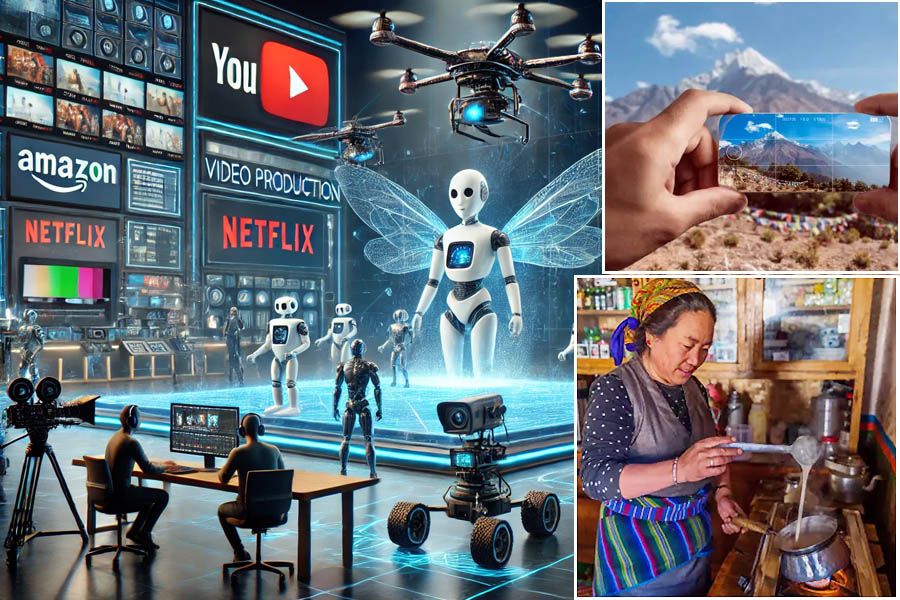
The media landscape is undergoing a seismic shift, driven by advancements in artificial intelligence and empowered by platforms that democratize content creation. At the forefront of this transformation is AI Sora, a groundbreaking suite of video-making techniques that is redefining how content is produced, distributed, and monetized. Coupled with innovative market mechanisms employed by giants like YouTube and Amazon, AI Sora is poised to reshape the future of television and streaming.
What is AI Sora?
AI Sora is OpenAI's revolutionary text-to-video generation model that creates high-quality videos from text descriptions. It can generate complex scenes with multiple characters, specific types of motion, and accurate details, making professional video production accessible to everyone - from independent creators to major studios.
YouTube
Monthly Active Users
10% of all TV watch time
Netflix
Global Subscribers
$31B+ annual revenue
Amazon Prime
Prime Members
Integrated with e-commerce
AI Sora: Democratizing Video Production
AI Sora represents the next generation of video production tools, leveraging artificial intelligence to simplify and enhance the content creation process. These techniques encompass:
- Automated Editing: AI-driven software can now perform complex editing tasks, such as scene transitions, color correction, and audio mixing, with minimal human intervention. This reduces production time and costs, making high-quality video creation accessible to a broader audience.
- Content Generation: AI Sora can generate scripts, suggest storylines, and even create visual effects, enabling creators to bring their visions to life without the need for extensive technical expertise.
- Personalization: Leveraging machine learning algorithms, AI Sora can tailor content to specific audience preferences, enhancing engagement and viewer satisfaction.
By lowering the barriers to entry, AI Sora empowers a new wave of self-taught filmmakers and content creators, akin to YouTube's do-it-yourself brigade that is already challenging traditional television and streaming giants.
How to Start Creating Videos with AI Sora
-
1
Join the Waitlist - Visit OpenAI's website and sign up for Sora access. The tool is gradually rolling out to users.
-
2
Learn Prompt Engineering - Master the art of writing detailed text descriptions. Include camera angles, lighting, mood, and specific actions.
-
3
Start Simple - Begin with short 5-10 second clips describing simple scenes before attempting complex narratives.
-
4
Iterate and Refine - Generate multiple versions, compare results, and refine your prompts based on what works best.
-
5
Combine with Traditional Tools - Use Sora for base footage, then enhance with traditional editing software like DaVinci Resolve or Adobe Premiere.
Pro Tip for Creators
Start with descriptive prompts that specify camera movements (e.g., "drone shot flying over","close-up tracking shot"), lighting conditions ("golden hour","neon-lit alley"), and mood ("mysterious","joyful","cinematic"). The more specific your prompt, the better your results!
YouTube's Ascendancy: A Platform Empowered by AI
YouTube, under Google's expansive umbrella, has harnessed AI technologies to build a formidable video-streaming ecosystem. With 2.5 billion monthly viewers, YouTube accounts for a tenth of all television watched in the United States, surpassing traditional streaming services like Netflix and Disney+. The platform's success is rooted in several key factors:
- User-Generated Content: AI Sora enables creators to produce high-quality videos independently, flooding YouTube with diverse and engaging content that caters to myriad niches.
- Algorithmic Recommendations: Advanced AI algorithms analyze viewer behavior to recommend personalized content, keeping audiences engaged and encouraging prolonged platform usage.
- Monetization Opportunities: Through ad insertion and revenue-sharing models, YouTube incentivizes creators to produce compelling content, fostering a thriving ecosystem of independent media producers.
The integration of AI Sora techniques amplifies YouTube's ability to support a vast array of content creators, further challenging mass-market incumbents and fostering a more diversified media landscape.
Amazon's Strategic Maneuvering: Beyond Entertainment
While Amazon's foray into video streaming has faced criticism for inconsistent content quality, the company's strategic integration of AI and e-commerce data positions it uniquely in the market. Key elements of Amazon's strategy include:
- Marketplace Integration: Prime Video acts as a high-margin marketplace, offering third-party content alongside Amazon's original productions. This model mirrors Amazon's retail strategy, where third-party sellers contribute significantly to overall sales.
- Targeted Advertising: Leveraging extensive customer data from its e-commerce and grocery sectors, Amazon employs AI to deliver highly personalized ads within its streaming services. This precision targeting enhances ad effectiveness and opens new revenue streams.
- Cross-Platform Synergy: Amazon's ecosystem—spanning Prime memberships, Fire TV devices, and services like Twitch—creates a cohesive user experience that encourages cross-engagement and loyalty across its various platforms.
AI Sora plays a pivotal role in Amazon's ability to scale content creation and distribution efficiently, enabling the company to offer a wide range of content that appeals to diverse global audiences.
Future Market Mechanisms: Personalized and Specialized Content
The convergence of AI Sora's video-making techniques and innovative platform strategies heralds a future where content is increasingly personalized and specialized. Key trends shaping this future include:
- Hyper-Targeted Content: AI-driven analytics will allow platforms to offer content tailored to individual preferences, fostering deeper viewer connections and higher engagement rates.
- Niche Markets: The affordability and accessibility of AI Sora tools will enable creators to serve highly specific niches, catering to interests that were previously underserved by mainstream media.
- Interactive and Immersive Experiences: Advances in AI and augmented reality (AR) will facilitate more interactive and immersive content, blurring the lines between traditional viewing and active participation.
The Enduring Value of Mass-Market Appeal
Despite the proliferation of specialized content, high-budget, mass-market productions will retain their allure due to their broad appeal and cultural impact. Shows like Netflix's "Stranger Things" or Amazon's "Citadel" exemplify the enduring value of large-scale productions that draw significant audiences. However, in an ecosystem dominated by personalized content, these blockbuster shows will become even more valuable assets, commanding premium pricing and exclusive distribution rights.
Conclusion: A Synergistic Future
The integration of AI Sora video-making techniques with the strategic initiatives of platforms like YouTube and Amazon is creating a synergistic effect that is transforming the media landscape. As AI continues to lower barriers and enhance creative capabilities, and as platforms refine their market mechanisms to leverage data and personalization, the future of video production and distribution promises unprecedented diversity, accessibility, and innovation.
In this evolving environment, the lines between traditional media and independent content creation will continue to blur, fostering a dynamic and competitive ecosystem where creativity and technology intersect to deliver compelling experiences for viewers worldwide.
Frequently Asked Questions About AI Sora & Streaming
AI Sora is OpenAI's text-to-video generation model that creates high-quality videos from text descriptions. It uses diffusion models similar to DALL-E but adapted for video generation. Sora can generate scenes up to 60 seconds long with multiple characters, specific types of motion, and accurate details. It understands how objects interact in the physical world, making it capable of creating realistic video content that follows physics and spatial relationships.
Step-by-step guide: 1) Visit OpenAI's website and join the Sora waitlist for access. 2) Learn prompt engineering techniques - be specific about camera angles, lighting, mood, and actions. 3) Start with simple 5-10 second clips describing basic scenes. 4) Generate multiple versions and refine your prompts based on results. 5) Combine AI-generated clips with traditional footage using editing software like DaVinci Resolve or Adobe Premiere. 6) Share your creations on platforms like YouTube or social media.
AI Sora will democratize video creation, enabling creators without traditional filming experience to produce professional content. This could lead to: 1) Increased competition on YouTube as more creators can produce high-quality videos. 2) Lower production costs for existing creators. 3) New content formats and styles previously impossible. 4) Potential oversaturation of certain content categories. 5) Emergence of AI-first YouTube channels with 24/7 content generation. Creators who adapt early will have a significant advantage.
Not entirely - AI Sora will complement rather than replace traditional production. For Netflix and major studios: 1) Production costs could decrease by 30-50%. 2) Faster turnaround times for special effects and animations. 3) Ability to create more diverse content. However, human creativity, directing, and high-budget productions with real actors will remain valuable. Netflix may use Sora for lower-budget productions and effects, while reserving traditional filming for flagship shows like "Stranger Things."
Amazon leverages AI across Prime Video in several ways: 1) Personalized recommendations based on viewing history and e-commerce data. 2) Targeted advertising using customer purchase data for precision ad placement. 3) Content creation and scaling with AI tools like Sora. 4) X-Ray feature using AI to identify actors and music. 5) Predictive analytics for content acquisition decisions. Amazon's integration of e-commerce and streaming data gives it unique advantages over competitors.
Top AI video tools include: Runway Gen-2 (text-to-video, video editing), Pika Labs (AI video generation), Heygen (AI avatars and lip-sync), Synthesia (AI presenters), Descript (AI video/audio editing), CapCut (AI editing for social media), Adobe Firefly (video generation), and ElevenLabs (AI voiceover). Most offer free tiers to start, making AI video production accessible to all creators.