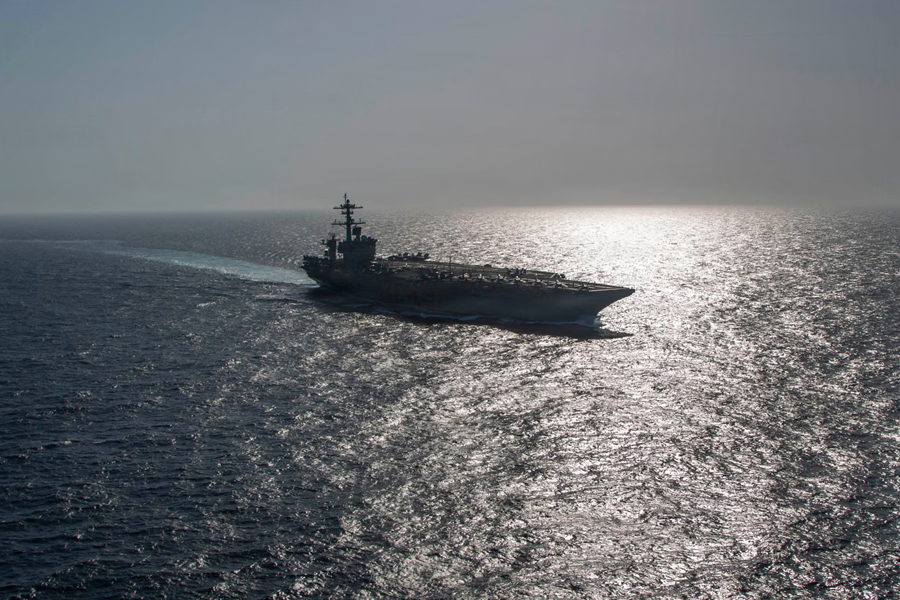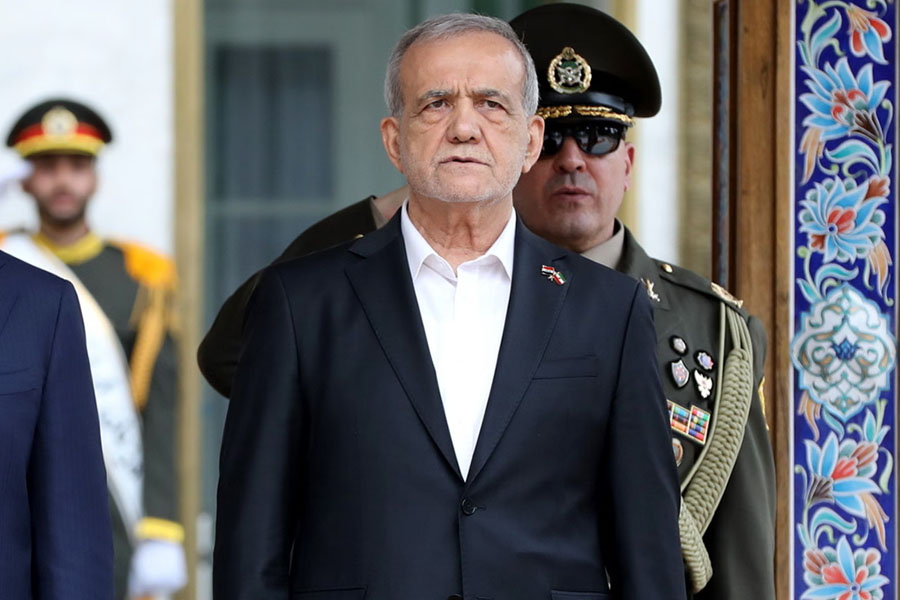
The Iranian president, Masoud Pezeshkian, has rejected the idea he and the country's supreme leader cannot work together.
5 August 2026 | Washington, Tehran, Muscat — Updated 23:45 GMT
Masoud Pezeshkian, Iran's president, has been forced to deny claims that he has repeatedly threatened to resign as he battles hardline factions opposed to reaching a settlement with the US over the strait of Hormuz.
The US and Europe hope a deal is imminent to reopen the strait and they are putting pressure on Oman to accept a temporary agreement that officials in Muscat fear will leave Iran retaining near permanent dominance of the vital oil shipping channel. Ships would enter the strait in a route close to Iran, but leave on a route that passes through Iranian and Omani waters.
But far from being feted over an imminent diplomatic victory, Pezeshkian was instead forced to deny that he had repeatedly offered to resign, verbally and in writing, during a television interview marking his second anniversary in the job.
Meanwhile, Donald Trump has criticised oil companies for "making too much money" from the global energy market disruption caused by his war on Iran, as ExxonMobil and Chevron posted combined profits exceeding $26bn for the quarter.
Welcome to the latest world headlines — where diplomacy, oil prices, and political turmoil collide across the Middle East.
🌍 WORLD HEADLINES — KEY NUMBERS: Iran president denies resignation claims • US pressures Oman on Hormuz deal • Oil drops 2% on optimism • ExxonMobil profits $14.5bn (doubled) • Chevron profits $12.2bn (5x higher) • BP profits $5.7bn (doubled) • US gas prices average $4.11/gal • Brent crude ~$85/barrel.
Pezeshkian Forced to Deny Resignation Threats Amid Hardline Opposition
Pezeshkian accused some of wishing to create a rift inside Iran and said: "If I want to resign, I will officially announce that I have resigned. I will not resign, I will stand."
The resignation claims, which have been front page news in Iran, were made by Mohammad Bagher Kharazi, who is linked by marriage to Mojtaba Khamenei, the new supreme leader.
He said Pezeshkian had become frustrated at being excluded from decision making, made worse by the supreme leader's reluctance to reveal his whereabouts for fear of foreign intelligence agencies. Khamenei was badly injured in the Israeli bombing on the first day of the war that killed his father and has not been seen or heard in public since.
— Masoud Pezeshkian, President of Iran
Kharazi claimed Pezeshkian had threatened to quit so many times that Khamenei warned him he would accept the next resignation threat, a claim Khamenei's office eventually said on Tuesday was "fundamentally false and untrue".
Pezeshkian insisted in the interview that he was in complete harmony with the military and said those that claimed 30,000 people had been killed in the January protests never took up the offer to provide proof.
The interview, marking the halfway point of his turbulent presidency, appeared to be an attempt to dispel the impression that his belief in consensus was a weakness, or that he had been sidelined by hardline war leaders.
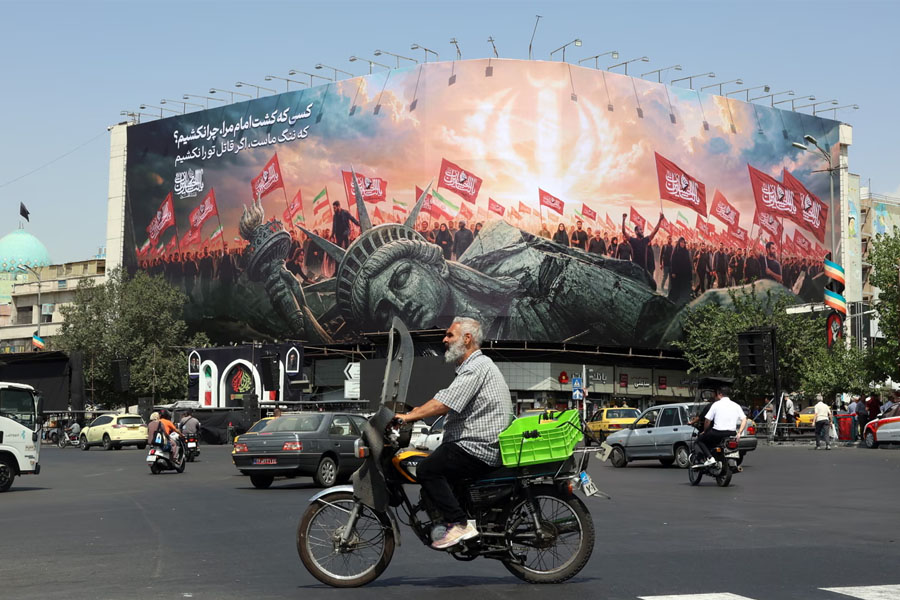
An anti-US billboard at Enghelab Square in central Tehran, Iran, reflecting hardline opposition to negotiations with the United States.
Hardline Assembly of Experts Calls US Negotiations 'Futile'
Kharazi is the brother-in-law of Massoud Khamenei, the younger brother of the supreme leader. Critics say he has a record of making unsubstantiated allegations and despite his family connections to the supreme leader, it is not clear if he has seen him since his elevation to the post in March.
However, the row has highlighted the deep strategic and tactical differences inside Iran over the wisdom of talks with the US.
Mehdi Tabatabaei, a senior member of the Iranian president's office, described the reports as "complete nonsense and lies".
— Mehdi Tabatabaei, Senior Member of Iranian President's Office
Ahmad Zeidabadi, a reformist reporter, said the claims were inflammatory and served only to exacerbate tensions.
Pezeshkian on Sunday suggested that the memorandum of understanding, negotiated with the US in June and reviled by some hardliners, would serve as a cornerstone for Iranian foreign relations in the future, saying that Iran "must strive to compel the enemy to remain committed to what it has signed".
On Monday, the conservative-dominated Assembly of Experts issued a statement describing hopes for an agreement or understanding with the US as "futile" and labelled what it termed "whispers of capitulation in the name of defending peace" an "unforgivable betrayal". It added that trusting this arrogant government was nothing more than a mirage.
Khamenei himself had said in April he was opposed to talks with the US in principle, but in deference to Pezeshkian had allowed them to go ahead.
— Assembly of Experts, Iran
US and Qatar Report Progress on Ceasefire and Hormuz Reopening
US and Qatari officials have said progress is being made in restoring a ceasefire in the US-Iran war and reopening the strait of Hormuz.
The optimistic speculation on Tuesday brought oil prices down 2%, but the strait remained closed to shipping and a cargo vessel was reportedly struck by an unidentified projectile off Oman's coast close to the strait.
Britain's maritime security agency, UKMTO, reported the strike on Monday night but did not name the vessel.
— Scott Bessent, US Treasury Secretary
The US treasury secretary, Scott Bessent, said the US and Iran were negotiating and told CNBC television: "I think there is a chance we may have a deal today or tomorrow to open the strait and move towards a more normalised position in this conflict."
His remarks echo similarly upbeat comments on Monday from Donald Trump, who claimed that a breakthrough was imminent, though Tehran quickly denied it was involved in any direct talks with the US.
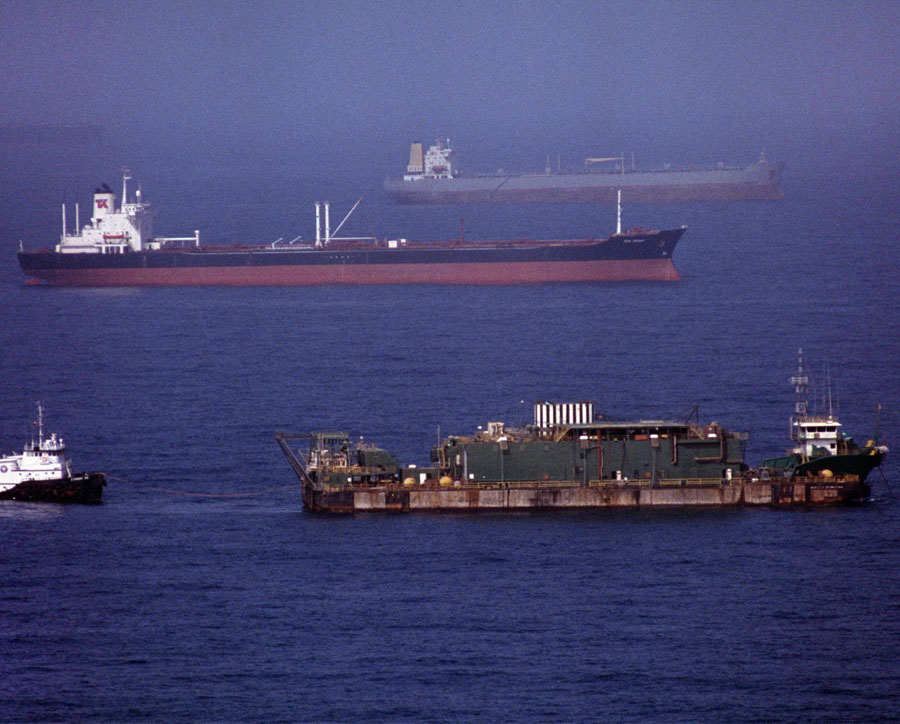
Oil supertankers and merchant marine ships in the Fujairah anchorage, just off the strait of Hormuz. The strategic waterway remains closed to shipping as diplomatic efforts intensify.
Qatari and Pakistani Mediators Exchange Proposals Between Washington and Tehran
Qatari and Pakistani mediators said they were talking to both sides in an effort to close gaps, restore the ceasefire deal from the memorandum of understanding (MoU) signed in mid-June and reopen the Hormuz strait, which was the portal for a fifth of the world's oil and liquified natural gas.
Qatar's foreign ministry spokesperson, Majed al-Ansari, said Qatar, Pakistan and Oman were mediating in close coordination and exchanging draft proposals between Washington and Tehran. He said the diplomatic contacts had reached "very progressive stages".
— Senior Pakistani Security Official
A senior Pakistani security official told Reuters news agency: "A lot is happening in the background … We are talking to both sides. Our sole goal at this moment is to make both parties at least agree to start talking."
However, neither Qatar nor Pakistan are directly involved in the focus of negotiations in recent days, which has been between Iran and Oman on a temporary transit scheme that would allow ships to enter and leave the Gulf. The MoU broke down in July when vessels tried to cross the strait along the Omani coast without seeking Iranian approval, and Iran attacked them.
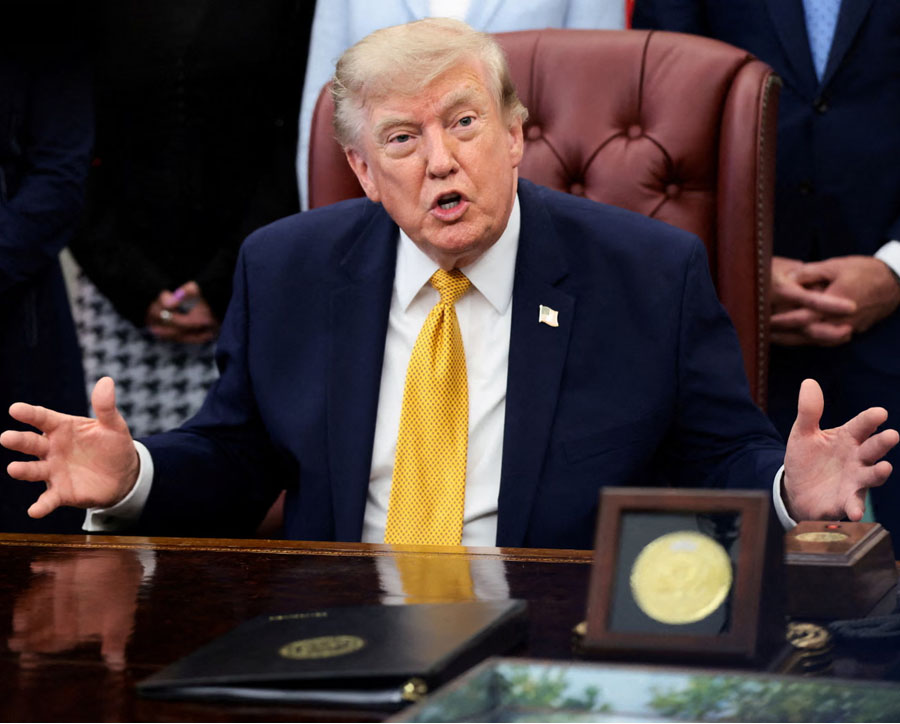
The US, Europe and Saudi Arabia are reportedly putting pressure on Oman to accept an arrangement on reopening the strait of Hormuz with a temporary shipping route.
Oman Resisting US Pressure Over Fears of Permanent Iranian Dominance
Regional diplomats involved in the talks about the strait of Hormuz said Oman was under concerted US, European and Saudi pressure to accept a temporary scheme that would allow shipping to enter the Gulf via a route through the strait close to Iran, and then leave on a southern route along the Omani coast, which would be jointly controlled with Iran.
The contentious issue of Iran's demand to charge transiting vessels tolls or other fees would be left to be decided during a 60-day negotiating period, during which time Iran's nuclear programme would also be addressed.
The Omani government has been resisting the Hormuz proposal out of fear it could become permanent and give Tehran an enduring say over sea routes in Omani waters, the regional diplomats said.
— Regional Diplomat
The Iranian state-run broadcaster IRIB reported on Tuesday evening: "These negotiations, taking place between the two coastal countries of the strait of Hormuz, are focused on determining safe routes for ships to transit. The talks have so far been assessed as positive at both the technical and political levels, and Iran is working with Oman to develop the necessary mechanisms for future arrangements to manage shipping traffic in this strategic waterway."
The talks are complicated by splits in Tehran, according to the diplomats, with the foreign ministry keen to do a deal and fearing Iranian control of the Hormuz strait could prove to be a wasting asset over time as sea traffic finds alternative routes. Regime hardliners, on the other hand, oppose the deal on the grounds that the US administration cannot be trusted to deliver the financial benefits promised in return for opening the strait.
"I think the regime understands the magnitude of the hold Iran has over the strait, and they smell the desperation coming from the US in terms of [trying to] strike a deal," a diplomat from the region said.
Another diplomat said Riyadh was putting particularly heavy pressure on Oman because the Saudis thought "we may be on the brink of a regional war because there is a big faction in Iran that does not want a deal under any circumstances".
Trump Accuses Oil Companies of 'Making Too Much Money' From His War on Iran
Donald Trump has criticised oil companies for "making too much money" from the global energy market disruption caused by his war on Iran.
Brent crude had been trading at about $70 (£52) a barrel before the first US-Israeli strikes at the end of February, but by the end of April it had soared as high as $126 and is now trading at about $85 a barrel.
The US president took aim at the windfall profits revealed last week by ExxonMobil and Chevron, and said the companies would "give some of that back to the public".
— Donald Trump, US President
Trump was speaking just hours before BP reported its profits had doubled in the last quarter, to $5.7bn.
The US oil companies made profits totalling more than $26bn for the three months to the end of June by taking advantage of the energy market disruption triggered by the US-Israeli war on Iran.
Chevron reported its highest ever quarterly profit of $12.2bn, a fivefold increase on the same period last year. ExxonMobil reported a profit of $14.5bn in the second quarter, double what it made in the same period a year ago and its highest quarterly profit since Russia's 2022 invasion of Ukraine.
🛢️ OIL COMPANY PROFITS — KEY NUMBERS
- ExxonMobil: $14.5bn profit (doubled year-over-year)
- Chevron: $12.2bn profit (5x higher, highest ever)
- BP: $5.7bn profit (doubled)
- Combined US profits: $26bn+
- Brent crude: ~$85/barrel (down from $126 peak)
- US gas prices: $4.11/gal average
- Trump target price: $2.25/gal
"Chevron: too much money. ExxonMobil: too much money," Trump said. "They're going to give some of that back to the public and they better cut the retail price, the consumer price."
Asked about Trump's comments, the BP chief executive, Meg O'Neill, told CNBC that she understood the pressures on households. "The reality is, we produce a global commodity, and the product we sell hangs off that global commodity price," she added.
Climate campaigners have also attacked big oil's bumper quarterly earnings, condemning them as "obscene".
— Clémence Dubois, 350.org
Trump criticised oil company profits weeks after warning energy retailers to cut their prices as he nears the November midterm elections with flagging approval ratings. He also ordered the US justice department to investigate potential price gouging in the retail energy sector.
"Gasoline Retailers must get their Prices down, IMMEDIATELY," he wrote on his Truth Social platform in late June. "If Retailers don't do this, big problems lie ahead!"
The president told journalists that the fall in oil and gas prices during the administration's June peace talks with Iran should have caused petrol prices to fall to $2.25 a gallon.
"Oil prices have come down so much and we are not seeing anything at the pump by comparison the way they should be," Trump told reporters in the Oval Office.
US gasoline prices currently average $4.11 a gallon, according to data from the AAA motoring group.
The Trump administration has repeatedly said it has no plans to introduce an export ban on oil or petroleum products, but some analysts say this could be revisited if prices at the pump continue to rise.
Red Sea Attacks and Houthi Threats
On Tuesday, the crew of an Indian-flagged commercial ship that sank in the Red Sea after an attack was rescued, a local Yemeni official said, with Delhi condemning the "unprovoked" aggression.
Yemen's internationally recognised government blamed the Iran-backed Houthi rebels for the attack, according to the official Saba news agency.
Last month, the Houthis declared a Red Sea maritime blockade of Saudi Arabia, and have since claimed several attacks on oil tankers and infrastructure.
All the crew of MSV Faize Noore Oliya, comprising 13 Indian nationals and one Yemeni, were rescued after the vessel came under attack south of the port city of Hodeida, the Yemeni official said.
— Sarbananda Sonowal, India's Shipping Minister
India's shipping minister, Sarbananda Sonowal, said on X: "India strongly condemns this unprovoked attack", saying the vessel was "hit by a projectile near Yemeni waters".
🌍 WORLD HEADLINES: THE NUMBERS THAT DEFINE THE MOMENT
🕊️ IRAN DIPLOMACY AT A GLANCE
Years in office (Pezeshkian)
Day negotiating period
Oil pre-war share
Oil price drop
🗣️ KEY VOICES
Masoud Pezeshkian (Iran President):
"I will not resign, I will stand."
Assembly of Experts (Iran):
"Hopes for an agreement with the US are futile."
Scott Bessent (US Treasury):
"I think there is a chance we may have a deal today or tomorrow."
Donald Trump:
"They're making too much money based on a shortage. I don't like it."
Regional Diplomat:
"The regime understands the magnitude of the hold Iran has over the strait."
💰 OIL COMPANY PROFITS
🛢️ OIL PRICES & GASOLINE
🚢 MARITIME INCIDENTS
🌍 THE FINAL VERDICT: DIPLOMACY, OIL, AND POLITICAL TURMOIL
✅ WHAT'S HAPPENING:
- US and Qatar report progress on Hormuz deal
- Qatari and Pakistani mediators exchanging proposals
- Iran and Oman negotiating new shipping route
- Oil drops 2% on diplomatic optimism
- Trump targets Exxon and Chevron profits
⚠️ THE CHALLENGES:
- Iran president denies resignation claims
- Hardline Assembly calls US talks "futile"
- Oman resists US pressure over fears of permanent Iranian dominance
- Houthi Red Sea blockade continues
- Oil company profits at record highs
- Gas prices remain high at $4.11/gal
"I will not resign, I will stand," Iran's President Pezeshkian declared, denying claims he had repeatedly threatened to quit amid hardline opposition to US negotiations. The US and Qatar reported progress on reopening the Strait of Hormuz, with Qatari and Pakistani mediators exchanging proposals between Washington and Tehran. Oman is under intense pressure from the US, Europe and Saudi Arabia to accept a temporary shipping arrangement, but fears it could become permanent. Meanwhile, Donald Trump lashed out at oil companies for "making too much money" from his war, as ExxonMobil and Chevron posted combined profits exceeding $26bn — with gas prices still averaging $4.11 a gallon.
— World Headlines Analysis
Stay updated with the latest world headlines, Middle East crisis developments, and breaking news on our World News Page.