Israeli Military Orders Evacuation of Parts of Rafah Amidst Rising Tensions — Ground Invasion Imminent
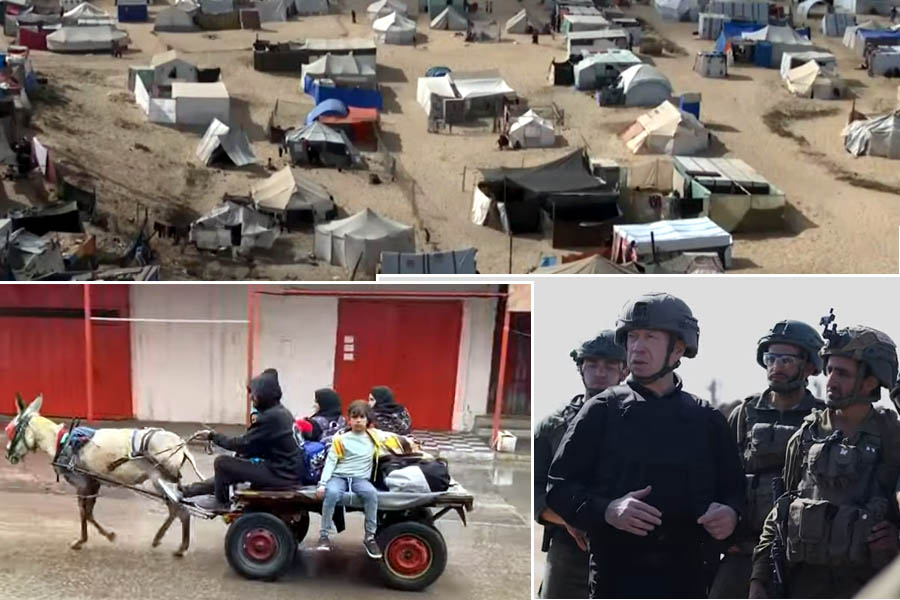
As tensions escalate in the conflict between Israel and Hamas, the Israeli military has issued a directive for tens of thousands of residents in the southern Gaza city of Rafah to evacuate. This move signals a potential ground invasion by Israeli forces, a development that has sparked concern among Western powers and neighboring Egypt, which has been mediating truce talks between the warring parties. The evacuation order covers the eastern neighborhoods of Rafah, home to over 100,000 people, with leaflet drops and text messages warning civilians to move to an expanded "humanitarian zone" along the coast.
Failed Ceasefire Negotiations
The decision to evacuate comes amidst stalled ceasefire negotiations, with Hamas reportedly making extreme demands that have hindered progress towards a peaceful resolution. Israel, on the other hand, has reiterated its commitment to dismantling Hamas's military infrastructure, particularly in Rafah, where the group is believed to have significant presence. The last round of talks in Cairo ended without an agreement, with Hamas insisting on a permanent ceasefire and full Israeli withdrawal — terms Netanyahu has rejected. CIA Director William Burns reportedly presented a revised framework, but both sides remained far apart on the duration of any pause and the number of prisoners to be released.
Defense Minister: Eradicating Hamas's Last Stronghold
Israeli Defense Minister, Yigal Golan, emphasized the necessity of eradicating Hamas from Gaza, highlighting Rafah as a key stronghold. The aim, according to military experts, is not only to neutralize Hamas's military capabilities but also to locate and release hostages held by the militant group. However, there are concerns about the complexity and risks associated with attempting to rescue hostages amid a military operation. Four Hamas battalions are reportedly positioned in Rafah, along with tunnel networks leading into Egypt. Israeli officials believe senior Hamas leaders, including Yahya Sinwar, may be hiding in the area.
Humanitarian Concerns
The impending ground offensive in Rafah raises several humanitarian concerns, particularly regarding the safety of civilians caught in the crossfire. The Israeli military has announced plans to establish humanitarian corridors to facilitate the evacuation of Palestinian citizens from the area, emphasizing its commitment to minimizing civilian casualties. However, there are fears that Hamas may exploit civilians as human shields, further complicating the situation. The area is already densely packed with displaced families living in makeshift tents, with limited access to food, water, and medical care. Aid organizations have warned that a ground invasion could lead to a "bloodbath" and overwhelm what little medical infrastructure remains.
Famine Looms as Aid Crossings Closed
Meanwhile, the situation in Gaza continues to deteriorate, with the threat of famine looming large over the territory. The closure of key aid entry points, including the Rafah Crossing and Kerem Shalom, exacerbates the humanitarian crisis, leaving over a million Palestinians at risk of food shortages. Israel has cited security concerns for closing the crossings following a Hamas rocket attack that killed four Israeli soldiers near Kerem Shalom. The escalation of violence and the displacement of civilians only exacerbate an already dire situation, with humanitarian organizations struggling to provide assistance amid the chaos. The World Food Programme has warned that northern Gaza is already experiencing famine-like conditions, and the situation in Rafah could push the entire Strip into catastrophe.
Regional Ramifications
In addition to the immediate humanitarian concerns, there are broader geopolitical implications to consider. The conflict between Israel and Hamas has regional ramifications, with the potential to escalate into a larger confrontation involving other actors such as Hezbollah in Lebanon. The specter of Iranian involvement adds another layer of complexity to an already volatile situation, raising concerns about the broader stability of the region. Egypt has warned that an offensive near its border could threaten the 1979 Camp David peace treaty, and has reinforced military presence along the frontier. Qatar, which hosts Hamas's political bureau, has also expressed alarm.
International Pressure Mounts
As the situation continues to unfold, the international community faces mounting pressure to intervene and broker a ceasefire that addresses the underlying grievances of both sides. However, reaching a lasting peace agreement remains elusive, with deep-rooted mistrust and entrenched positions on both sides. The United States has paused a shipment of bombs to Israel over concerns about the Rafah offensive, marking the first time the Biden administration has leveraged military aid to influence Israeli decision-making. The European Union and United Nations have called for restraint, but no concrete measures have emerged to halt the operation.
In the meantime, the people of Rafah and Gaza as a whole remain trapped in a cycle of violence and suffering, with little hope for a resolution in sight. As diplomatic efforts falter and military tensions escalate, the human cost of the conflict continues to rise, underscoring the urgent need for a concerted international response to end the bloodshed and bring about a lasting peace in the region.
Related Coverage: For ongoing updates on the Rafah crisis and Gaza war, visit our Middle East Breaking News page and Israel-Gaza War Hub.
Global Post Headline — independent Middle East coverage. globalpostheadline.com | Follow live: middle-east-breaking.php