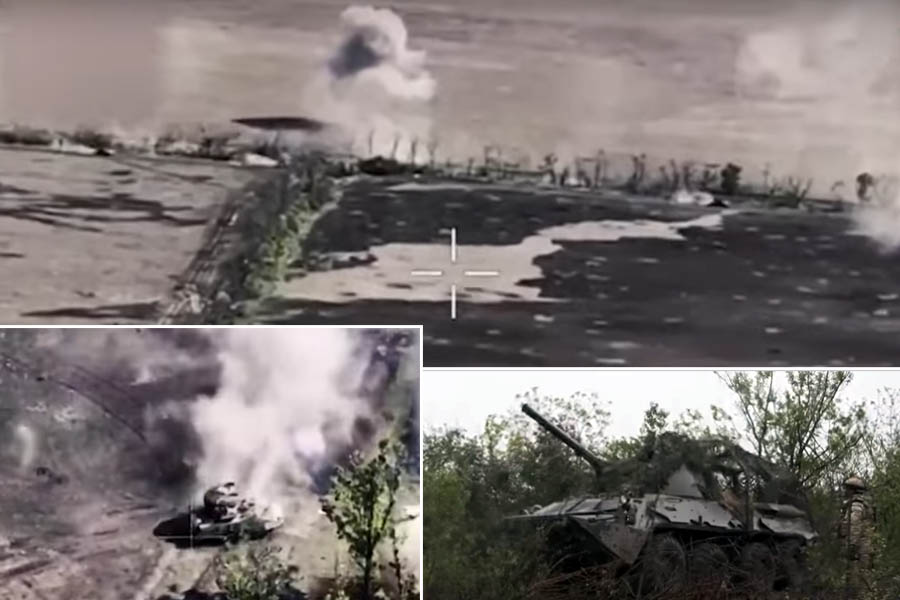
Escalating Tensions: Russia-Ukraine Conflict Intensifies in Sumy and Kharkiv — Russian Forces Capture 10 Border Villages as Ukraine Launches Dnipro Countermeasures
Amid the escalating tensions between Russia and Ukraine, the conflict has reached a critical juncture with recent developments near the Sumy and Kharkiv regions shedding light on the intensification of hostilities. On May 15, 2024, Ukraine was jolted by the loss of ten border villages in the Kharkiv region to advancing Russian forces. This setback forced the Ukrainian Army to retreat from two strategically vital areas in Kharkiv, underscoring the significant gains made by Russian troops in the region — the first major territorial advance by Moscow since the capture of Avdiivka in February.
The new Russian offensive, launched on May 10, appears aimed at creating a "buffer zone" along the border to protect Russian territory from Ukrainian shelling. Russian forces crossed the border north of Kharkiv and advanced toward the town of Vovchansk, approximately 5 kilometers from the frontier. Ukrainian officials had warned of such an offensive for weeks but were reportedly caught off-guard by its规模和 intensity.
⚔️ The Kharkiv Front: A New Russian Offensive
The situation on the ground depicts a grim picture of escalating violence, particularly in the Kharkiv region where Russian assaults have surged. May 14 witnessed a notable spike in Russian attacks, with a total of 14 assaults reported in a 24-hour period, indicating a disturbing escalation in hostilities. The town of Vovchansk bore the brunt of these assaults, tragically resulting in the loss of two lives and highlighting the devastating human toll of the conflict. Ukrainian authorities have ordered the evacuation of civilians from Vovchansk and surrounding villages, with an estimated 5,000 residents still in the area.
However, the focal point of Russian aggression shifted towards Pokrovsk town on Tuesday, revealing the dynamic nature of the battlefield and the fluidity of military operations. The relentless onslaught by Russian forces underscores their unwavering determination to advance their military objectives, regardless of international condemnation and heightened tensions. Ukrainian commanders have acknowledged that the situation is "difficult" and that Russian forces are attempting to exploit weaknesses in Ukrainian defenses.
President Volodymyr Zelensky has described the Kharkiv offensive as a "new wave of counteroffensive actions" by Russia and has called for accelerated delivery of Western military aid. "We need air defense systems now — not in six months," Zelensky said in his nightly address. "Every day of delay costs Ukrainian lives."
🇺🇦 Ukrainian Special Forces: Dnipro River Bridgeheads
In a simultaneous development, Ukrainian special forces launched a daring operation on the left bank of the Dnipro River, penetrating enemy-held territory and establishing crucial bridgeheads. These specialized units operate deep within enemy lines, employing guerrilla tactics to disrupt Russian movements and exert pressure on hostile forces. The operation, carried out by Ukraine's Special Operations Forces (SSO), involved crossing the river under cover of darkness and establishing positions near the village of Krynky.
The strategic significance of these bridgeheads cannot be overstated, positioned just 100 kilometers away from Crimea. They represent a potential threat to Russian interests in the region, compelling Russian troops to divert resources and attention, thereby alleviating pressure on other fronts. Russian military bloggers have expressed concern that the bridgeheads could be used as staging points for future operations to cut the land bridge between Russia and Crimea.
The success of this operation hinges on the resilience and resourcefulness of Ukrainian troops, who navigate challenging terrain and hostile conditions with unwavering determination. In the swampy landscapes along the Dnipro River, Ukrainian Marines operate under constant danger, utilizing stealth and camouflage to evade detection by Russian forces. The importance of these bridgeheads becomes evident when considering their role in disrupting Russian military planning. By drawing attention away from civilian centers and forcing the repositioning of Russian troops, Ukrainian forces effectively undermine the enemy's ability to consolidate territorial gains.
Ukrainian military analysts suggest that the bridgehead operations are designed to force Russia to choose between reinforcing the Kharkiv front or defending the approaches to Crimea — a strategic dilemma that could slow Russian advances elsewhere.
🛡️ Zelensky's Urgent Appeal: Patriot Systems Needed Now
Meanwhile, Ukrainian President Volodymyr Zelensky's appeal for Patriot air defense systems underscores the urgent need for international support. With Russian forces exerting pressure on multiple fronts — from Kharkiv in the northeast to Chasiv Yar in the east — Ukraine's defense capabilities are stretched thin, necessitating assistance to bolster its ability to repel aggression. Zelensky has specifically requested seven additional Patriot batteries to cover major cities and critical infrastructure.
During a visit to Kyiv, US Secretary of State Antony Blinken announced an additional $2 billion in military aid but acknowledged that the administration is "working around the clock" to expedite deliveries. "We understand the urgency," Blinken said. "Russia is trying to take advantage of the delay in our assistance. We will not let that happen." However, the $60 billion aid package remains stalled in Congress, and even if passed, it would take weeks or months for new weapons to reach the front lines.
The delay in Western aid has been particularly costly in Kharkiv. Ukrainian troops report shortages of artillery shells and air defense interceptors, forcing them to conserve ammunition while Russian forces fire freely. "We are fighting with one hand tied behind our backs," a Ukrainian soldier in Kharkiv told reporters.
☢️ Putin's Nuclear Gambit: The Bulava Missile
Russian President Vladimir Putin has intensified the country's military capabilities by authorizing the inclusion of a new nuclear-capable missile, known as the Bulava intercontinental ballistic missile (ICBM), into Russia's military arsenal. This addition reportedly signifies a pivotal step in Russia's nuclear modernization campaign, underscoring Moscow's commitment to bolstering its strategic defenses. The Bulava is a submarine-launched ICBM capable of carrying up to 10 nuclear warheads, with a range of over 8,000 kilometers.
The deployment of the Bulava missile comes at a critical juncture in the ongoing conflict, raising concerns among NATO allies and the United States about the escalation of tensions in the region. The introduction of advanced weaponry capable of delivering nuclear payloads adds a new dimension to the military dynamics between Russia and its neighboring states, heightening anxieties and prompting calls for de-escalation and diplomatic solutions. NATO Secretary General Jens Stoltenberg called the move "another example of Russia's irresponsible nuclear rhetoric."
However, some analysts note that the Bulava has been in development for nearly two decades and was already considered operational. The formal announcement may be intended more as a signal to the West than a genuine change in capabilities. Nevertheless, in the context of the Ukraine war — where Putin has repeatedly raised the specter of nuclear escalation — the announcement adds to an already tense atmosphere.
🌍 International Response: Blinken's Visit and the Path Forward
As US Secretary of State Antony Blinken reaffirmed America's unwavering support for Ukraine during his visit to Kyiv, the significance of timely and decisive action cannot be overstated. Delays in passing critical military aid packages only serve to embolden Russian aggression, further jeopardizing Ukraine's sovereignty and security. "We will stand with Ukraine until its security is guaranteed," Blinken said, though he stopped short of committing to a timeline for new aid.
In the face of escalating hostilities, it is imperative for the international community to stand united in condemning Russian aggression and supporting Ukraine's right to defend itself. The events unfolding in Sumy and Kharkiv serve as a stark reminder of the human cost of war and the urgent need to seek a peaceful resolution to the ongoing conflict. Yet with both sides seemingly committed to military solutions, the prospects for diplomacy appear dim.
The coming weeks will be critical. If Ukraine can stabilize the Kharkiv front and hold its Dnipro bridgeheads, it may buy time for Western aid to arrive. If Russian forces continue to advance, Ukraine could face its most serious military crisis since the early days of the 2022 invasion. The outcome will depend on Western resolve as much as Ukrainian bravery.
Related Coverage: For more on the Russia-Ukraine war, visit Ukraine's Military Admits Setbacks as Russia Continues Advance and Russia-Ukraine War: Recent Escalations Analysis.
Global Post Headline — independent coverage of the Russia-Ukraine war. globalpostheadline.com | Follow updates: War News | Politics

Experience the Himalayas with expert Sherpa guides. Trekking, expeditions, and cultural tours in Nepal, Tibet & Bhutan.
Plan Your Nepal Trip →
Authentic Nepali crafts, pashmina, singing bowls — worldwide shipping.