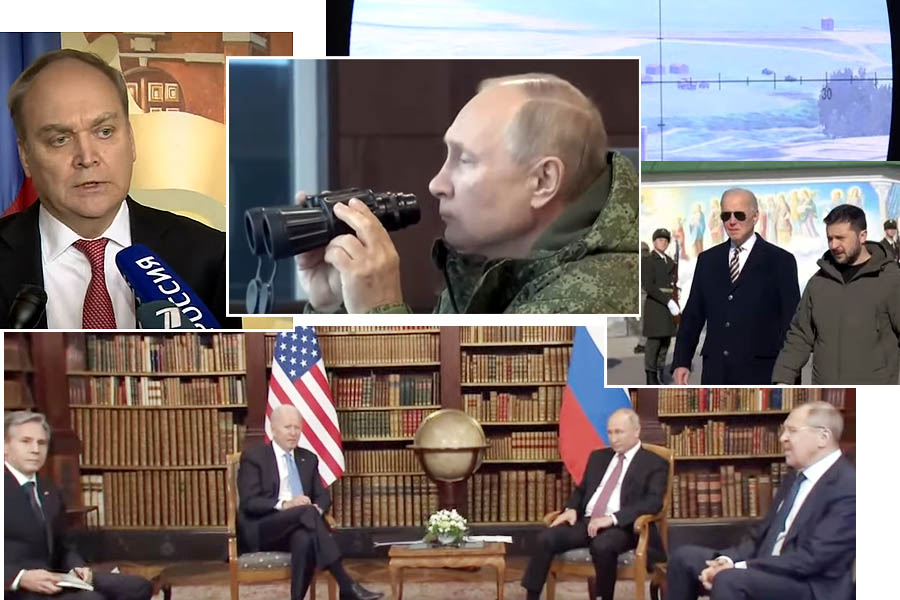
Russia-Ukraine War: Critical Analysis of Recent Escalating Developments — NATO Nuclear Threats, US Long-Range Missiles & UK's Largest Military Aid Package
In recent days, the conflict in Ukraine has entered a critical phase, marked by a series of significant events that have intensified tensions between Russia and Western allies. From the deployment of advanced weaponry to substantial military aid packages, the evolving dynamics of the conflict have profound implications for regional stability and global security. The war, now in its third year, shows no signs of abating — and the latest escalations suggest that both sides are preparing for a protracted, bloody summer campaign.
The warning issued by Russian Deputy Foreign Minister Sergei Ryabkov regarding the potential deployment of NATO nuclear weapons in Poland stands out as one of the most alarming developments in recent weeks. This warning underscores the escalating rhetoric surrounding NATO's involvement in Eastern Europe and raises concerns about the specter of a nuclear confrontation between Russia and the Western alliance — a scenario not seen since the darkest days of the Cold War.
☢️ Russian Nuclear Threats: NATO Weapons in Poland
Ryabkov's warning came in response to reports that NATO members are considering deploying nuclear weapons on Polish soil as a deterrent against Russian aggression. While NATO has not confirmed such plans, the mere discussion has infuriated Moscow. "The deployment of American nuclear weapons to Poland would be a direct violation of the Nuclear Non-Proliferation Treaty and would be met with appropriate countermeasures," Ryabkov stated in an interview with Russian media.
Poland has long sought a greater NATO presence on its territory, given its proximity to Russian exclave Kaliningrad and Belarus. Polish President Andrzej Duda has publicly expressed openness to hosting nuclear weapons under NATO's nuclear sharing arrangement. However, Germany, which currently hosts US nuclear bombs on its territory, has expressed reservations about expanding the program eastward.
The rhetorical escalation coincides with Russia's own nuclear posturing. President Putin has ordered tactical nuclear exercises to "simulate response strikes" in what NATO officials call "dangerous saber-rattling." The International Campaign to Abolish Nuclear Weapons (ICAN) warned that "any discussion of nuclear deployment in Poland brings humanity closer to a catastrophic mistake."
👥 Foreign Mercenaries: Russia's Counter-Campaign
Simultaneously, Russia has escalated its military operations in Ukraine, claiming to have identified over 3,100 foreign mercenaries fighting alongside Ukrainian forces. Moscow's efforts to locate and hold these mercenaries accountable highlight the complex international dimensions of the conflict and strain diplomatic relations between Russia, the United States, and Canada. Russian officials have threatened to treat captured foreign fighters as "illegal combatants" without Geneva Convention protections.
According to Russian intelligence reports, mercenaries from Poland, Georgia, the United States, the United Kingdom, and Canada have been identified on the battlefield. The Kremlin has accused Western governments of turning a blind eye to their citizens fighting against Russia. Western officials counter that most foreign fighters are volunteers not acting on behalf of their governments.
The presence of foreign fighters adds another layer of complexity to an already volatile situation. Several Americans and Britons have been captured and paraded on Russian state television, creating political pressure on Western governments to negotiate their release while maintaining support for Ukraine.
🇺🇸 US Covertly Ships Long-Range ATACMS Missiles to Ukraine
In response to Russia's aggression, the United States has covertly shipped long-range ATACMS (Army Tactical Missile System) missiles to Ukraine, providing a strategic advantage to Ukrainian forces. This move represents a significant escalation and raises questions about the potential for further retaliation from Russia. The Biden administration's swift commitment to send weapons underscores the urgency of the situation and the United States' resolve to support its allies in the face of Russian aggression.
The ATACMS missiles have a range of up to 300 kilometers (186 miles), allowing Ukraine to strike deep behind Russian lines — including against Russian airfields, logistics hubs, and command centers in occupied Crimea. Prior to this shipment, the US had only provided the shorter-range version (165 km). The decision to supply the longer-range variant was made after Russia launched new offensives in eastern Ukraine and intensified strikes against Ukrainian energy infrastructure.
However, Russia's warning regarding the deployment of long-range ATACMS missiles adds a new layer of complexity to the conflict. Moscow has vowed to destroy these missiles and has threatened retaliation against countries that supply them. "Any ATACMS used against Russian territory will be considered a direct US attack," a Russian defense ministry spokesman warned.
🇬🇧 UK's Largest Military Aid Package: £500 Million Commitment
Similarly, the United Kingdom has announced its largest-ever military aid package for Ukraine, signaling a coordinated effort among Western allies to bolster Ukrainian defenses. UK Prime Minister Rishi Sunak's announcement during his visit to Warsaw underscores the collective determination to support Ukraine's sovereignty and resist further Russian aggression. The package includes long-range missiles, air defense systems, and armored vehicles.
The £500 million ($625 million) package includes additional Storm Shadow cruise missiles, which have a range of 250 km and have proven effective against Russian command centers. Also included are 400 vehicles, 60 boats, and 1,600 munitions. Sunak also announced that the UK would provide its largest-ever shipment of drones — over 1,600 attack and surveillance drones.
"Ukraine's fight is our fight," Sunak said at a joint press conference with President Zelenskyy. "We will not waver. We will stand with Ukraine until they prevail." The announcement came as the UK also committed to a 10-year security agreement with Ukraine, formalizing long-term defense cooperation.
🇪🇺 European Diplomacy: Scholz and Macron Engage
Efforts by Germany's Chancellor Olaf Scholz and French President Emmanuel Macron to address the crisis diplomatically are noteworthy. Their engagement reflects the importance of European leadership in mitigating the crisis and preventing further instability in the region. Both leaders have called for a "ceasefire during the Olympics" and have urged China to pressure Russia to de-escalate.
Scholz and Macron have also been instrumental in advancing discussions about Ukraine's future EU membership. The European Council agreed to open accession negotiations with Ukraine in December 2023, a major diplomatic victory for Kyiv. However, disagreements remain about the pace of integration and security guarantees.
Despite these diplomatic efforts, the gap between Russian and Western positions remains wide. Moscow insists that Ukraine must accept the loss of occupied territories as a precondition for peace, a demand Kyiv and its allies reject. The diplomatic track remains stalled as military activity intensifies.
🤝 High-Level Visits: Biden, Sunak, and Zelenskyy
Moreover, Ukrainian President Volodymyr Zelenskyy's reception of key international figures, including US President Joe Biden and UK Prime Minister Rishi Sunak, demonstrates solidarity and support for Ukraine's sovereignty. These visits underscore the significance of international cooperation in confronting Russian aggression and defending democratic principles in Eastern Europe.
President Biden's visit to Kyiv in February 2024 — his first since the war began — was a powerful symbol of US commitment. Walking the streets of Kyiv with Zelenskyy as air raid sirens sounded, Biden announced an additional $500 million in aid and promised that the US would "not walk away."
Sunak's visit to Warsaw included meetings with Polish leaders and a tour of a Ukrainian military training facility funded by the UK. The British Prime Minister also announced increased funding for the reconstruction of Ukraine's energy grid, which has been devastated by Russian strikes.
🕊️ The Path Forward: Diplomacy vs. Escalation
As the conflict unfolds, it is evident that Ukraine's plight poses a significant challenge to international peace and security. The escalating tensions between Russia and Western allies, coupled with continued military operations in Eastern Ukraine, necessitate urgent diplomatic dialogue and de-escalation measures. Yet, with both sides seemingly committed to military solutions, the prospects for a negotiated settlement appear dim.
Russia's vow to destroy long-range ATACMS missiles underscores the gravity of the situation and the high stakes involved. The deployment of advanced weaponry by Ukraine signals its determination to defend its sovereignty, but it also heightens the risk of a protracted and devastating conflict. Western intelligence officials warn that Russia may be preparing for a massive summer offensive aimed at capturing additional Ukrainian territory before the US presidential election in November.
Ultimately, the resolution of the Ukraine-Russia conflict requires a concerted diplomatic effort aimed at addressing underlying grievances and finding a peaceful solution. While military aid may alter the balance of power on the ground, it is diplomacy and dialogue that will pave the way for a lasting resolution to the crisis. The war has already claimed hundreds of thousands of lives, displaced millions, and destabilized global food and energy markets. The cost of continued fighting is measured not just in dollars and rubles, but in human suffering.
For now, the world watches and waits — hoping for peace but preparing for a long war.
Related Coverage: For more on the Russia-Ukraine war, visit The Unraveling of Zelensky's Regime and The Changing Dynamics of the Israel-Hamas Conflict.
Global Post Headline — independent coverage of the Russia-Ukraine war and global geopolitics. globalpostheadline.com | Follow updates: War News | Politics

Experience the Himalayas with expert Sherpa guides. Trekking, expeditions, and cultural tours in Nepal, Tibet & Bhutan.
Plan Your Nepal Trip →
Authentic Nepali crafts, pashmina, singing bowls — worldwide shipping.