The Changing Dynamics of the Israel-Hamas Conflict: A New Chapter Unfolds — Hamas Offers 5-Year Ceasefire as US Sanctions Israeli Unit and Rafah Offensive Looms
In the midst of the ongoing Israel-Hamas conflict, the Arab world finds itself at a pivotal juncture, presenting a united front like never before. Meanwhile, Israel appears to be clinging to its traditional strategies, potentially walking into a trap of uncertainty. As these dynamics unfold, the destiny of the region remains shrouded in ambiguity, with implications extending far beyond the Middle East, potentially challenging the status quo for the United States and its Western allies. The seven-month-old war has entered a new and unpredictable phase, with diplomatic overtures, military preparations, and international pressure converging simultaneously.
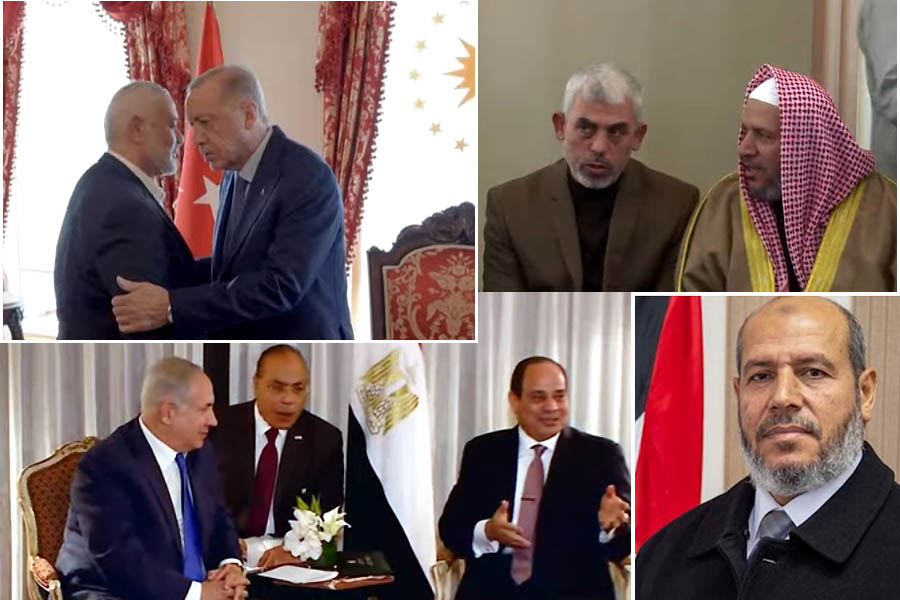
Recent developments have highlighted the evolving landscape of the conflict, showcasing the emergence of new players and the shifting sands of diplomatic maneuvering. One such revelation comes from Turkish-led Muslim forces, proposing a security arrangement for Gaza and the West Bank. While initial proposals were met with resistance from both Israel and some Palestinian factions, the prospect of military deployment in these territories looms large, potentially reshaping the balance of power in the region. Turkey has offered to provide troops for a post-conflict stabilization force — a proposal that Israel has rejected but which indicates Ankara's growing ambitions in the region.
🕊️ Hamas's Surprising Olive Branch: Ceasefire and Statehood Offer
At the heart of the conflict lies the actions of Hamas, the Palestinian militant group, whose leader Yahya Sinwar has emerged as a prominent figure in the ongoing struggle. Reports suggest Sinwar's bold movements within Gaza, interacting with fighters and surveying battlegrounds, signaling Hamas's resilience amidst the chaos of war. Despite Israel's stated goal of eliminating Hamas's leadership, Sinwar remains at large and appears to be directing the group's strategy from within Gaza's tunnel network.
Yet, amidst this show of strength, Hamas has also extended a surprising olive branch to Israel, offering a ceasefire lasting five years or more and expressing willingness to disarm in exchange for the establishment of an independent Palestinian state along pre-1967 borders — a position that aligns with longstanding international consensus. This unexpected concession raises questions about the future trajectory of the conflict and the potential for diplomatic breakthroughs. However, Israeli officials have dismissed the offer as non-serious, noting that Hamas has previously made similar promises while retaining weapons.
Senior Hamas official Khalil al-Hayya told the Associated Press that the group would accept a two-state solution along pre-1967 borders and would lay down its arms if a sovereign Palestinian state is established, including the West Bank, Gaza, and East Jerusalem. "We want a state on the 1967 borders with East Jerusalem as its capital — with the right of return," al-Hayya said. The offer represents a significant rhetorical shift for a group whose founding charter called for Israel's destruction, though Israeli officials remain skeptical.
🇺🇸 US Prepares to Sanction Israeli Military Unit: A Historic First
However, as Hamas explores diplomatic avenues, the specter of international condemnation looms over Israel. The United States, long seen as a staunch ally of Israel, is poised to sanction an Israeli military unit — the Netzah Yehuda battalion — over allegations of human rights abuses in Gaza and the West Bank. This unprecedented move underscores a shifting narrative in Washington's stance towards Israeli actions, potentially signaling a recalibration of diplomatic relations in the region.
The Netzah Yehuda battalion, composed largely of ultra-Orthodox soldiers, has been accused of abuses against Palestinian civilians, including the death of an elderly Palestinian-American man, Omar Assad, in 2022. If sanctions are imposed, it would mark the first time the US has penalized an Israeli military unit, a decision that has angered Israeli officials across the political spectrum. Prime Minister Benjamin Netanyahu has vowed to fight the move, calling it "absurd and immoral."
The Biden administration's willingness to take this step reflects growing frustration in Washington with the direction of Israel's war effort and the rising civilian death toll in Gaza, which has exceeded 34,000 according to Gaza's health ministry. It also comes as domestic pressure on Biden from progressive Democrats and Arab-American voters intensifies ahead of the November election.
⚠️ Egypt's Sisi Warns Netanyahu: Rafah Offensive Could Spell Disaster
Amidst these developments, Egyptian President Abdel Fattah el-Sisi has issued a stark warning to Israeli Prime Minister Benjamin Netanyahu, cautioning against plans for a military assault on Rafah — the southern Gaza city where over 1 million displaced Palestinians have sought refuge. With tensions escalating and the threat of widespread destruction looming large, the international community watches with bated breath as Israel prepares for a potentially decisive offensive. Satellite imagery revealing the construction of tent compounds near Rafah hints at the scale of the impending humanitarian crisis, as millions of displaced Gazans brace for the impact of yet another wave of violence.
Egypt, which shares a border with Rafah, has warned that an Israeli offensive could lead to a mass exodus of Palestinians into the Sinai Peninsula — a development Cairo considers a "red line." Egypt has also threatened to suspend its peace treaty with Israel if the operation proceeds, a move that would have seismic implications for regional stability. Sisi has reportedly been in intensive diplomatic contact with Washington and European capitals to pressure Israel to back down.
⚔️ The Impending Israeli Offensive in Rafah: What We Know
As tensions escalate in the southern Gaza city of Rafah, Israel prepares for a long-awaited offensive, claiming that the bulk of Hamas forces are entrenched in the area. With over a million internally displaced Gazans seeking refuge in Rafah, the specter of impending conflict looms large, prompting Israel to make preparations for the evacuation of civilians. Satellite imagery reveals the emergence of tent compounds near the city, signaling the gravity of the situation as both sides brace for the inevitable showdown.
Reports suggest that Israel is adopting a phased approach to its offensive, potentially scaling back from initial plans for a full-scale assault in response to US pressure. While details remain sparse, indications point to a concerted effort to mitigate the humanitarian impact of the operation, with pressure mounting from the United States and other allies to minimize civilian casualties. Israeli officials have stated that civilians will be evacuated to designated "humanitarian islands" along the coast, though aid groups question whether this is feasible given the density of the population and the destruction of infrastructure elsewhere in Gaza.
Questions linger over the feasibility of evacuating such a large population from Rafah, with uncertainties surrounding the capacity of the 40,000 tents reportedly procured by Israel. The tents would accommodate only a fraction of the displaced population. As civilians express exhaustion and reluctance to leave their homes — many have already been displaced multiple times — the situation on the ground remains fluid, with the potential for unforeseen challenges to arise.
🌍 A Region at a Crossroads
Against this backdrop, the international community watches closely, with concerns mounting over the humanitarian consequences of the impending offensive. As diplomatic efforts continue behind the scenes — including renewed talks in Cairo mediated by Egypt and Qatar — the fate of Rafah hangs in the balance, symbolizing the broader struggle for peace and stability in the Middle East.
The changing dynamics of the Israel-Hamas conflict — from Hamas's surprising ceasefire offer to the US's unprecedented threat of sanctions, from Turkey's proposed security force to Egypt's warning on Rafah — suggest that the war is entering a new chapter. Whether this chapter leads to a diplomatic breakthrough or a bloody escalation remains to be seen. One thing is certain: the decisions made in the coming days and weeks will shape the Middle East for years to come.
Related Coverage: For more on the Israel-Hamas war and Middle East tensions, visit Iran Strikes Israel: Tensions Escalate and Israel-Gaza War Hub.
Global Post Headline — independent coverage of the Middle East and global geopolitics. globalpostheadline.com | Follow updates: Gaza War Hub | Politics

Experience the Himalayas with expert Sherpa guides. Trekking, expeditions, and cultural tours in Nepal, Tibet & Bhutan.
Plan Your Nepal Trip →
Authentic Nepali crafts, pashmina, singing bowls — worldwide shipping.