Escalating Israel-Hezbollah Conflict: Iran's Missile Strikes and Middle East Tensions
The ongoing conflict between Israel and Hezbollah has reached new heights, as clashes intensify in southern Lebanon following Israel's ground incursion into the region. Seven Israeli soldiers have been killed in recent combat, and Israel claims to have neutralized over 150 Hezbollah targets. In response to these actions, Hezbollah has confirmed continued engagement with Israeli forces, with reports suggesting the conflict shows no signs of abating. This escalation marks the most significant ground combat between the two sides since the 2006 Lebanon War.
Iran's Hypersonic Missile Barrage
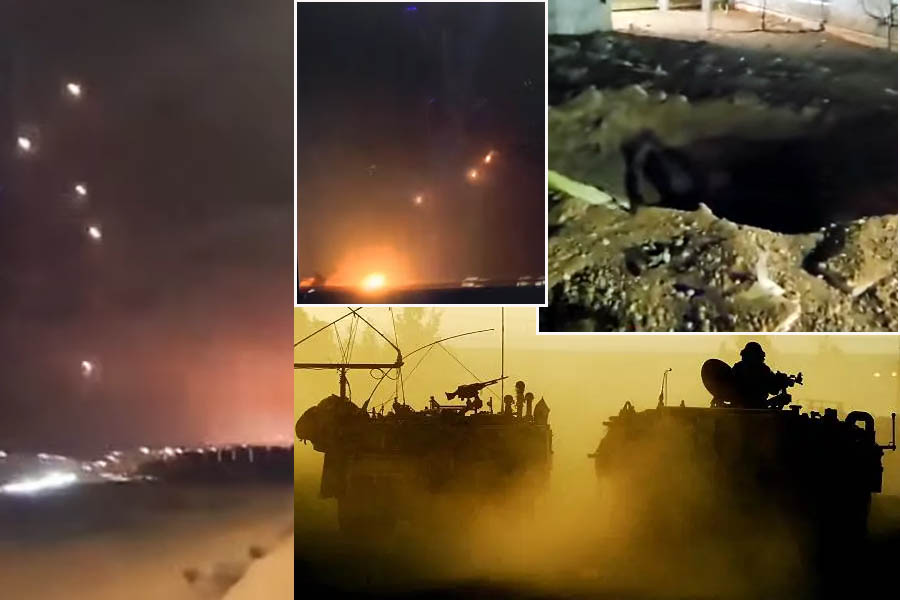
This clash is part of a broader regional conflict, heavily influenced by rising tensions between Israel and Iran. Following Iran's massive missile strike on Israeli airbases — a retaliation for the assassination of Hezbollah's leader, Hassan Nasrallah — Israel acknowledged limited damage. Iran launched over 200 ballistic and hypersonic missiles in a single barrage, targeting military installations including the Nevatim Air Base and Tel Aviv-area facilities. The strike, however, has exacerbated the already volatile situation, signaling Tehran's readiness to respond to what it views as Israeli provocations. Israel's aerial defense systems, supported by US and UK naval assets, intercepted the majority of incoming missiles, but several penetrated defenses, causing significant damage to infrastructure.
Diplomatic Efforts Falter as UN Chief Faces Backlash
At the international level, diplomatic efforts to de-escalate the situation are faltering. UN Secretary-General António Guterres condemned Iran's missile attack on Israel, urging both sides to cease hostilities and avoid further violence. In a stark warning, Guterres stated that "time is running out" to prevent the conflict from engulfing the region. The UN Security Council convened in an emergency session, addressing the escalation following the assassination of Nasrallah and Israel's ground operations against Hezbollah. However, Israel's reaction to Guterres' statements complicated diplomatic efforts. Citing the Secretary-General's failure to unambiguously condemn Iran's actions, Israel's foreign minister announced that Guterres would be barred from entering the country, heightening tensions between Israel and the UN.
Iran Prepares for Retaliation: Warnings of Further Israeli Strikes
In Iran, preparations are underway for possible Israeli airstrikes, particularly on nuclear facilities at Fordow and Natanz, following the country's retaliatory missile attack. Supreme Leader Ayatollah Ali Khamenei, in his first public address since the assassination of Nasrallah, reaffirmed Iran's stance against Western interference in the Middle East and called for a complete withdrawal of foreign powers from the region. Iran's leadership has justified its missile strike on Israeli military installations as a necessary defensive response to Israeli aggression, maintaining that the operation adhered to international law. While Iran's foreign minister, Abbas Araghchi, has engaged in diplomatic discussions with European leaders, stressing that Iran's actions were not intended to harm civilians, tensions remain high. Iranian defense officials have issued warnings that any further provocations by Israel could lead to a full-scale conflict.
Largest Missile Barrage Yet: Iran's Hypersonic Assault
Amid these rising tensions, Iran launched its most extensive missile attack on Israel to date. Ballistic and hypersonic missiles targeted Israeli military bases, with Israel's aerial defense systems—supported by allies like the US and UK—managing to intercept a majority of the incoming missiles. However, some missiles penetrated Israel's defenses, causing significant damage to airbases and cratering areas in central and southern Israel. This escalation came amidst Israel's ongoing war in Gaza, which has resulted in widespread devastation, including the deaths of tens of thousands of Palestinians. The missile strikes mark a critical moment in the broader conflict between Israel and the Iranian axis, with Hezbollah, backed by Tehran, playing a key role.
The Geopolitical Web: Contradictions and Complications
The Middle East's geopolitical landscape is notoriously complex, with internal contradictions and shifting alliances playing pivotal roles in shaping the region's trajectory. Countries like Iran, Israel, Lebanon, and Syria are entangled in a web of rivalries, strategic interests, and power struggles that often lead to unpredictable outcomes. Saudi Arabia's response to the assassination of Nasrallah underscores the region's contradictions. While Riyadh expressed concern for Lebanon's sovereignty, it deliberately avoided any mention of Nasrallah himself — reflecting Saudi Arabia's cautious approach to Iran-backed militant groups. The Gulf states, including Qatar, Bahrain, and the UAE, have maintained a cautious stance, avoiding direct involvement in the Israel-Hezbollah conflict.
Israel's Expanding Regional Influence
Despite facing significant challenges, Israel has successfully expanded its influence across the Middle East through strategic partnerships, security assurances, and technological advancements. The Abraham Accords, which saw countries like the UAE, Bahrain, and Morocco normalize relations with Israel, have redefined the regional landscape. Saudi Arabia has frozen normalization talks following the Gaza war, but Israeli officials remain hopeful that post-conflict dynamics could restore momentum. However, the sidelining of Palestine raises critical questions about the future of the region's longstanding conflicts. Israel's strategy of dismantling pro-Palestinian forces, including Hezbollah and Hamas, through military means, is part of its broader effort to maintain control and suppress resistance.
The Path Forward: Diplomacy or War?
As the Middle East teeters on the brink of a broader conflict, diplomatic efforts continue to falter. Iran's missile strikes and Israel's military response highlight the fragile nature of peace in the region. With Hezbollah emboldened by Iranian support and Israel facing increasing international scrutiny for its operations in Gaza and now Lebanon, the potential for a wider war looms large. The international community, particularly Western powers, remains divided on how to address the escalating violence. While the UN and European leaders call for restraint, Israel and Iran show no signs of backing down. As tensions rise, the region stands at a crossroads — one path leading to potential diplomacy and the other to a devastating war that could reshape the Middle East for years to come.
Related Coverage: For ongoing updates on the Middle East crisis, visit our Middle East Breaking News page and Israel-Gaza War Hub.
Global Post Headline — independent Middle East coverage. globalpostheadline.com | Follow live: middle-east-breaking.php