Israeli Tanks Mobilize for Rafah Offensive Despite Halted USA Support — Netanyahu Vows to Fight 'Alone'
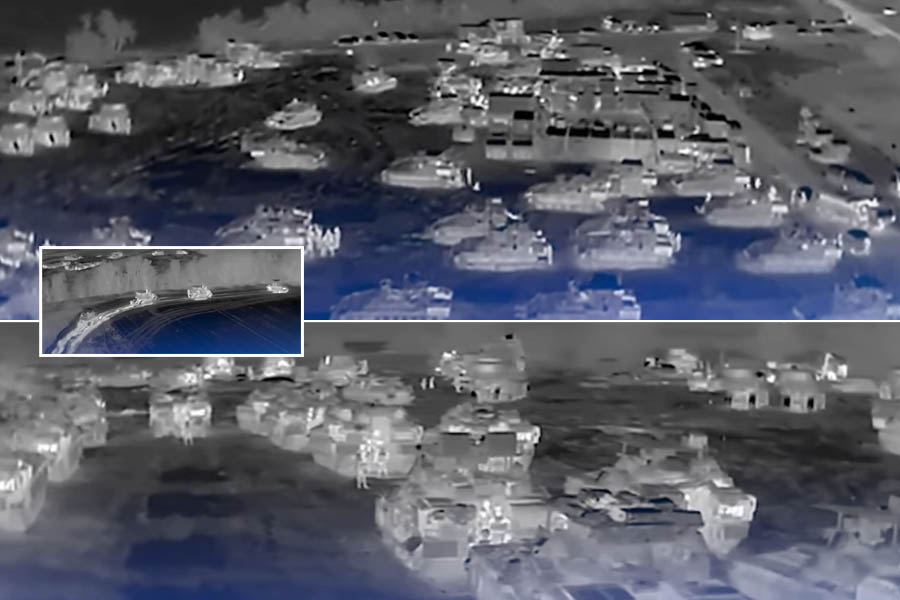
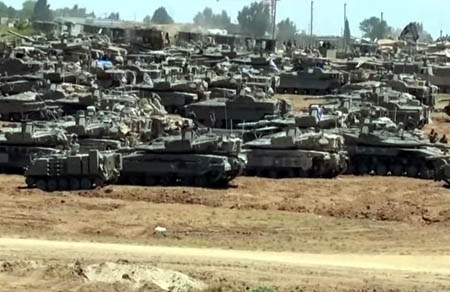
In the hushed darkness of the night, the world witnessed a chilling spectacle unfold at the Rafah border. Dozens of Israeli tanks and bulldozers silently amassed, poised for action. This haunting scene, captured in footage circulating online, marked a significant escalation in the ongoing conflict between Israel and Hamas. The military vehicles, including those from the formidable "Iron Tracks" and "Givati" units, crossed the border fence under the cover of darkness. Their destination: Rafah, a city in the southern Gaza Strip where over a million displaced Palestinians have sought shelter, and where tensions were already at a fever pitch.
The 162nd 'Steel Formation' Division: Israel's Spearhead
The IDF's 162nd 'Steel Formation' Division spearheaded Israel's incursion into Rafah, signaling a determined effort to confront Hamas head-on. Night-vision drone footage captured the imposing sight of Merkava Mark IV tanks, Namer armored personnel carriers, and Puma armored engineering vehicles advancing into the heart of the conflict zone on May 8. The division's reputation for armored warfare dates back to the 1973 Yom Kippur War, and its deployment to Rafah underscores the seriousness of the operation. Israel's military objectives were clear: to seize control of the crossing between Rafah and Egypt and neutralize the threat posed by Hamas militants in the area.
US Support Halted: Biden's Weapons Freeze
Despite diplomatic pressure and warnings from allies, including the United States, Israel remained resolute in its mission. President Joe Biden's threat to halt weapon shipments — specifically a shipment of 3,500 bombs (including 2,000-pound bombs that could cause significant civilian casualties in dense urban areas) — underscored the severity of the situation. The Biden administration paused the shipment over concerns about the humanitarian impact of a full-scale Rafah operation, marking the first time the US has leveraged weapons supplies to influence Israeli military decision-making. However, Israel prioritized the need to confront Hamas and protect its citizens. "If we need to stand alone, we will stand alone," Prime Minister Benjamin Netanyahu declared in a defiant video statement, referencing Israel's 1948 War of Independence as precedent.
Military Capacity: Can Israel Proceed Without US Arms?
Amid debates over the supply of weapons to Israel, military analyst Sean Bell offered insights into Israel's capacity to wage war against Hamas. Despite concerns raised by the US regarding civilian casualties, Bell suggested that Israel possessed sufficient weaponry to carry out its offensive in the short term. Israel maintains an indigenous defense industry that produces ammunition, small arms, and some precision-guided munitions. However, the halt of US-supplied 2,000-pound bombs could affect Israel's ability to strike underground targets. Israeli officials have downplayed the impact, noting that the IDF has stockpiled significant reserves and that the paused shipment represents only a portion of ongoing resupply requests. The long-term sustainability of the campaign without US resupply remains an open question.
The Rafah Crossing: Strategic Objective Secured
In the face of resistance from approximately 30 militants who opened fire during the operation, Israeli forces pressed forward, determined to dismantle terrorist infrastructure and eliminate threats to their security. By May 9, the IDF had seized control of the Rafah crossing terminal — the sole passage between Gaza and Egypt, previously the primary entry point for humanitarian aid. Israel's 401st Brigade and Yahalom special engineering unit secured key positions around the crossing, cutting Hamas's last link to the outside world. However, the operation's intensity raised immediate concerns about the fate of the 1.4 million displaced Palestinians sheltering in the Rafah area.
The 'Gaza Metro' Challenge
However, Bell cautioned that Hamas's network of underground tunnels, dubbed the "Gaza Metro," presented a formidable challenge for the IDF. These tunnels enabled Hamas to employ guerrilla warfare tactics, complicating Israel's military operations in the densely populated urban landscape of Gaza. The tunnel network under Rafah is believed to be particularly extensive, with some branches extending into Egypt — a sensitive issue for Cairo-Egypt relations. Israeli forces have used explosives, robots, dogs, and now seawater flooding to destroy tunnel shafts, but neutralizing the network entirely could take months.
Netanyahu: 'We Will Continue Alone'
As tensions escalated and diplomatic rifts widened, Israeli Prime Minister Benjamin Netanyahu adopted a defiant stance, vowing to press ahead with the campaign against Hamas, even if it meant going it alone. With the specter of conflict looming large, Netanyahu's declaration underscored Israel's determination to confront threats to its security without hesitation. "If we have to, we will fight with our fingernails," Netanyahu said in a reference to Israel's early days of statehood. The statement drew sharp reactions from Washington, with the White House reiterating its opposition to a major Rafah offensive but acknowledging Israel's right to self-defense.
Civilian Casualties and Humanitarian Crisis
Amidst the backdrop of political maneuvering and military operations, the fate of Rafah hung in the balance. The city, home to over a million displaced Palestinians — many of whom had already fled multiple times from northern and central Gaza — bore witness to the harrowing realities of war as Israeli forces clashed with Hamas militants. The UN warned that an offensive could lead to a "slaughter" of civilians, with the World Health Organization noting that Rafah's hospitals are already overwhelmed. The unfolding events at the Rafah border serve as a stark reminder of the entrenched divisions and escalating violence plaguing the region. As Israel and Hamas continue to engage in a deadly struggle for supremacy, the toll on civilian lives and the prospects for peace grow increasingly uncertain.
Related Coverage: For ongoing updates on the Gaza war and Rafah crisis, visit our Middle East Breaking News page and Israel-Gaza War Hub.
Global Post Headline — independent Middle East coverage. globalpostheadline.com | Follow live: middle-east-breaking.php