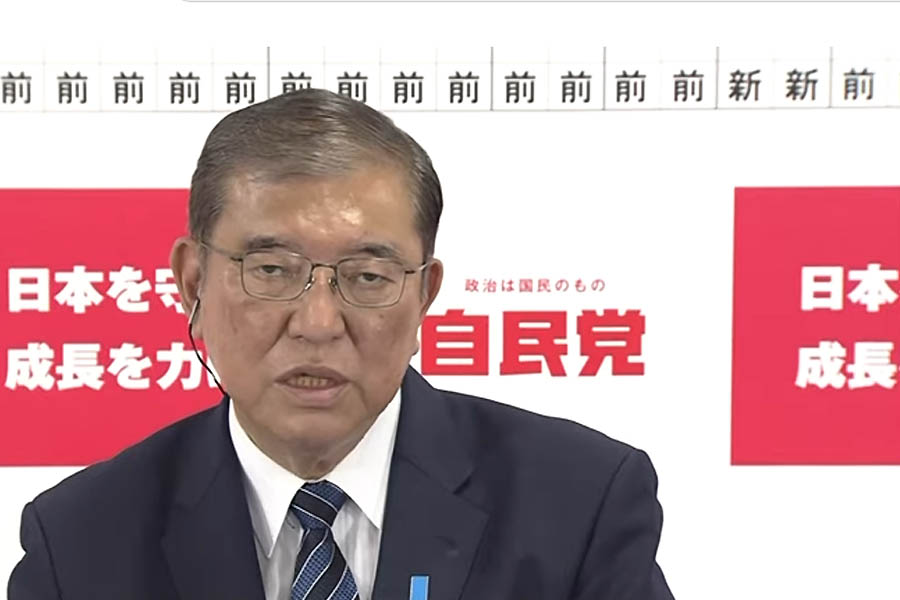
Shigeru Ishiba Vows to Continue as Prime Minister Amidst Historic Election Loss — LDP Loses Majority for First Time Since 2009
Tokyo, Japan – In a stunning political development that has reshaped Japan's political landscape, Prime Minister Shigeru Ishiba has pledged to remain in office despite his Liberal Democratic Party (LDP) suffering a devastating defeat in Sunday's general election — the first time since 2009 that the ruling party has lost its parliamentary majority. The snap election, called by Ishiba just weeks after assuming office in a bid to solidify his mandate, backfired spectacularly as voters delivered a "severe judgment" on the scandal-plagued party.
Addressing the nation from LDP headquarters in Tokyo, a somber but resolute Ishiba accepted responsibility for the outcome. "The Japanese people have expressed a strong desire for the LDP to reflect more closely on their needs and sentiments," Ishiba said. "We must humbly accept this severe judgment. I intend to continue my duties as Prime Minister and lead the party through fundamental reform."
A Historic Setback for Japan's Dominant Party
The LDP, alongside its coalition partner Komeito, secured just 215 seats in the 465-seat lower house — falling 18 seats short of the 233-seat majority required for effective governance. This electoral result is particularly alarming as the LDP has historically maintained almost continuous rule since its founding in 1955, interrupted only by brief opposition governments in 1993-1994 and 2009-2012. The defeat marks the worst electoral performance for the LDP since the historic 2009 loss that briefly brought the Democratic Party of Japan to power.
For Ishiba, who won the LDP leadership race just weeks ago on a platform of reform and transparency, the result is a bitter personal blow. His decision to call a snap election — seen by many analysts as a risky gamble — appears to have backfired as voters used the opportunity to punish the LDP for a series of fundraising scandals that have eroded public trust.
The Scandals That Sank the LDP
The electoral setback is symptomatic of a tumultuous period for the LDP, characterized by scandals, widespread voter apathy, and record-low approval ratings. Earlier this year, the party's approval ratings plummeted below 20% amid a political fundraising corruption scandal that severely damaged its leadership. Multiple LDP factions were accused of failing to report hundreds of millions of yen in fundraising proceeds, leading to criminal complaints and the resignation of several senior lawmakers.
Voters appeared to punish the LDP for its perceived arrogance and lack of accountability. Exit polls suggested that corruption and political ethics were among the top concerns for voters — issues that opposition parties hammered relentlessly during the campaign. "People are tired of the same old faces and the same old excuses," said Yoshihiko Noda, leader of the Constitutional Democratic Party (CDP), in his victory speech.
In response to the electoral defeat, Ishiba vowed to pursue "fundamental reform" regarding the intertwined issues of money and politics. "We must restore trust among the electorate and rejuvenate the party's image," Ishiba said. "This will require difficult changes, but they are necessary."
Opposition Surge: CDP Makes Historic Gains
The biggest beneficiary of the LDP's collapse was the Constitutional Democratic Party (CDP), which surged to 148 seats — a dramatic increase from previous elections. The CDP, which advocates for constitutional reform, greater social welfare spending, and a more transparent political system, capitalized on voter anger at the LDP's scandals. The party's strong showing positions it as a credible alternative to the LDP for the first time since the 2009-2012 DPJ government.
However, historical challenges remain. Opposition parties in Japan have often struggled to present a cohesive and viable alternative to the ruling coalition. The CDP would need to cobble together a coalition with several smaller opposition parties to reach a majority — a prospect that remains uncertain given ideological differences among Japan's fractured opposition landscape.
What Comes Next? Coalition Politics in a Fragmented Parliament
With the LDP's diminished power, Japan's parliament has a critical window of 30 days to reconvene and select a prime minister. The chosen leader's party or coalition will face significant legislative challenges, as they will no longer have the unilateral power to pass laws. Every piece of legislation will require negotiation with opposition parties — a new reality for a party accustomed to governing with comfortable majorities.
Ishiba has indicated he will seek to continue governing as a minority government, relying on case-by-case cooperation with opposition parties to pass legislation. This is a precarious strategy, as opposition parties could bring down the government by voting against key budget bills. An alternative scenario would see the CDP attempt to form a coalition government — a prospect that would mark the first genuine alternation of power in Japan since 2012.
Political analysts warn that Japan may be entering a period of instability reminiscent of the "revolving door" premierships of the late 2000s, when Japan cycled through six prime ministers in four years. "The era of Japan as a bastion of political stability — a status that attracted foreign investors for decades — may be coming to an end," said Dr. Yuki Tanaka, a political science professor at Waseda University.
Implications for Japan's Economy and Foreign Policy
The political uncertainty comes at a delicate moment for Japan's economy, which has just emerged from a technical recession. A weak government could struggle to implement the structural reforms economists say are necessary to boost productivity and address Japan's demographic crisis. The Bank of Japan's efforts to normalize monetary policy could also be complicated by political instability.
On the foreign policy front, a weakened LDP government could face challenges in responding to North Korean provocations and China's growing military assertiveness in the East China Sea. Ishiba, a defense expert who has advocated for a stronger military posture, may find it difficult to push through defense spending increases without a parliamentary majority. The Japan-US alliance, long the cornerstone of Japanese security, could also face strains if Tokyo appears politically unstable.
A Leader's Test: Can Ishiba Survive?
Despite calls from some party elders for his resignation, Ishiba has made clear he intends to stay. His decision to remain in office reflects both personal determination and the lack of an obvious successor. However, his political survival is far from assured. The LDP could force a leadership election in the coming months if his poll numbers continue to languish.
For now, Ishiba's immediate priorities are to steady the LDP, negotiate with potential coalition partners, and prepare for a challenging parliamentary session. "The Japanese people have spoken, and we have heard them," Ishiba said. "The task ahead is to rebuild trust — one step at a time." Whether he will be given the time to complete that task remains the central question hanging over Japanese politics.
Related Coverage: For ongoing analysis of Japan's political crisis, explore Shigeru Ishiba: Japan's New Prime Minister and Japan's Leadership and Business Revolution.
Global Post Headline — independent coverage of Asian politics and global affairs. globalpostheadline.com | Follow Japan updates: Asian Daily News

Authentic Nepali crafts, pashmina, singing bowls — worldwide shipping.