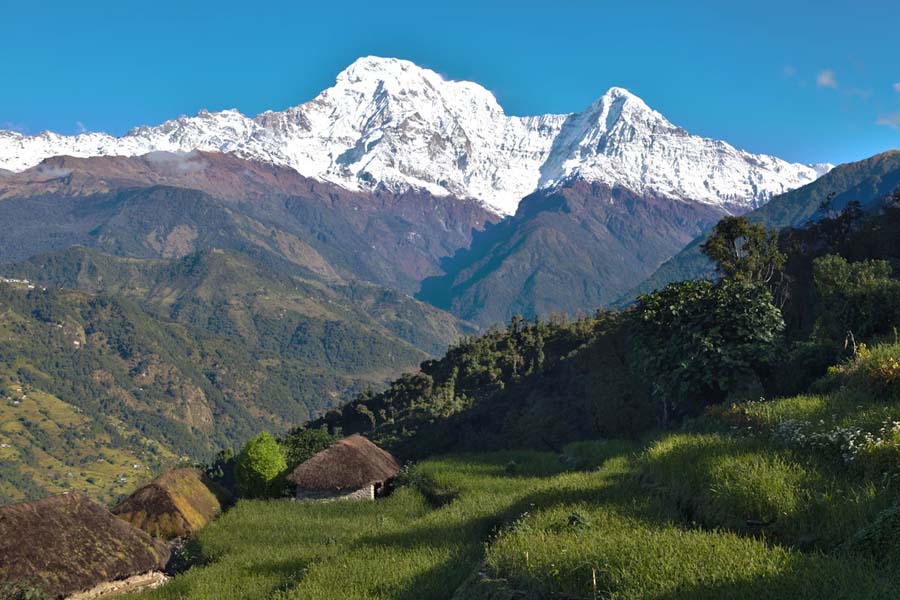
The Annapurna Conservation Area is a globally renowned destination attracting thousands of trekkers, hikers, climbers, and adventure travelers seeking spectacular Himalayan landscapes and cultural experiences. A record 441,422 tourists visited the region this year.
19 June 2026 | Myagdi, Kaski, Kathmandu — Updated 14:30 GMT
The Kali Gandaki roars through the gorge. The Mistrikhola trickles. In Annapurna, Nepal's emerging "hydro hub," the contrast could not be starker.
Six hydropower projects with a combined capacity of 176 megawatts are already operating. Three more projects totaling 255.5 megawatts are under construction. The 184-megawatt Kali Gandaki Gorge project is in preparation. This is progress — roads, bridges, jobs, and prosperity where there was once isolation.
But at what cost?
In Narchyang, fish have disappeared from Mistrikhola. The cold waters that once teemed with prized Asala fish — selling for Rs 1,500-1,700 per kilogram — are now empty. Water diverted through tunnels for hydropower has reduced the river to a trickle. Even the mandated 10 percent minimum environmental flow cannot sustain aquatic life.
"Previously, Mistrikhola was rich in fish and frogs, but after the water level dropped, they have disappeared," says Avin Chochangi, a local resident. "Even though 10 percent of the water is released into the stream, the reduced water level appears to have forced fish and other aquatic species to abandon their habitat."
Yet the region is booming. A record 441,422 tourists visited the Annapurna region this year — the highest in history. Indian tourist arrivals jumped nearly 300 percent in Jestha alone. Hotel occupancy in Pokhara reached 90 percent. The Annapurna Base Camp trekking route now has national grid electricity up to Upper Sinuwa, improving services for trekkers and locals alike.
The government is now presenting 151 projects at the Investment Summit, seeking foreign investment in energy, infrastructure, tourism, agriculture, and technology. The message is clear: Nepal is open for business.
But as the turbines turn and the tourists arrive, the rivers are paying the price. And the question that hangs over Annapurna is one that echoes across Nepal: can development and sustainability coexist?
🏔️ ANNAPURNA — THE NUMBERS: 176 MW hydropower operational • 255.5 MW under construction • 6 operational projects • 3 under construction • 441,422 tourists (record high) • 127,459 visited in Jestha alone (↑300% Indian tourists) • 90% hotel occupancy in Pokhara • Rs 17 million royalty revenue (↑ from Rs 7 million) • 151 projects at Investment Summit • 31 energy projects • 19 transport projects • 13 tourism projects.
Annapurna's Hydro Boom: 176 MW and Counting
Over the past decade, Annapurna Rural Municipality has increasingly established itself as one of Nepal's emerging "hydro hubs." As the Kali Gandaki, Mistri, Nilgiri, Rele, Ghalemdi, and Gharkhola rivers have been transformed into sources of energy production, the area has witnessed rapid economic, social, and physical development.
According to Rural Municipality Chairperson Bharat Kumar Pun, six hydropower projects with a combined capacity of 176 megawatts are currently in operation in Annapurna, while three projects with a total capacity of 255.5 megawatts are under construction.
In the Narchyang area, the five-megawatt Ghalemdikhola, 42-megawatt Mistrikhola, 38-megawatt Nilgiri-I, 71-megawatt Nilgiri-II, and six-megawatt Relekhola projects are already operational. Likewise, the 14-megawatt Gharkhola Hydropower Project, located along the boundary of Wards 5 and 6, has also come into operation.
In addition, construction has begun on the 180-megawatt Kali Gandaki Gorge Hydropower Project in the Bhalebas area of Narchyang. The Super Ghalemdi (9.14 MW) and Middle Kali Gandaki (66.5 MW) projects are currently under construction. IME Group is also preparing to move forward with the 66-megawatt Tiplyang Kali Gandaki Project.
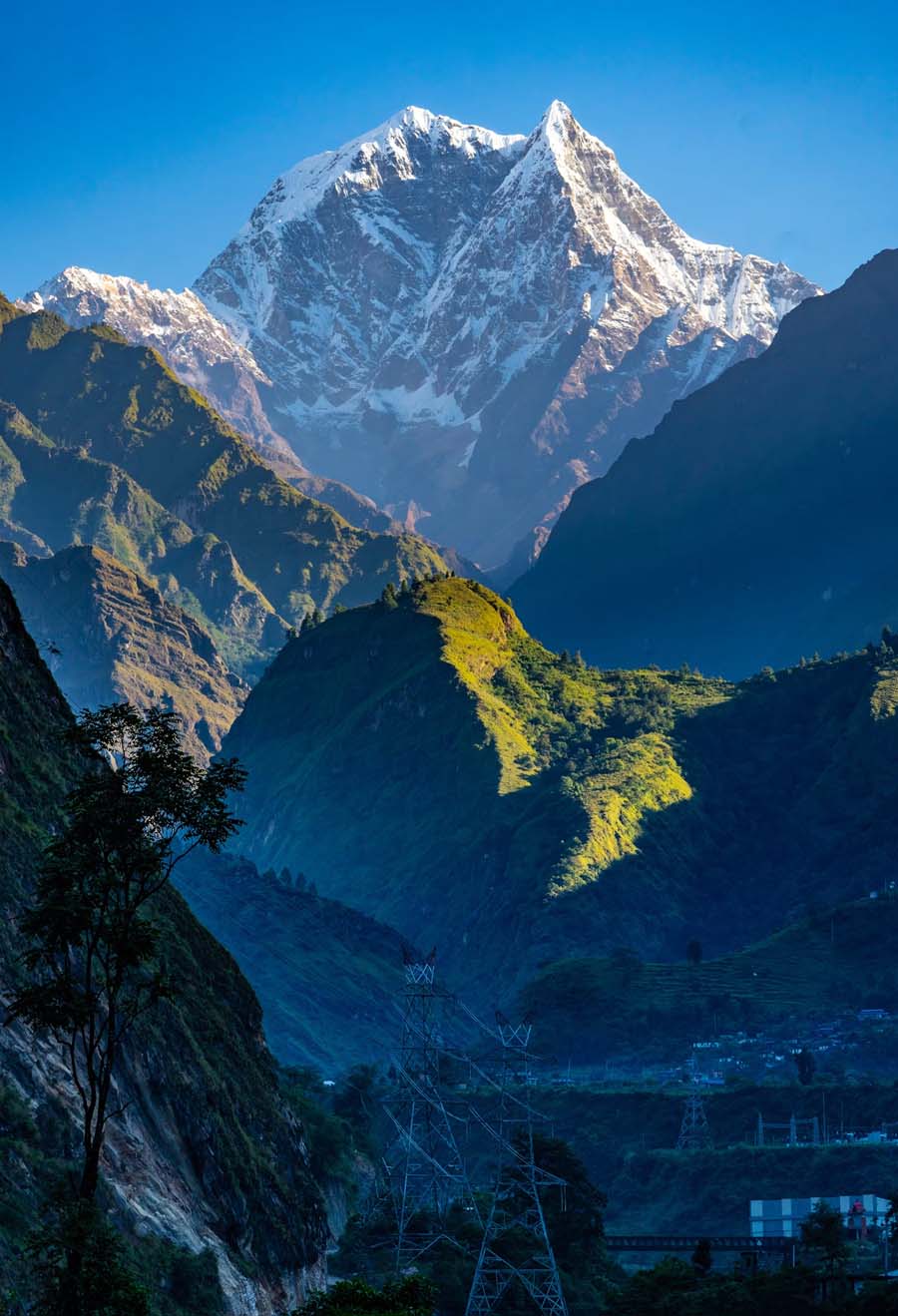
From Isolation to Prosperity: Narchyang's Transformation
Narchyang, Ward No. 4 of Annapurna Rural Municipality, has become the focal point of hydropower development. Existing and under-construction projects have dramatically changed the village's landscape.
According to Ward Chairperson Lok Bahadur Fagami, Narchyang, which once lacked road access, is now connected by roads, bridges, and other infrastructure due to hydropower projects.
"We now have roads cutting through cliffs we never imagined could be crossed. Employment and income-generating opportunities have been created within the village itself," he said.
With approximately 450 households and a population of 1,600, Narchyang currently hosts more workers brought in from outside for project-related work than its local population. Land prices have risen to between Rs 3 million and Rs 3.5 million per ropani. Many people who had migrated abroad for employment or relocated to cities are now returning to the village.
🏗️ ANNAPURNA HYDROPOWER — PROJECTS
- Operational (176 MW): Ghalemdikhola (5 MW), Mistrikhola (42 MW), Nilgiri-I (38 MW), Nilgiri-II (71 MW), Relekhola (6 MW), Gharkhola (14 MW)
- Under Construction (255.5 MW): Kali Gandaki Gorge (180 MW), Super Ghalemdi (9.14 MW), Middle Kali Gandaki (66.5 MW)
- In Preparation: Tiplyang Kali Gandaki (66 MW)
- History: First project in 1988 (Tatopani Small Hydropower, 2 MW)
- Royalty Revenue: Rs 17 million (current year) — up from Rs 7 million
According to Tek Bahadur Pun, who returned from Pokhara and now operates a hotel business, opportunities created within the village have eliminated the need to live elsewhere. Locals are earning income through land compensation, hotel businesses, agriculture, livestock farming, transportation services, construction material supply, contracting, and share investments.
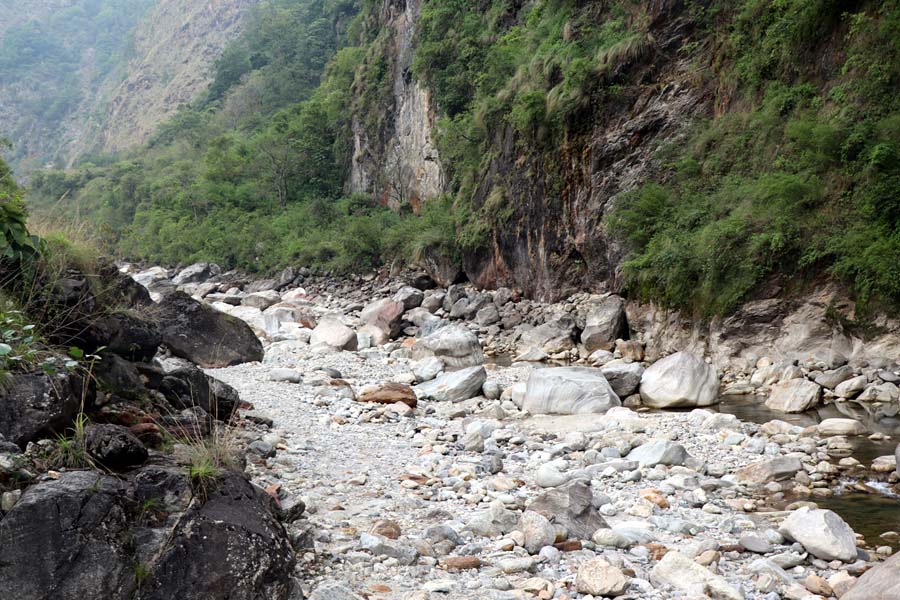
Mistrikhola River in Narchyang, Myagdi, where reduced water flow from hydropower diversion has affected fish populations and aquatic ecosystems. Local residents report a sharp decline in fish and other aquatic species after water diversion for hydropower projects reduced natural river flow.
'Fish Have Disappeared': The Environmental Cost of Hydropower
Fish are no longer being found in Mistrikhola, the stream that flows through Narchyang in Ward No. 4 of Annapurna Rural Municipality, Myagdi.
The decline in water levels following the construction of hydropower projects has affected fish and other aquatic life in the stream. Avin Chochangi of Bansbot, Narchyang, Annapurna Rural Municipality–4, said that fish and frogs have disappeared since water from the stream began being diverted through tunnels from the hydropower dam to the powerhouse.
"Previously, Mistrikhola was rich in fish and frogs, but after the water level dropped, they have disappeared," he said. "Even though 10 percent of the water is released into the stream, the reduced water level appears to have forced fish and other aquatic species to abandon their habitat."
After the construction of the 42-megawatt Mistrikhola Hydropower Project in 2020 (2077 B.S.), only a minimal amount of water flows in Mistrikhola from Dobhilna in Narchyang to its confluence with the Kali Gandaki River during the winter and dry-season months from Mangsir to Jestha.
Residents who once relied on fishing for their livelihoods say they have been forced to switch to wage labor and farming after fish disappeared from the stream during the peak fishing season.
People from Bansbot, Narchyang, and Patar Tol traditionally fished in Mistrikhola. The cold waters flowing from the foothills of the Annapurna and Nilgiri mountains were home to the prized Asala fish species. The main market for these fish was the popular tourist destination of Bhurung Tatopani.
Hotel entrepreneur Amritman Sherchan said that because locally sourced fish can no longer meet demand, fish now have to be imported from outside the area.
The local market price of Asala fish ranges between Rs 1,500 and Rs 1,700 per kilogram.
— Avin Chochangi, local resident
Lok Bahadur Fagami, Ward Chairperson of Annapurna Rural Municipality–4, Narchyang, said that while hydropower projects have brought economic benefits and physical infrastructure development, aquatic life in the river has disappeared, traditional water sources have dried up and required alternative arrangements, and wildlife appears to be abandoning nearby habitats.
"Hydropower development has brought road access, support for local infrastructure projects, and opportunities for affected residents to invest in shares," he said. "However, some negative impacts have also emerged. The most significant is the disappearance of fish and other aquatic species, and wildlife is no longer seen in nearby forests."
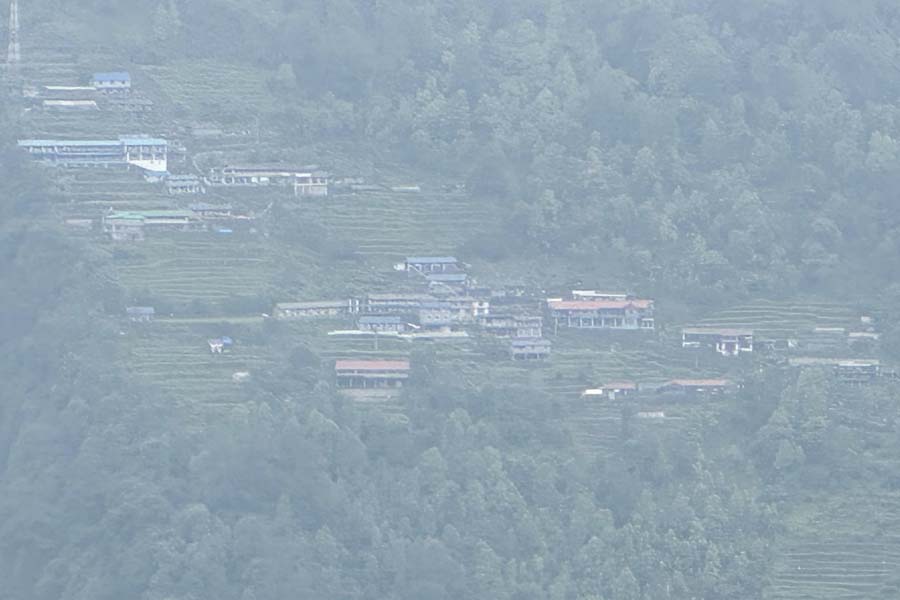
The extension of the national transmission line to Upper Sinuwa is enhancing the trekking experience on the world-famous Annapurna Base Camp trail with reliable electricity and improved tourism services.
World-Famous ABC Route Gets Brighter: National Grid Reaches Upper Sinuwa
Trekking is set to become even more convenient for domestic and international visitors traveling along the world-renowned Annapurna Base Camp (ABC) trekking route.
The area has been illuminated following the extension of the national electricity transmission line by the Nepal Electricity Authority from Jhinu Danda in Ward No. 11 of Annapurna Rural Municipality up to Upper Sinuwa along the Annapurna trekking trail.
Under the government's plan to electrify major trekking routes in Kaski District, electricity from the national grid has been extended to the tourism corridor stretching from Jhinu Danda to Upper Sinuwa. As a result, local residents, hotel operators, and tourists who had long depended on micro-hydropower systems and alternative energy sources will now have access to a reliable electricity supply.
⚡ ABC TREK ELECTRIFICATION — KEY FACTS
- Route electrified: Jhinu Danda to Upper Sinuwa (Annapurna Base Camp trail)
- Hotels between Jhinu and Upper Sinuwa: 60-70
- Project cost: Rs 22.1 million
- Challenges: Poles/transformers transported by helicopter above Chhomrong
- Next phase: Himalaya (next fiscal year)
Tourism entrepreneurs, in particular, are delighted by the development. Jagdish Gurung, who has been running a hotel business in Jhinu, Annapurna-11, for the past 20 years, said, "The arrival of national grid electricity here is a matter of great happiness. Tourism in this area will now be promoted even further."
According to him, between 60 and 70 hotels, both large and small, are currently operating between Jhinu Danda and Upper Sinuwa.
Mikash Gurung, a hotel entrepreneur from Chhomrong in Annapurna-11, expressed confidence that the national grid electricity service would make trekking more convenient for visitors. With the arrival of grid electricity, trekkers will enjoy easier access to mobile charging facilities, hot water, internet services, and other electrical amenities.
Record 441,422 Tourists Visit Annapurna — Indian Arrivals Jump 300%
The Annapurna Conservation Area has welcomed the highest number of foreign tourists in its history this year.
According to the Annapurna Conservation Area Project (ACAP), a total of 441,422 tourists visited the region by the end of Jestha (mid-June) of the current fiscal year.
In the fiscal year 2024/25 (2081/82 B.S.), the region received a total of 278,113 foreign tourists. Since one month still remains in the current fiscal year, Project Chief Dr. Rabin Kadariya said tourist arrivals are expected to increase further.
"In the month of Jestha alone, the number of tourists from India and other South Asian countries increased by nearly 300 percent," he said. "This is the first time such a large number of Indian tourists have visited the region."
📊 ANNAPURNA TOURISM — RECORD NUMBERS
- Total tourists (current year): 441,422 (record high)
- Previous year: 278,113
- South Asian tourists: 319,419
- Other international tourists: 121,993
- Jestha alone: 127,459 (↑300% Indian tourists)
- Hotel occupancy in Pokhara: 90%
- Conservation Area size: 7,600 sq km
He attributed the rise in Indian visitors to tourism promotion efforts in India highlighting destinations such as Pokhara and Muktinath, improved transportation facilities, and increased exposure through social media. Many Indian tourists also visit Pokhara and nearby destinations during this season to escape the summer heat.
According to project data, of the total tourists who visited by the end of Jestha, 319,419 were from South Asian countries, while 121,993 came from other parts of the world.
In Jestha alone, 127,459 tourists visited the Annapurna region. During the same month last year, the number stood at just 31,955.
Laxman Subedi, President of the Hotel Association Pokhara, said hotel occupancy in Pokhara reached as high as 90 percent during the months of Baisakh and Jestha this year.
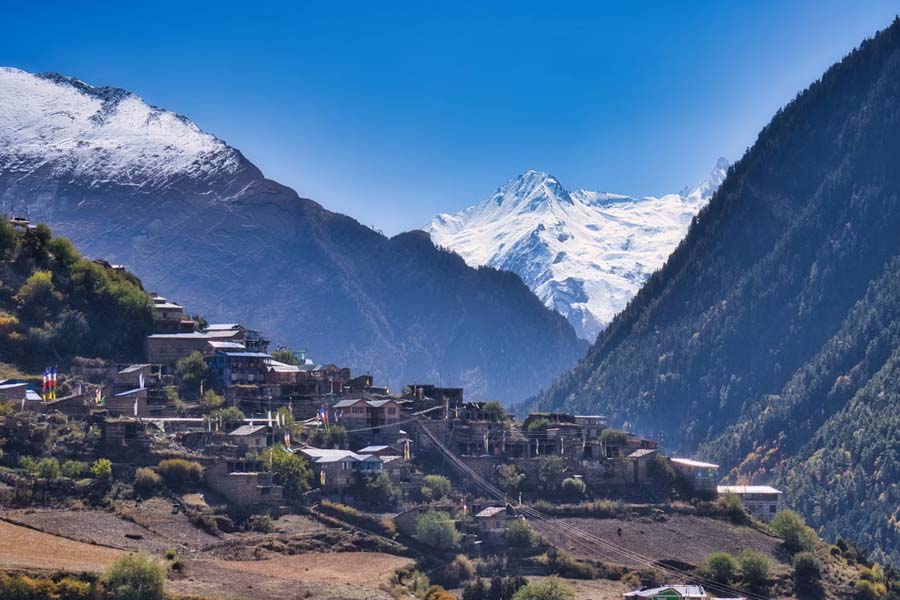
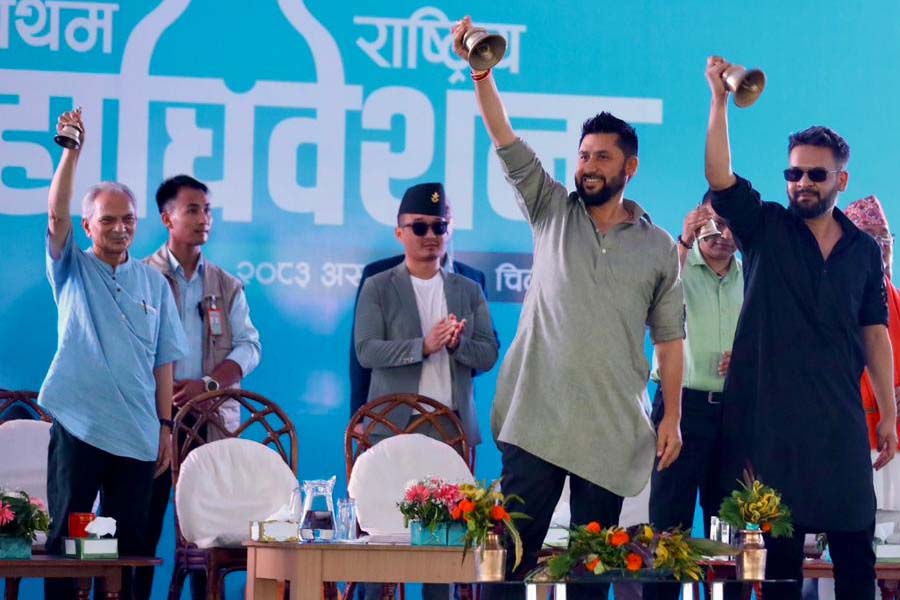
Government officials and investors attending Nepal's Investment Summit, where 151 projects are being showcased to attract foreign direct investment in energy, infrastructure, tourism, agriculture, and technology.
151 Projects at Investment Summit: Nepal Opens Doors to Foreign Investors
A total of 151 projects will be presented at the upcoming Third Investment Summit, which aims to attract foreign direct investment (FDI) into Nepal for the establishment of industries, factories, and other projects that contribute to economic development.
As adequate capital, technology, and human resources require collaboration among the government, private sector, and foreign investors, these projects—considered vital to the country's overall development—will be showcased during the summit scheduled for next Sunday and Monday in Kathmandu.
The 58th meeting of the Investment Board Nepal has decided to invite expressions of interest and hold detailed discussions with potential investors regarding these projects.
📋 INVESTMENT SUMMIT 2026 — PROJECT BREAKDOWN
- Total projects: 151
- Energy projects: 31
- Transportation projects: 19
- Mining and minerals: 13
- Tourism infrastructure: 13
- Agriculture: 14
- Private sector projects: 31
- Manufacturing: 5
- Industrial infrastructure: 7
- Urban development: 6
- Water supply: 4
- Health and education: 3
- Communication/IT: 2
The energy sector accounts for the largest share, with 31 projects included. According to Investment Board spokesperson Pradyumna Prasad Upadhyay, the projects include 19 transportation projects, 13 mining and mineral projects, 13 tourism projects, 14 agriculture projects, five manufacturing projects, seven industrial infrastructure and trade projects, three health and education projects, two communication and information technology projects, four water supply projects, and six urban development projects.
In addition, 31 projects proposed by the private sector have also been included for foreign investment promotion.
🏔️ ANNAPURNA: THE NUMBERS THAT DEFINE THE REGION
⚡ HYDROPOWER CAPACITY (MW)
📊 TOURIST ARRIVALS
↑ 58.7% increase
🇮🇳 INDIAN TOURIST SURGE (JESTHA)
📋 INVESTMENT SUMMIT 2026 — SECTOR BREAKDOWN
31 Energy
19 Transport
13 Tourism
14 Agriculture
13 Mining
Total: 151 projects
🗣️ THE VOICES OF ANNAPURNA
Avin Chochangi (Local resident):
"Previously, Mistrikhola was rich in fish and frogs, but after the water level dropped, they have disappeared."
Ward Chairperson Lok Bahadur Fagami:
"Hydropower has brought road access and opportunities. But fish have disappeared, water sources have dried up, and wildlife is no longer seen in nearby forests."
Dr. Rabin Kadariya (ACAP Project Chief):
"In Jestha alone, Indian tourists increased by nearly 300 percent. This is the first time such a large number of Indian tourists have visited the region."
💰 ROYALTY REVENUE GROWTH
🏔️ THE FINAL VERDICT: PROGRESS OR DESTRUCTION?
✅ WHAT PROGRESS HAS BROUGHT:
- 176 MW hydropower operational
- Roads, bridges, infrastructure
- Land prices up to Rs 3.5 million/ropani
- Record 441,422 tourists
- National grid to ABC trek route
- Rs 17 million royalty revenue
⚠️ WHAT HAS BEEN LOST:
- Fish disappeared from Mistrikhola
- Asala fish — Rs 1,500-1,700/kg — gone
- Traditional water sources drying up
- Wildlife abandoning nearby forests
- Hot springs potentially threatened
- Environmental monitoring inadequate
"The Kali Gandaki roars through the gorge. The Mistrikhola trickles. In Annapurna, the contrast could not be starker. Six hydropower projects, 176 MW, and a booming tourism industry have brought prosperity where there was once isolation. But the rivers are paying the price. Fish have disappeared from Mistrikhola. Water sources are drying up. Wildlife is vanishing. As Nepal presents 151 projects at the Investment Summit, the question is clear: Can development and sustainability coexist? Or will the turbines keep turning until the rivers run dry?"
— Annapurna Analysis
Stay updated with Nepal's development, tourism, and environmental news on our Nepal Pulse Page.