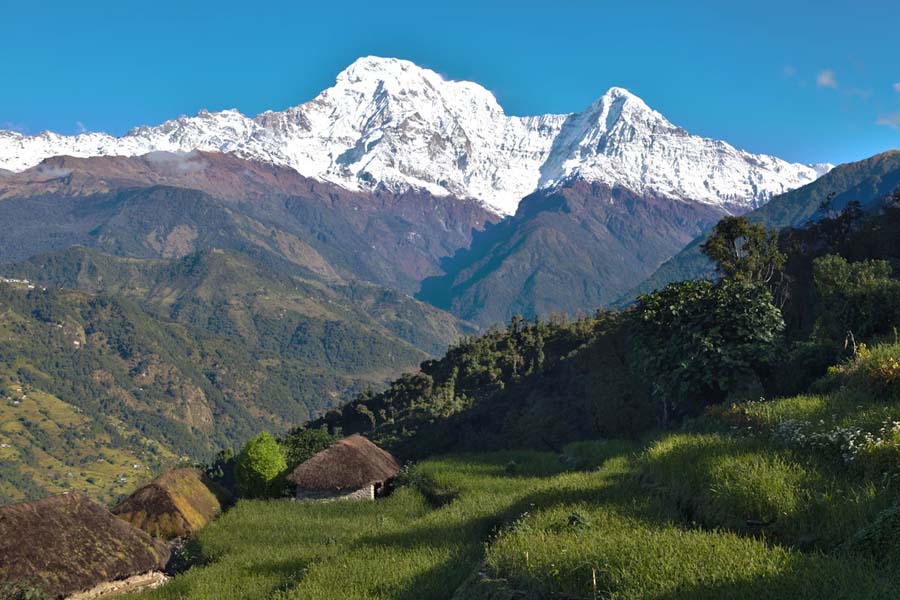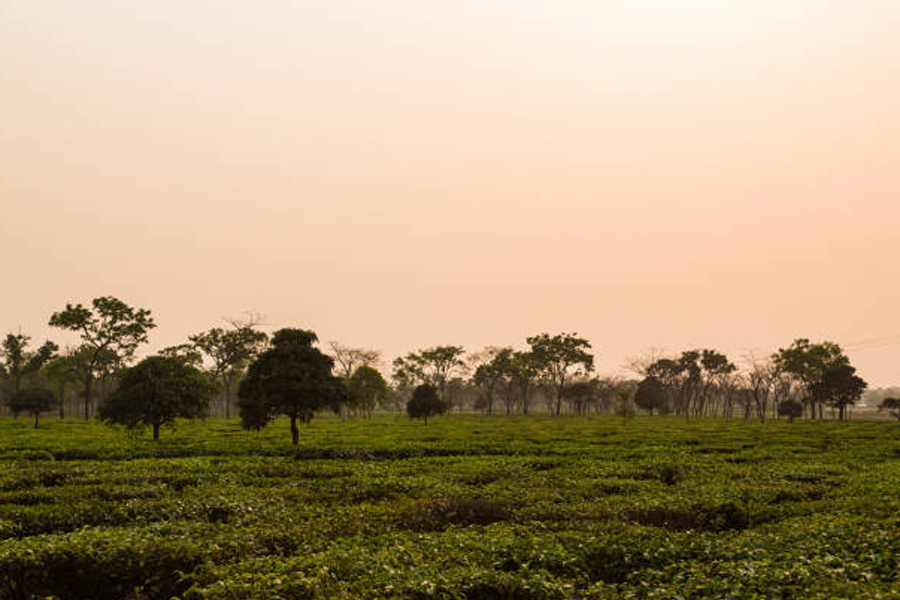
Jhapa tea estate in eastern Nepal near Kakarvitta border town connecting Nepal and India. The region's tea industry faces an existential crisis as all 32 tea factories in Jhapa are set to shut down from Thursday, putting nearly 60,000 jobs at risk.
18 June 2026 | Jhapa, Ilam, Kathmandu — Updated 12:30 GMT
The kettle is boiling. But no one is pouring.
All tea factories in Jhapa are set to shut down from Thursday. Thirty-two processing industries. Nearly 60,000 workers and employees without jobs. A NPR 12-14 billion industry grinding to a halt.
This is not a weather event. This is not a market fluctuation. This is policy paralysis — plain and simple.
India's new Standard Operating Procedure (SOP) on tea imports has effectively blocked Nepali tea from entering the market. Since June 15, all 53 orthodox tea factories in Ilam have remained closed. Now, Jhapa is next. And the government? It's still consulting, still studying, still promising action — while the tea goes cold.
Farmers haven't been paid. Workers haven't seen wages in three months. Exporters are stuck with millions of kilograms of unsold tea. Laboratory tests take 20-25 days. Storage costs are mounting. And if a shipment fails? Destruction.
In Birtamod, 170 workers at the Giribandhu Tea Estate haven't been paid since February. Shopkeepers have stopped providing food on credit. Families are struggling to meet basic needs.
Yet, amid the crisis, there is irony. International demand for Nepali tea is at an all-time high. Buyers from India, China, and France are placing orders — but Nepal cannot supply. Production has declined. Exporters can't meet demand.
And while the industry collapses, Agriculture Minister Gita Chaudhary announces plans to "expand the tea market and support young and women entrepreneurs." Noble words. But hollow when the industry is on its knees.
If the government does not act now, Nepal's tea sector — one of the country's most important agricultural export industries — will not survive. And 60,000 families will pay the price.
🍵 NEPAL TEA CRISIS — THE NUMBERS: 32 factories closing in Jhapa • 53 factories already closed in Ilam • 60,000 workers at risk • NPR 12-14 billion annual trade • NPR 5 billion in annual exports to India • 20-25 day testing delays • 8,876 farmers in Ilam alone • 7,236 hectares under tea cultivation • 171 tea estates nationwide • 120 small/medium processing centers • NPR 4.59 billion annual export earnings.
'All Factories to Shut': Jhapa Joins Ilam in Tea Industry Collapse
All tea factories in Jhapa are set to shut down from tomorrow (Thursday), a move that could leave nearly 60,000 workers and employees without jobs. The district is home to 32 tea processing industries, including one government-owned factory and four cooperatives.
According to Aditya Parajuli, Central President of the Nepal Tea Producers Association, the closure has been forced by serious disruptions to Nepali tea exports caused by a new Standard Operating Procedure (SOP) implemented by the Indian Tea Board and India's Department of Commerce following a joint meeting held on May 12.
The impact of the Indian policy has already been felt in eastern Nepal. Since June 15 (Asar 1), all 53 orthodox tea factories in Ilam have remained closed due to difficulties in exporting tea to India.
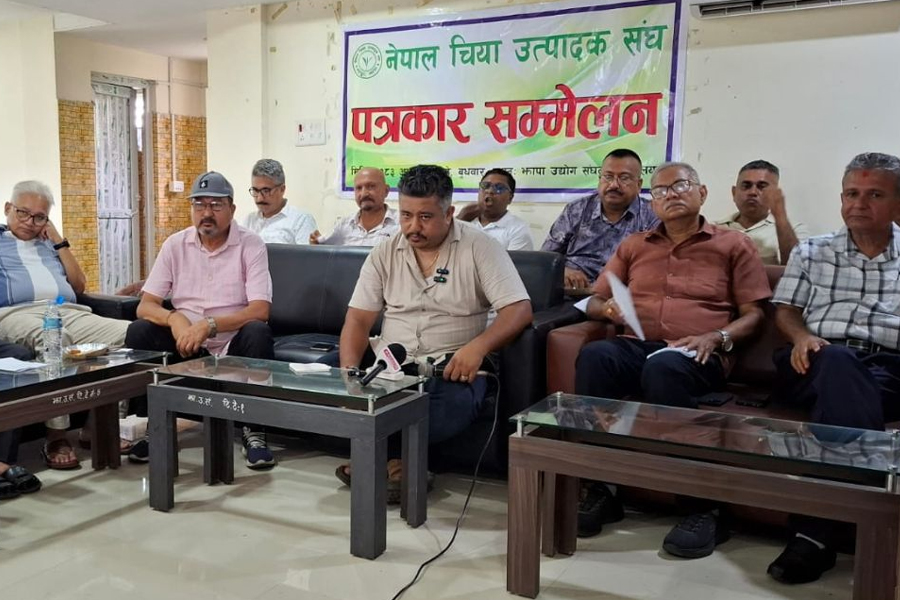
Speaking at a press conference organized by the association on Wednesday, President Parajuli said Nepal's annual trade in CTC and orthodox tea is worth approximately NPR 12 to 14 billion. Of this, tea exports to India generate around NPR 5 billion in foreign exchange earnings each year.
"The tea industry directly provides employment to around 60,000 workers and staff," Parajuli said.
He explained that the new Indian SOP has created major barriers for Nepali tea exports by introducing extensive quality-testing requirements, complicated procedures, and strict storage regulations.
🏭 FACTORY SHUTDOWNS — KEY FACTS
- Jhapa factories closing: 32 (from 19 June)
- Ilam factories already closed: 53 (since 15 June)
- Total factories affected: 85
- Workers at risk: 60,000
- Annual tea trade: NPR 12-14 billion
- Annual exports to India: NPR 5 billion
- Testing delays: 20-25 days
"It has already been one and a half months since tea exports from Nepal to India have effectively stalled," he said.
Under the new rules, even processed tea that has already crossed customs checkpoints must be stored in warehouses designated by Indian buyers. The Indian Tea Board collects samples from these shipments for testing, and laboratory reports can take between 20 and 25 days to arrive.
Industry representatives argue that prolonged storage during the testing period is damaging tea quality. Furthermore, if laboratory reports indicate quality issues, the tea may be destroyed under the new regulations, which producers describe as impractical and unfair.
— Aditya Parajuli, Central President, Nepal Tea Producers Association
Parajuli said the new policy has created uncertainty over whether Nepali exporters will receive payment for tea already shipped to India. Tea producers are also required to bear warehouse rental costs during the testing period.
As tea inventories continue to pile up, factories are struggling to pay tea farmers for green tea leaves, settle electricity bills, and meet Value Added Tax (VAT) obligations on time.
Shiv Kumar Gupta, Senior Vice President of the Nepal Tea Producers Association, warned that tea factories would remain closed unless the government takes immediate action to address the crisis facing the sector.
Meanwhile, the association has formally urged the Government of Nepal to intervene and seek a solution to the export difficulties. A delegation led by President Aditya Parajuli submitted a memorandum through the District Administration Office in Jhapa, calling for urgent government action.
'No Food, No Money': Giribandhu Tea Workers Unpaid for Three Months
Workers at the Giribandhu Tea Estate in Birtamod have complained that they have not received their wages for the past three months and have sought intervention from the Labor Office, District Administration Office, and the municipality. The tea estate currently employs around 170 permanent workers in its tea gardens and processing factory.
Giribandhu Tea Estate operates tea plantations and a factory in Birtamod-6 and Arjundhara-11. Workers said they were forced to approach government authorities after estate management ignored repeated requests for the payment of overdue wages.
On Monday, the workers submitted a memorandum to Birtamod Mayor Pabitra Mahatara Prasai and Deputy Mayor Nagendra Prasad Sangraula, urging them to help ensure the payment of their salaries.
Sai Kumar Rai, Central Vice President of the Nepal Agricultural and Plantation Workers Union, said tea workers have not been paid since Falgun 2080 (February–March 2024).
"The workers are facing severe hardship after going months without wages," Rai said. "Local shopkeepers have even stopped providing food and daily necessities on credit."
Most workers live in basic housing provided within the tea estate. Labor leader Narayan Darji said the government must take the issue seriously, as many workers have no alternative source of income and are struggling to meet basic needs.
According to the workers, management had previously paid wages on a fortnightly basis. Despite the suspension of payments, employees have continued to report for work regularly. However, when they ask for their wages, management has allegedly continued to ignore their concerns.
— Sai Kumar Rai, Central Vice President, Nepal Agricultural and Plantation Workers Union
The workers have already submitted memorandums to the District Administration Office in Jhapa and the Labor Office in Bhadrapur, requesting assistance in securing their unpaid wages. They have warned that they may be forced to launch protests if the issue is not resolved.
Giribandhu Tea Estate Manager Sant Kumar Rai acknowledged that the company has been unable to pay workers due to financial difficulties. He stated that the estate has been operating at a continuous loss and that no viable solution has yet emerged.
Sulabh Shrestha, Chief of the Labor Office in Bhadrapur, confirmed that workers had approached the office with complaints regarding unpaid wages.
"The workers came to our office with their concerns," Shrestha said. "We have already sent a formal written notice to the management, urging them to pay the outstanding wages."
The dispute highlights the growing financial challenges facing parts of Nepal's tea industry and the impact such difficulties can have on workers who depend entirely on plantation employment for their livelihoods.
Irony of the Crisis: International Demand Soars as Production Collapses
Although international demand for processed tea produced in Ilam remains strong, production has declined this year, according to tea industry stakeholders. Buyers from countries including India, China, and France continue to place significant orders for Ilam's specialty teas.
Sharad Subba, a tea entrepreneur from Biblyante, Ward No. 5 of Ilam Municipality, said that foreign buyers had requested 2,000 kilograms of specialty tea this year. However, due to lower production, only 1,500 kilograms can be supplied.
"There is particularly high demand in international markets for processed tea made from tea buds," Subba said. "Buyers often send payment in advance and place bookings based on their requirements. Unfortunately, because production has fallen, we are unable to meet export demand."
Subba noted that the international tea market, which slowed significantly during the COVID-19 pandemic, has gradually recovered. This year, demand from third-country markets has increased considerably.
Dinesh Shrestha, manager of the Threejure Tea Factory, said the company exported 2,000 kilograms (20 quintals) of processed tea, including varieties such as Golden Black Tea and Green Tea, to France this year. The factory produced approximately 1,300 kilograms of processed tea last year.
Shrestha also highlighted that Threejure Tea won a Grand Gold Award at an international Tea Expo held in China last year. Following that recognition, international demand for the factory's products has grown further.
Similarly, Greenhill Tea Industry exported 8,000 kilograms of processed tea this year to India and other international markets, according to company owner Tank Dahal.
"We have not been able to provide the quantity of high-quality tea demanded by buyers," Dahal said. "Green tea leaf production has been lower than last year, making it difficult to fulfill market requirements."
📊 TEA EXPORT STATISTICS
- Exports through Mechi Customs (last fiscal year): NPR 3.16 billion
- Total tea exported: 13.43 million kg
- Domestic consumption: ~10% of production
- Exported to third countries: ~20%
- Exported to India: ~70% (majority)
- Ilam tea farmers: 8,876
- Tea cultivation area in Ilam: 7,236 hectares
Dahal stated that Greenhill produced 55,000 kilograms of processed tea last year, but output is expected to decline to between 40,000 and 42,000 kilograms this year.
According to the Mechi Customs Office in Jhapa, processed tea worth NPR 3.16 billion was exported through the customs point during the last fiscal year. A total of 13.43 million kilograms of tea was exported during the period.
The National Tea and Coffee Development Board reports that approximately 10 percent of Nepal's tea production is consumed domestically. Around 20 percent is exported to third countries, while the remaining majority is exported to India.
Indra Prasad Adhikari, an Agricultural Development Officer at the board, said changes in weather conditions have resulted in lower green tea production this year compared to last year.
The board is planning new programs to encourage organic tea production by providing farmers with training, technical assistance, and additional incentives.
"Last year, we improved livestock sheds for 1,300 farmers," Adhikari said. "Alongside shed improvements, we have been helping farmers properly manage organic manure produced from livestock waste. Subsidy programs for tea exports are also being implemented."
Adhikari explained that international demand for Nepalese tea was relatively limited in the past but has increased significantly due to improved promotion and marketing efforts. He expressed confidence that production will continue to grow in the future, as buyers from third countries are offering better prices, encouraging both tea producers and farmers.
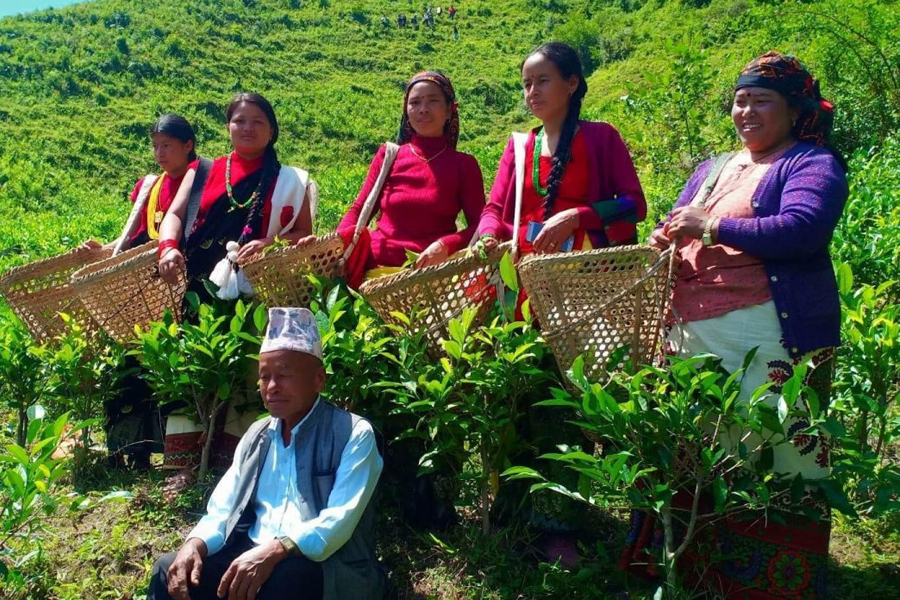
Baglung Resh tea garden attracting tourists as an alternative to Ilam tea gardens. A newly developed tea garden in Baglung's Resh has become a growing tourism destination, allowing visitors to experience tea plantations closer to home — a bright spot amid the industry's crisis.
Silver Lining: Baglung's Tea Garden Becomes Tourism Destination
A hillside that was covered with invasive weeds just five years ago has now been transformed into a thriving tea garden. Commercial tea cultivation has been introduced on land owned by Janakalyan Secondary School in Tingring, Resh, Ward No. 7 of Kathekhola Rural Municipality, Baglung.
Since the barren slope was converted into a lush tea plantation, domestic tourists have begun visiting the area. According to Ward Chairperson Prem Lamichhane, visitors now come to Resh to enjoy the tea gardens, take photographs, and share the scenic views on social media platforms such as Facebook and TikTok, eliminating the need to travel all the way to Ilam. Students and researchers also visit the site for educational and academic purposes.
"After Resh was selected as a Chief Minister's Environment-Friendly Model Agricultural Village, we started tea cultivation on a trial basis. Tea planted across 72 ropanis of school and public land is now ready for harvesting," Lamichhane said. "The cooperative has even started producing a branded tea product, which is offered as a souvenir to visitors."
Lamichhane noted that students from Baglung Bazaar regularly visit the tea gardens for educational tours and observation programs. To support growing tourism, the ward office is constructing roads, drinking water facilities, and other infrastructure leading to the plantation.
Plans are also being developed to connect tea tourism with the four community homestays operating in Resh. The ward office has assisted in purchasing tea-drying equipment, and discussions are underway with relevant stakeholders to establish a tea-processing industry as production continues to increase.
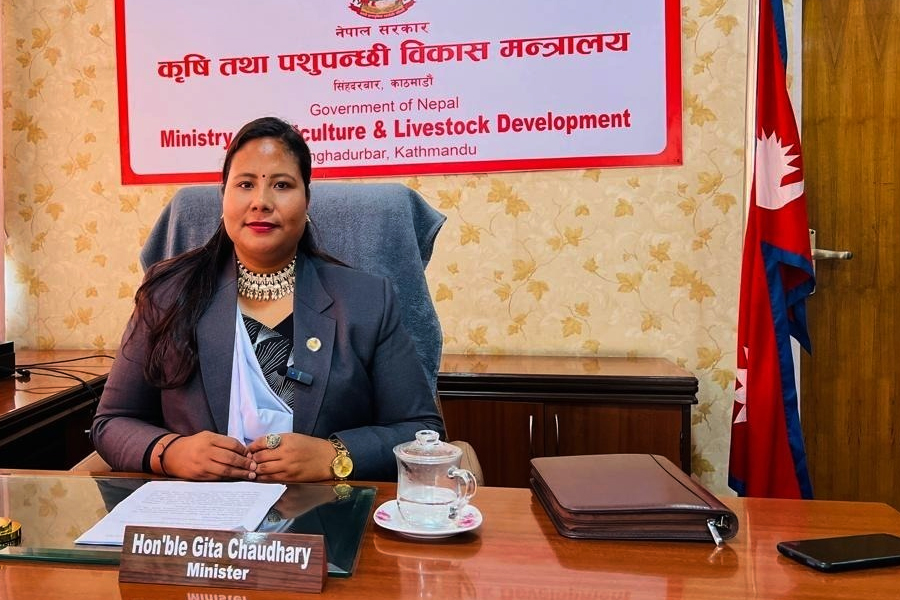
Minister Chaudhary announces plans to expand Nepal tea market and support young and women entrepreneurs. The government plans to increase investment in Nepal's tea sector, explore new markets, and encourage youth and women-led tea businesses — but industry leaders say action is needed now.
Government Promises Action — But Is It Too Late?
Minister for Agriculture and Livestock Development as well as Forests and Environment, Gita Chaudhary, has announced that the government will increase investment in the tea sector, identify new markets, and encourage young and women entrepreneurs in the coming year.
Minister Chaudhary stated that the government is committed to strengthening Nepal's tea industry through greater investment, market diversification, and targeted support for youth and female entrepreneurs.
Tea is one of Nepal's major agricultural export commodities. Tea cultivation has expanded across 31 districts of the country, and more than 15,000 farmers depend on the sector for their livelihoods. In addition, Nepal's tea industry, comprising 171 tea estates and around 120 small and medium-sized tea processing centers, has generated approximately 60,000 direct jobs.
At a time when Nepal's trade deficit continues to widen, tea exports contribute significantly to the national economy. Nepal currently exports tea worth approximately NPR 4.59 billion annually.
Despite numerous challenges facing the industry, Minister Chaudhary said that Nepalese tea has successfully established a strong presence in the global market. She credited this achievement to the relentless efforts of tea farmers, workers, cooperatives, industrialists, business owners, and other stakeholders involved in the sector.
According to the minister, continued collaboration among all stakeholders, along with government support and investment, will further strengthen the competitiveness of Nepalese tea in international markets and create greater opportunities for employment and entrepreneurship.
🍵 NEPAL TEA CRISIS: THE NUMBERS THAT DEFINE THE DISASTER
🏭 FACTORY CLOSURES
TOTAL: 85 factories affected
👥 WORKERS & EMPLOYMENT
Workers at risk
Farmers dependent
Farmers in Ilam alone
💰 ANNUAL EXPORT EARNINGS
⏱️ INDIA'S TESTING DELAYS
🗣️ THE VOICES OF THE TEA CRISIS
Aditya Parajuli (Nepal Tea Producers Association):
"Exporting Nepali tea to India has become nearly impossible. Indian buyers have stopped purchasing Nepali tea, forcing factories to shut down operations."
Sai Kumar Rai (Agricultural Workers Union):
"The workers are facing severe hardship after going months without wages. Local shopkeepers have even stopped providing food and daily necessities on credit."
Sharad Subba (Tea Entrepreneur):
"Buyers often send payment in advance and place bookings based on their requirements. Unfortunately, because production has fallen, we are unable to meet export demand."
🌟 BRIGHT SPOTS AMID THE CRISIS
Threejure Tea
Grand Gold Award (China)
International Demand
India, China, France
Baglung Tea Tourism
New destination emerging
🍵 THE FINAL VERDICT: WILL THE GOVERNMENT WAKE UP?
✅ WHAT THE INDUSTRY NEEDS:
- Immediate diplomatic intervention with India
- Removal of non-tariff barriers
- Repeal of per-truck testing requirement
- Worker wage protection and payment
- Export market diversification
⚠️ WHAT HAPPENS IF NOT:
- 85 factories remain closed
- 60,000 workers lose jobs
- NPR 12-14 billion industry collapses
- 15,000 farmers lose livelihoods
- Nepal loses its tea export market
"Thirty-two factories in Jhapa shutting down. Fifty-three already closed in Ilam. Sixty thousand workers facing unemployment. NPR 12 billion in annual trade at risk. And the government is still consulting, still studying, still promising action. Workers at Giribandhu haven't been paid in three months. Shopkeepers have stopped giving food on credit. Meanwhile, international demand for Nepali tea is at an all-time high — but Nepal cannot supply. The tea is growing. The workers are waiting. The factories are closing. The question is: Is anyone in Kathmandu listening?"
— Nepal Tea Crisis Analysis
Stay updated with Nepal's agricultural, trade, and economic news on our Nepal Pulse Page.