Nepal Budget 2082/83: Growth Plan or Fiscal Gamble?
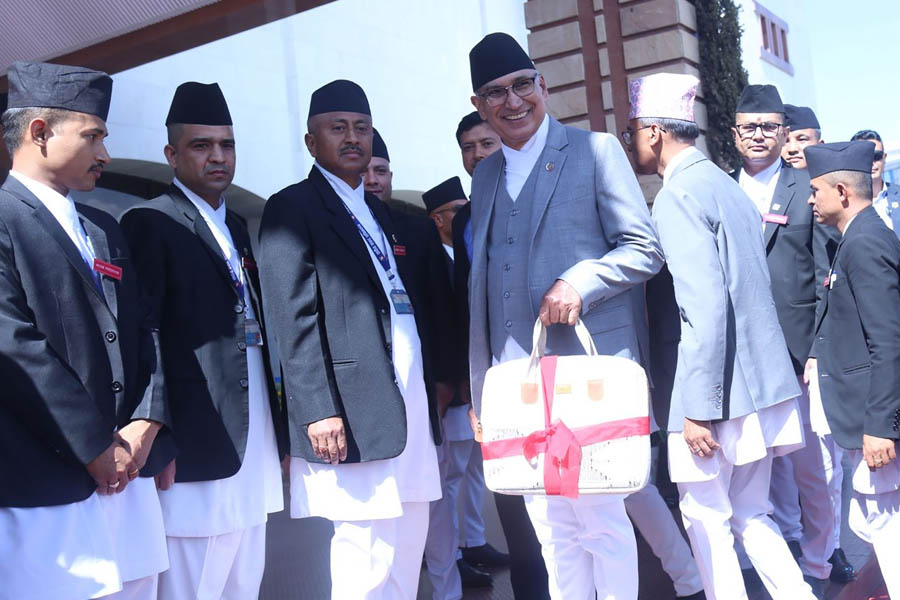
On May 30, 2025, Deputy Prime Minister and Finance Minister Bishnu Prasad Poudel presented a forward-looking budget for the fiscal year 2082/83. The plan outlines efforts to boost Nepal's credibility, secure its first sovereign credit rating, and attract much-needed foreign capital.
Public investment in profitable sectors, policy reforms, trade balance enhancement, promotion of domestic production & entrepreneurship, attracting skilled Nepalis abroad, and innovation-driven youth employment.
Challenges in Grants & Transfers
Despite NPR 4 trillion 8.83 billion being allocated, equalization grants remain stagnant. With NPR 148 billion allocated in equalization, conditional grants dominate at over NPR 200 billion—straining local governance. Rajendra Pyakurel of the National Federation of Rural Municipalities criticized the imbalance, emphasizing the need for a more flexible, empowering fiscal framework for local development.
Customs Duty Revisions and Trade Adjustments
New customs policies include reduced tariffs for SAARC nations and adjustments to regulate imports:
- Raisins (SAARC): 6%; Others: 10%
- Beet sugar: 6% (SAARC), 15% (Others)
- Sugar: Reduced to 15%
- Spirits & Beer: New fixed and percentage-based duties
Budget Size and Feasibility
The proposed budget of Rs 1964.11 billion faces a projected deficit of Rs 600 billion. Revenue targets aim for Rs 1480 billion, a 4% increase from the prior year, despite current collections lagging at 68.19%. Experts warn the targets may be overly optimistic, citing historical overestimation and current shortfalls in foreign grants and tax revenues.
EVs remain tax-exempt, a relief for consumers and advocates. However, there is criticism over the lack of innovative fiscal strategies to expand the tax base.
Urban Development Focus
With a boost to Rs 100.18 billion, the Ministry of Urban Development now oversees small political projects. Meanwhile, the Ministry of Physical Infrastructure sees minimal growth, raising concerns over fragmented planning. The Kathmandu-Terai Madhes Expressway receives just Rs 24.49 billion—far below its actual need. Analysts point out a severe gap between national priorities and actual budgetary allocations.
The Finance Minister claimed a drop of 4,600 projects, yet only 1,327 were logged in the Infrastructure Bank. This discrepancy raises red flags about planning transparency and data accuracy.
Alternative Development Financing & Development Budget Under Pressure
Plans to explore new financing models for energy, tunnels, and tourism sound promising, but execution clarity is missing. Without accountability, these ideas risk becoming hollow promises. Current and mandatory expenditures take the lion's share, limiting space for capital investment. Nepal faces increasing reliance on debt to cover gaps, pushing capital projects further out of reach.
Nepal's Budget 2082/83 sets a bold vision aimed at transforming the economy through strategic reforms, foreign investment, and enhanced public-private partnerships. The introduction of the sovereign credit rating is a landmark step intended to boost international confidence. However, the foundation appears fragile as projected revenues seem overly ambitious against the backdrop of underperformance in recent collections, and the reliance on debt continues to grow. While urban and infrastructure development receive attention, the underfunding of key national projects reveals a mismatch between policy vision and fiscal commitment. At the local level, fiscal federalism faces challenges due to the overemphasis on conditional grants at the expense of equalization, limiting municipal autonomy. Ultimately, while the document is ambitious and symbolic of a new economic direction, its success will depend on execution, accountability, and policy coherence across all levels of government.
Global Post Headline — Independent economic and fiscal analysis from Nepal. globalpostheadline.com