Devastating Nepal Floods: 148 Dead, 55 Missing, and Major Infrastructure Damage
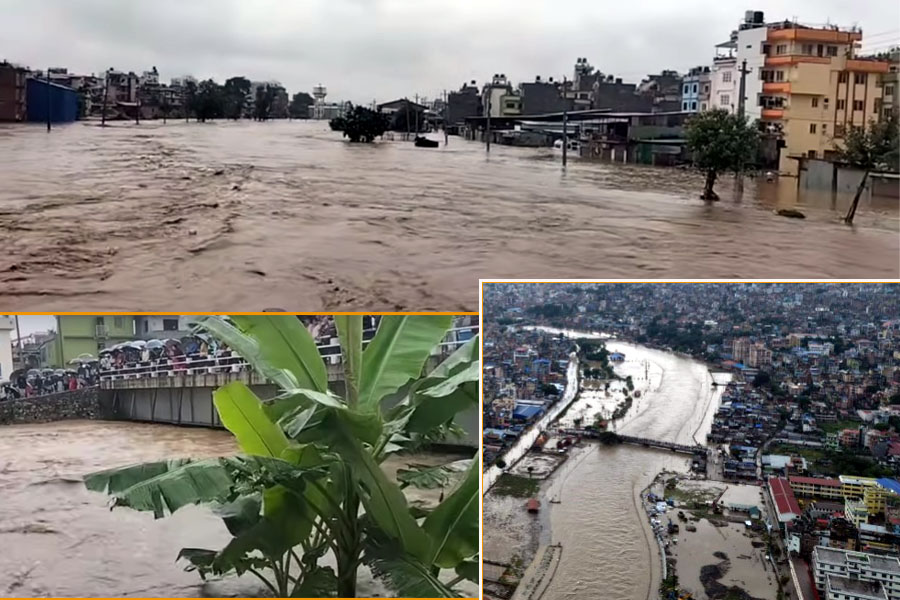
Kathmandu – In a heart-wrenching disaster that has gripped Nepal, floods and landslides caused by continuous torrential rains have resulted in the deaths of 148 people, with 55 still missing. The catastrophic events have not only claimed lives but also caused widespread destruction to infrastructure and disrupted the daily life of thousands of Nepalese.
According to Rishiram Tiwari, spokesperson for the Ministry of Home Affairs, the impact has been felt across the country. The hardest-hit districts include Dhading, where 38 people have lost their lives, followed by Lalitpur with 22 casualties, and Kavre with 29 fatalities. Kathmandu, the capital, has not been spared, with 16 deaths reported so far. Rescue efforts continue as 9,983 security personnel, including the Nepal Army and Armed Police, are tirelessly working on the ground, having rescued 3,661 people to date.
Floods Wreak Havoc on Infrastructure and Water Supply
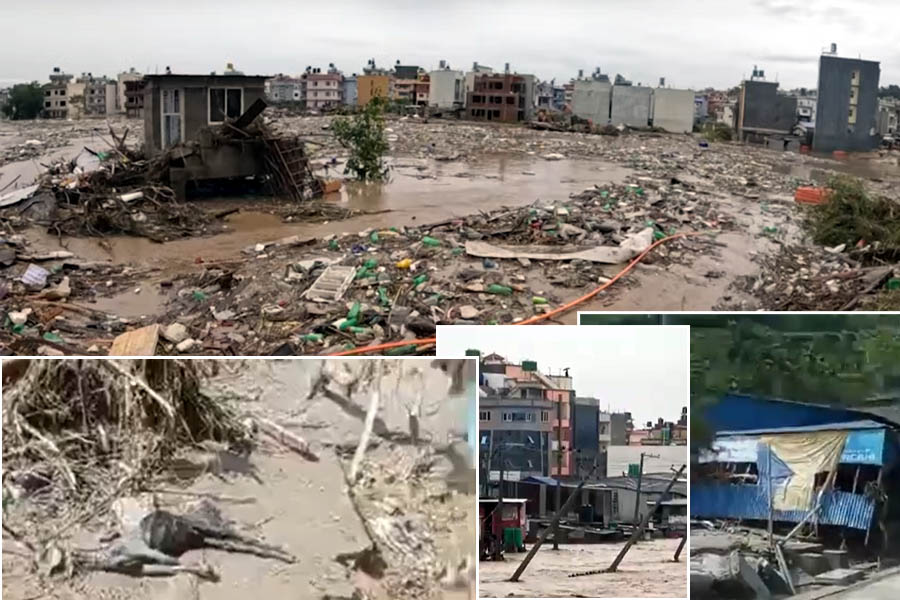
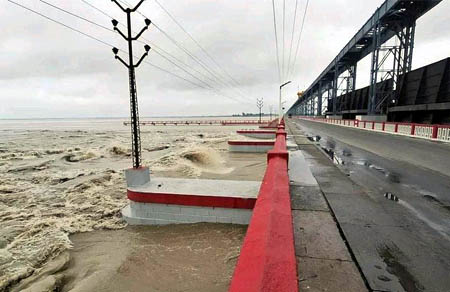
The heavy downpours have not only led to the loss of life but also dealt a devastating blow to infrastructure. Over 322 homes have been damaged, and 16 bridges have been washed away, cutting off vital transportation routes and leaving many communities isolated. Particularly in Kathmandu Valley, the water supply has been severely affected. The Ministry of Water Supply, led by Minister Pradeep Yadav, is working urgently to restore normalcy.
While authorities are racing against time to bring 40 million liters of water from the Bagmati River into the valley by Monday, only 1 million liters of underground water can currently be pumped due to flooded pumphouses. In Pharping, the rupture of a key penstock pipe has further complicated efforts, leaving thousands of households in distress.
Roads Cut Off, Vehicles Swept Away: A Nation in Crisis
The scenes of devastation extend beyond the capital, as landslides have ravaged several major highways. The vital Nepalthok-Khurkot road section has finally been reopened after being blocked for days, but only temporary diversions have been created, and the situation remains precarious.
In a particularly tragic event, 35 people were killed in a landslide that buried three vehicles in the Jhyaplekhola area of Dhading. The bodies of 25 men and 10 women have been recovered from the site, with rescue teams continuing to search for more victims. Security personnel unearthed the remains of entire families from the mud, their lives cut short in an instant.
Border Towns in Jeopardy: Tatopani and Kimathanka Closed Indefinitely
Border regions have also suffered immensely, with the Belybridge in Larcha, Sindhupalchok washed away, cutting off the Tatopani border post—a key trade route to China. Containers meant for trade with China are now stranded, leading to massive delays and financial losses. In another blow, the Kimathanka border crossing in Sankhuwasabha has been closed indefinitely after a landslide on the Chinese side.
Nepal's Hydropower Sector Struggles: Billions Lost in Damage
Nepal's hydropower sector, one of the backbones of its economy, has not been spared. Eleven operational hydropower projects, producing 625.96 MW, have been heavily damaged, causing a staggering loss of NPR 2.45 billion. Energy Minister Deepak Khadka confirmed that most power plants have had to shut down due to flooding, while ongoing projects with a total capacity of 1,010 MW have also suffered severe setbacks.
With major festivals such as Dashain, Tihar, and Chhath around the corner, the government is scrambling to ensure that essential services can be restored in time. The damage to power plants threatens electricity supply during the festive season.
A United Response: Government and Private Sector Join Hands
In response to the devastation, the Nepalese government convened an all-party meeting to discuss measures for relief, rescue, and rehabilitation. Chaired by Acting Prime Minister Prakashman Singh, the meeting resulted in a 9-point action plan aimed at ensuring the safety and recovery of those affected. From providing immediate shelter and medical care to the stranded and injured, to coordinating efforts to rebuild infrastructure, the plan calls for the entire country to unite in this time of crisis.
The government has also appealed to the private sector and common citizens to contribute to the Prime Minister's Disaster Relief Fund, underscoring that every bit of support is crucial to rebuilding a stronger Nepal.
Conclusion: A Nation Tested, But Unbroken
As Nepal grapples with the aftermath of one of the most severe monsoon seasons in recent memory, the resilience of its people shines through. Families, communities, and rescue teams continue to fight against the odds, with hope as their guiding light. While the road to recovery will be long and challenging, Nepal has weathered many storms before—and will emerge from this disaster stronger, united, and ready to rebuild.
Global Post Headline — Independent disaster and emergency coverage from Nepal. globalpostheadline.com