Nepal Weather Crisis 2024-2025: Record-Breaking Rains, 112 Deaths, 78% Flight Cancellations & National Emergency
28 September 2024 | Updated March 2026 | Disaster Coverage323mm rainfall in 24 hours — highest in 54 years — 112 confirmed deaths, 68 missing, over 1,300MW hydropower offline, and 78% of domestic flights canceled.
323mm
Rainfall in 24 hours
Highest in 54 years
112
Confirmed Deaths
78%
Flight Cancellations
1,300+MW
Hydropower Offline
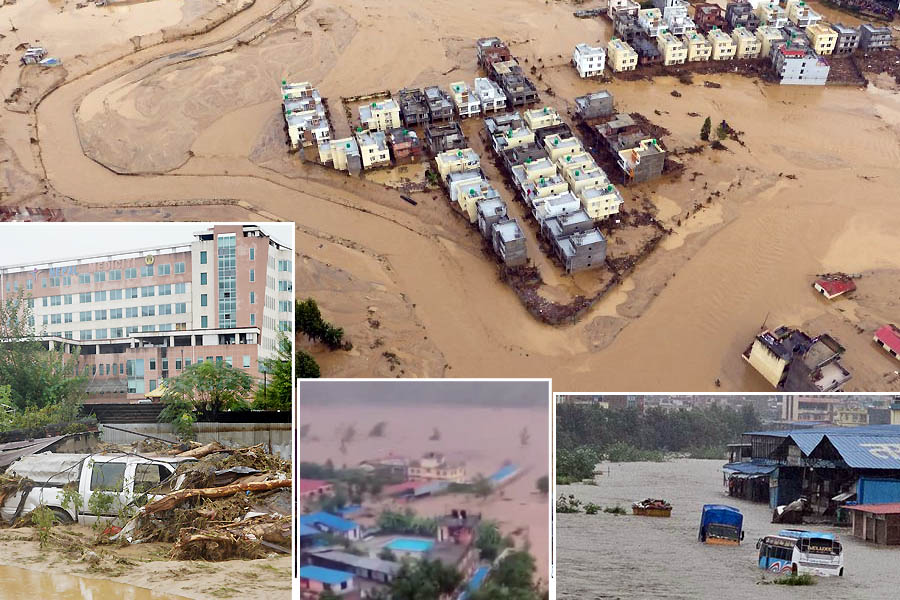
Nepal is reeling under the catastrophic effects of relentless rainfall that began on Friday, causing widespread devastation. The collapse of the Sunkoshi River embankment has submerged villages in Khurkot, Sindhuli, while homes along the highway remain perilously close to collapse. In one instance, families were stranded overnight in makeshift shelters as landslides buried the roads in the region. Vehicles filled with people, essential goods, and even livestock are stuck along key highways, including Naubise-Muglin and Araniko, cutting off transport in and out of the capital.
Kathmandu itself is on the verge of devastation, with surrounding cities like Patan-Lalitpur and Bhaktapur facing a similar fate as landslides and floods block roads and destroy infrastructure. As the capital braces for further chaos, daily life has ground to a halt, and critical supplies are running out.
Record-Breaking Rainfall and Tragic Losses
Saturday marked a grim milestone in Nepal's weather history, with the highest recorded rainfall in Kathmandu Valley in 54 years—323 mm in just 24 hours. The heavy rains led to floods and landslides that claimed 112 lives and left 68 people missing across the country. In the Valley alone, 37 people were killed, and 20 remain unaccounted for.
Disaster struck when a microbus traveling from Butwal to Kathmandu was buried in a landslide at Jhyaplekhola, near Dhading. Tragically, 14 passengers lost their lives. The calamity did not end there—rivers and streams in the Kathmandu Valley overflowed, submerging hundreds of homes and turning once-bustling streets into watery wastelands. Five people perished in the collapse of a concrete house in Pharping, while three more were buried alive in Ichangunarayan, near Swayambhu.
Rescue operations have been hindered by the sheer scale of the disaster. "Despite our efforts, we have been overwhelmed," lamented a security officer involved in the rescue. "We lacked the resources and equipment needed to deal with such a massive crisis."
Infrastructural Collapse
The rains brought not only death but also widespread destruction to Nepal's infrastructure. Landslides and floods damaged over 195 homes nationwide, and 64 road sections were blocked, cutting off vital routes to the federal capital. The Nagadhunga-Muglin, Dakshinkali-Sisneri, and Araniko highways, which serve as lifelines connecting Kathmandu to other parts of the country, have been rendered impassable by landslides. Thousands of travelers and essential supplies have been stranded in various districts.
Bridges, too, were swept away by the floodwaters. Among the destroyed crossings were the Bhotekoshi bridge in Sindhupalchok and Hewakhola bridge in Panchthar. The Ministry of Physical Infrastructure and Transport estimates the total damage to exceed 400 million rupees, with essential crossings severed.
A Nation in Darkness: Power Outages and Energy Crisis
Adding to the misery, Nepal's energy sector has been brought to its knees. Over 1,300 megawatts of electricity production has been halted, as several hydropower projects were either submerged or damaged by landslides. The 456 MW Upper Tamakoshi Hydropower Project, Nepal's largest, was completely shut down, and the project's control room was destroyed. Transmission lines in key corridors such as Solu, Koshi, and Likhu have been knocked out, leaving the country without a substantial portion of its energy supply. The impact extends beyond Nepal's borders, halting the country's export of electricity to India.
Kulman Ghising, executive director of the Nepal Electricity Authority, expressed concern about the extent of the damage: "Exports to India have ceased, and the restoration of domestic power flow will take time due to the severe damage to both infrastructure and the transmission network."
Domestic Flight Chaos: 78% Cancellations Leave Travelers Stranded
Saturday witnessed a near-total shutdown of Nepal's domestic air travel. Out of 294 scheduled flights, a staggering 78% were canceled due to adverse weather conditions, leaving passengers stranded and exacerbating the crisis. Only 64 domestic flights managed to operate after being partially reopened post-4 pm on Saturday.
According to Jagannath Khanal, General Manager of Tribhuvan International Airport, Buddha, Yeti, and Shree Airlines conducted these limited flights between key cities such as Dhangadhi, Nepalgunj, Bhairawa, and Pokhara. The lack of weather improvement prevented flights to eastern Nepal from taking off. Many Buddha Air flights that were en route to Biratnagar, Janakpur, Simra, and Bharatpur on Friday were forced to return on Saturday.
Government Response & Support Measures
In response to the flight disruptions, the Ministry of Tourism and Civil Aviation has issued directives to international airlines. The ministry instructed these airlines not to levy additional fees for passengers unable to reach their international destinations due to the cancellation of domestic flights. Tourism Minister Badri Pandey convened a meeting with stakeholders, urging airlines to waive extra charges for affected passengers.
Additionally, the Ministry has called upon the Hotel Association of Nepal (HAN) to offer concessions and regular rates for hotels and meals to tourists stranded by flight cancellations. Private helicopter companies involved in rescue operations have also been instructed to provide charter flights at standard and concessional rates, ensuring no extra charges for those in need. Rafting companies across Nepal have been mobilized to provide manpower and equipment to aid in flood and rescue operations.
The Road Ahead: Recovery and Resilience
As the nation begins the arduous task of rebuilding, it is clear that Nepal must address its glaring infrastructural and governmental shortcomings. The recent rains have left a permanent scar on the landscape, but the resilience of the Nepali people shines through. If the government can take meaningful action to bolster disaster preparedness and recovery, Nepal may emerge stronger from this disaster. But for now, the wounds are fresh, and the road to recovery will be long.
More Nepal News & Updates