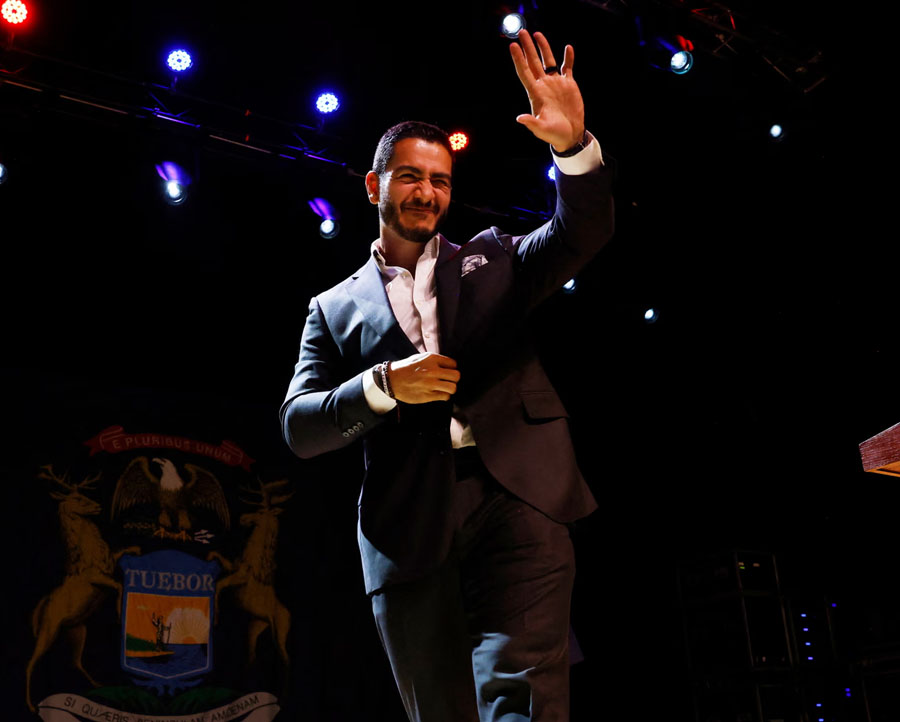
Detroit, Michigan – Leading Democrats quickly papered over whatever qualms they had about progressive candidate Abdul El-Sayed after his win in the Michigan Senate primary was confirmed on Wednesday, instead welcoming the former public health official as their champion against the Republican nominee, Mike Rogers.
The state is now key to Democrats' hopes of retaking control of the chamber in November's midterm elections. Winning in Michigan would put them on the path to snarling Donald Trump's legislative agenda and blocking his judicial nominees for the final two years of his presidency, while defeat could undermine their prospects of gaining a majority in the chamber for years to come.
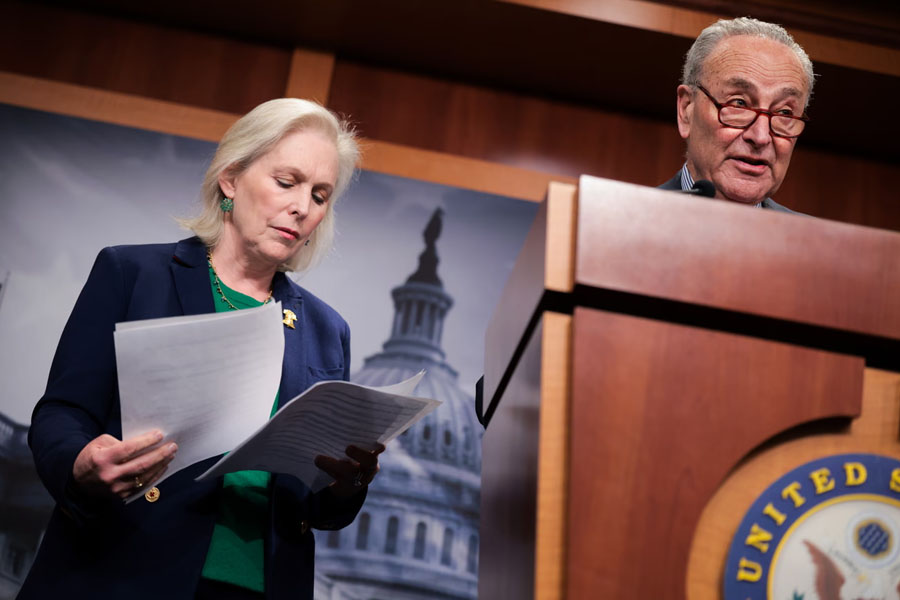
"Democrats are united by a common purpose: putting a check on Donald Trump by defeating his Republican enablers and taking back the Senate. We look forward to working with Abdul and Democrats across Michigan to win this seat in November," the Senate minority leader, Chuck Schumer, and Kirsten Gillibrand, who chairs the Democratic Senate campaign arm, said in a joint statement.
Key developments:
- Primary winner: Abdul El-Sayed defeats Haley Stevens in Michigan Senate Democratic primary
- Margin: Narrow victory – 48.5% to 47.5%
- Establishment support: Schumer, Gillibrand, Whitmer, Peters had backed Stevens
- Progressive wave: El-Sayed joins other leftwing candidates winning primaries nationwide
- General election: Will face Republican Mike Rogers in November
- Historic potential: Could become first Muslim US senator
- Outside spending: $70M+ from pro-Israel groups opposing El-Sayed
- Trump reaction: Called El-Sayed a "communist loser who hates Jews and Israel"
- Key issues: Medicare for All, Gaza, Palestinian rights
- Turnout: 1.2 million early voters, double 2024 primary
Schumer was among a long list of Democratic establishment figures who had rallied behind Stevens in the weeks before the vote, as polls showed her trailing El-Sayed. He ultimately prevailed but by a far slimmer margin than data indicated, winning by 48.5% to Stevens's 47.5%.
"There's a lot of passion and energy in these primaries, and that's a good thing. Democrats are ready to beat Republicans across the state," said Governor Gretchen Whitmer, who had endorsed Stevens.
"We're all united by our shared goal of getting things done for the people in Michigan."

What Michigan Means for Senate Control
The easiest path for Democrats to win back the Senate – which Republicans control with 53 lawmakers to their 47 – requires holding on to their seats in Michigan and Georgia while ousting Republicans from blue state Maine as well as three other red states.
Democratic leaders believe they have the right candidates to pull that off in North Carolina, Ohio and Alaska, but it will nonetheless be a tall order, given that all three states backed Trump in 2024, and the latter two by double-digit margins.
Party Leaders Rally Behind El-Sayed After Primary
Michigan's Democratic senator Gary Peters, whose decision not to seek re-election had sparked the primary for his seat, backed Stevens as his replacement but quickly endorsed El-Sayed after his primary.
"Both candidates ran strong campaigns focused on improving the lives of all Michiganders. But now it's time to come together as a party and rally around our nominee, Abdul El-Sayed, to make sure Mike Rogers never sees the floor of the US Senate," Peters said.
In a statement released following her loss, Stevens congratulated El-Sayed but did not outright endorse him, instead indicating she was ready to campaign for him as well as Democrats vying to win swing districts in Michigan.
Republican Attack Lines Against El-Sayed
Republicans meanwhile pounced on El-Sayed's views to paint him as too far left for voters in Michigan, a state that backed Trump in 2016 and again in 2024.
"The choice this November is simple: common sense or complete insanity," Rogers said. The former congressman blamed Democrats – who have held both of Michigan's Senate seats since 2001 – for job losses in manufacturing, while saying El-Sayed "doesn't represent a vision for the future. He's leading a movement grounded in ideological fanaticism."
Israel-Gaza Divide Defined the Primary Race
The question of aid to Israel animated the primary, with Stevens arguing Democrats should continue backing the US's top ally in the Middle East and El-Sayed calling for an end to military support in response to its actions in Gaza and the West Bank.
The United Democracy Project, a Super Pac connected to the American Israel Public Affairs Committee (Aipac), spent more than $30m in the race to support Stevens and oppose El-Sayed, to no avail, and he now joins others in Denver, New York City, New Jersey and Philadelphia in having wooed Democratic voters in part by vowing to stand up for Palestinian rights.
"Abdul's victory is a win for everyone who supports equality, justice, and a thriving future for all," said the IfNotNow Movement, a Jewish organization opposed to Israel's policy towards Palestinians.
"We urge those who see Abdul's support for Palestinian human rights and blocking weapons to Israel as a threat to our community to reconsider. It is incredibly dangerous to conflate Jewish safety with support for Aipac or Israel's military."
Brian Romick, president of the Democratic Majority for Israel Pac, called El-Sayed's victory an indicator that "there is clearly strong anti-establishment energy this cycle, but no one should count pro-Israel Democrats out."
"While El-Sayed's razor-thin victory in Michigan is disappointing, it was hardly the sweeping triumph he predicted or a mandate for his views," Romick said, noting that Stevens lost only narrowly.
Trump Celebrates El-Sayed's Victory
Trump celebrated El-Sayed's victory on Tuesday, claiming it was "great news" for Republicans in a post on his Truth Social platform. The president went on to call El-Sayed a "communist loser who hates Jews and Israel", despite the Democratic nominee's frequent denunciations of antisemitism.
"Now, the Dumocrats crazy policies will only get worse!" Trump wrote.
'We Took On a Machine': El-Sayed's Victory Speech
Shortly after 1am, when the race remained too close to call, El-Sayed took the stage at Detroit's Majestic Theater to Tupac Shakur's Changes, telling hundreds of supporters to stay patient as the votes were being counted.
Instead, he cast his contest with Stevens as proof that a grassroots campaign could compete against unprecedented outside spending.
"We're still standing," he told the raucous crowd, arguing Michigan voters were motivated less by ideological divides than by the rising cost of rent, groceries and healthcare.
"They spent an unprecedented amount of money to beat us," El-Sayed said at a press conference on Wednesday. "But it turns out the commercials are the part of the television show most people don't want to watch."
"We took on a machine. You're not supposed to be able to beat $70m of outside spending, a record amount of money spent in a campaign against a Democrat in a primary, in any campaign. You're not supposed to be able to beat that. And what we showed is that the power of our many is greater than the power of their money."
What This Means for the Democratic Party
El-Sayed, 41, is a former public health official who centered his run on the Medicare for All model of universal healthcare, while confronting heavy outside spending against him, which became another theme of the race. Stevens, meanwhile, touted her work on the US auto rescue taskforce, where she served as chief of staff.
Rogers, a former congressman from the state, was also the Republican nominee for US Senate in 2024, when he lost to Senator Elissa Slotkin.
Should he win in November, and beat Rogers in the general election in Michigan, El-Sayed could become the first Muslim US senator. While he is not a democratic socialist, his primary win came amid a wave of wins by democratic socialist candidates elsewhere in the country. He has said he is a "capitalist who understands how capitalism works", and who wants to regulate monopolies.
🗳️ The Big Picture
Abdul El-Sayed's narrow victory in the Michigan Senate Democratic primary marks the latest win for the progressive wing of the party, as the former public health official overcame more than $70 million in outside spending against him – a record for a primary campaign. The race exposed deep divisions within the Democratic Party over issues including aid to Israel, with El-Sayed's calls to end military support for Israel's actions in Gaza pitting him against establishment-backed Haley Stevens, who was supported by Aipac-linked groups. Now, party leaders including Chuck Schumer and Kirsten Gillibrand have quickly united behind El-Sayed, viewing Michigan as a critical seat in their fight to retake the Senate. But with Trump celebrating the progressive nominee as a "communist loser" and Republican Mike Rogers painting him as too far left, the general election battle in this key swing state promises to be one of the most closely watched races of 2026.
What's Next in the Michigan Senate Race
Key developments to watch:
- General election: El-Sayed vs. Mike Rogers in November
- Senate control: Michigan critical to Democratic majority hopes
- Progressive movement: Continued wave of leftwing primary wins
- Aipac influence: Future of pro-Israel spending in Democratic primaries
- Midterm elections: November 2026 will decide Congress control
🗳️ For more breaking political news and updates: Visit NewsOrbit – World Breaking News for the latest headlines from around the globe.