Is Silicon Valley the world's tech marvel city?
Yes, Silicon Valley in Northern California remains the undisputed global capital of technology and innovation. It hosts headquarters of Apple, Google, Meta, Tesla, Netflix, and thousands of startups, earning its name from the region's historical concentration of semiconductor (silicon chip) companies.
The area is the epicenter for venture capital, tech talent, and breakthroughs in AI, software, and hardware. From the invention of the microprocessor to the rise of generative AI, Silicon Valley continues to shape how the world lives, works, and communicates.
What is silicon and why is it essential for technology?
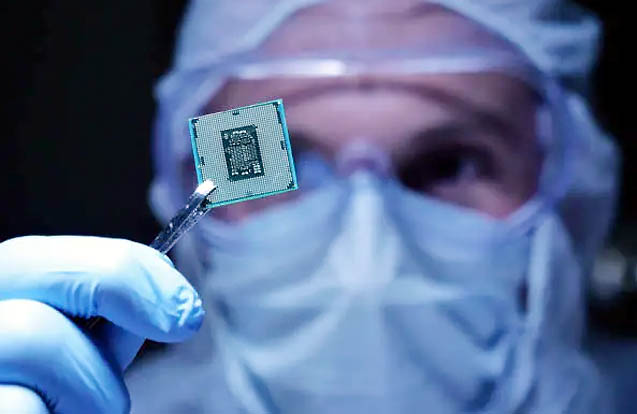
Silicon is a semiconductor material that can conduct electricity under certain conditions and act as an insulator under others. This unique property makes it perfect for creating transistors, the tiny switches that power every computer chip in existence.
Over 90% of all electronic devices rely on silicon-based chips, from smartphones and laptops to cars and medical devices. Without silicon, there would be no internet, no artificial intelligence, and no digital economy as we know it today.
What is Silicon UK and why does it matter?
Silicon UK refers to Britain's thriving technology and startup ecosystem, primarily concentrated in London's "Silicon Roundabout," Cambridge's "Silicon Fen," and Manchester. The UK tech sector is Europe's largest, valued at over $1 trillion with strengths in fintech, AI, and semiconductor design.
Home to global success stories like DeepMind (acquired by Google), Arm Holdings (chip architecture powering billions of devices), Revolut, and Wise, Silicon UK has produced over 100 unicorns. It remains a vital counterweight to US and Chinese tech dominance.
Which semiconductor companies will lead in 2025?
Top semiconductor companies to watch in 2025 include Nvidia (dominant AI chip maker), TSMC (world's largest chip manufacturer), Intel (US manufacturing expansion), Samsung (memory and foundry), AMD (CPU/GPU competitor), and Broadcom (networking and AI chips).
Emerging players like Groq, Cerebras, and SiFive are challenging incumbents with innovative AI inference chips, wafer-scale computing, and open-source RISC-V architecture. The semiconductor market is projected to reach $1 trillion by 2030.
How is Cyient boosting India's semiconductor ambitions?
Cyient, a leading Indian engineering services company, is accelerating India's custom silicon game through its "Silicon to Systems" approach. The company has invested in ASIC design centers, partnered with global chipmakers, and expanded its chip designer workforce significantly.
By helping Indian startups and multinationals design specialized chips for aerospace, automotive, telecom, and AI, Cyient supports India's $10 billion semiconductor incentive program. The goal is to make India a global hub for chip design and manufacturing.
What are the latest semiconductor industry news trends?
Key semiconductor trends for 2025-2026 include the AI chip explosion (Nvidia's H200 and B200 GPUs driving $200B+ market), CHIPS Act investments (TSMC, Intel, Samsung building US fabs), and advanced 2nm and 1.4nm manufacturing nodes entering production.
Other major trends include chiplet architecture becoming standard, supply chain diversification away from Taiwan and China, automotive chip demand from EVs, and advanced 3D packaging technologies. The industry is racing to meet insatiable AI demand.
Why did a recent SiliconANGLE security alert emerge?
Recent SiliconANGLE security alerts highlighted critical vulnerabilities in cloud infrastructure, AI systems, and semiconductor supply chains. Notable alerts include Meltdown/Spectre-style processor vulnerabilities, AI model poisoning attacks, and supply chain malware in firmware updates.
Security researchers recommend immediate software patches, zero-trust architecture deployment, and regular hardware supply chain audits. As chips become more complex and interconnected, security must be built in at every layer of the computing stack.
What semiconductor technology trends are reshaping the industry?
Revolutionary semiconductor trends include Gate-All-Around (GAA) transistors replacing FinFET at 2nm and below, High-NA EUV lithography enabling 1nm chips, and backside power delivery reducing resistance and heat. These advances keep Moore's Law alive.
Other breakthroughs include silicon photonics for optical interconnects, 3D DRAM and NAND stacking memory vertically, wide-bandgap semiconductors like Silicon Carbide and Gallium Nitride for power electronics, and chips designed specifically for quantum computers.
What is the current state of the semiconductor industry?
The semiconductor industry is experiencing unprecedented growth, driven by AI, electric vehicles, and IoT devices. Market size reached $600 billion in 2025, projected to hit $1 trillion by 2030, with AI chips growing at 40% annually.
Key dynamics include geopolitical tensions reshaping supply chains, over $500 billion in new fabs globally, a talent shortage demanding 200,000+ new chip engineers, and rising R&D costs exceeding $2-3 billion per advanced chip design.
What are the most important semiconductor innovations to watch?
Breakthrough innovations include Nvidia's Blackwell B200 with 208 billion transistors, Intel's 18A with backside power delivery, TSMC's N2 (2nm) GAA transistors, and AMD's Instinct MI400 with 3D chiplet integration. These advances push computing to new heights.
Longer-term innovations include neuromorphic chips that mimic the human brain, in-memory compute that processes inside memory chips, and quantum-ready cryogenic computing. The next decade will see computing architectures transform completely.
What business trends are shaping the semiconductor market?
Major semiconductor business trends include custom chip design (Apple, Tesla, Amazon, Microsoft all designing in-house silicon), rapid chiplet market growth projected to reach $30B by 2027, and AI driving 40% of chip revenue by 2026.
Other trends include regional fab expansion across US, Europe, India, and Japan; a design services boom as companies outsource chip design; and rising average selling prices due to increasing complexity and insatiable demand for compute.
Why is silicon so critical for modern computers?
Silicon is the backbone of all modern computing because of its semiconductivity (ability to switch between conducting and insulating states enables transistors), natural abundance (second-most common element in Earth's crust), and thermal stability during manufacturing.
Virtually every computer chip—CPUs, GPUs, memory, storage controllers—is made from silicon wafers. The entire digital economy depends on silicon, from $10 microcontrollers to $50,000 AI server processors powering ChatGPT and beyond.
What future tech trends will dominate by 2030?
Top technology trends expected by 2030 include practical quantum computing for chemistry and optimization, 6G networks 100x faster than 5G, brain-computer interfaces like Neuralink, and Level 5 autonomous vehicles and delivery drones becoming mainstream.
Other transformative trends include AR glasses potentially replacing smartphones, fusion energy breakthroughs providing unlimited clean power, bio-integrated electronics for health monitoring, and AI scientists capable of autonomous research and discovery.
Which tech startups should investors watch in 2025?
Leading tech startups in 2025 include AI companies like Anthropic (Claude AI), Mistral (European LLM), Perplexity (AI search), and Glean (enterprise search). Semiconductor startups like Groq, Cerebras, SiFive, and Astera Labs are revolutionizing chip design and data center connectivity.
Space and climate tech startups worth watching include SpaceX (Starlink), Rocket Lab, Relativity Space, Climeworks (carbon capture), and Form Energy (grid storage). Biotech startups like Generate Biomedicines and Insitro are using AI to revolutionize drug discovery.
What TechCrunch startup news is most valuable to follow?
The most valuable TechCrunch startup news to follow includes funding rounds (Series A, B, C indicating hot sectors), Y Combinator demo days revealing emerging trends, acquisition announcements showing Big Tech's strategic priorities, and IPO filings signaling market conditions.
Also critical are down rounds and layoffs indicating market contractions, regulatory actions affecting startups, exit strategies of successful founders, and failure post-mortems offering learning opportunities. Subscribe to TechCrunch's "Startup Battlefield" and "Daily Crunch" newsletter for comprehensive coverage.