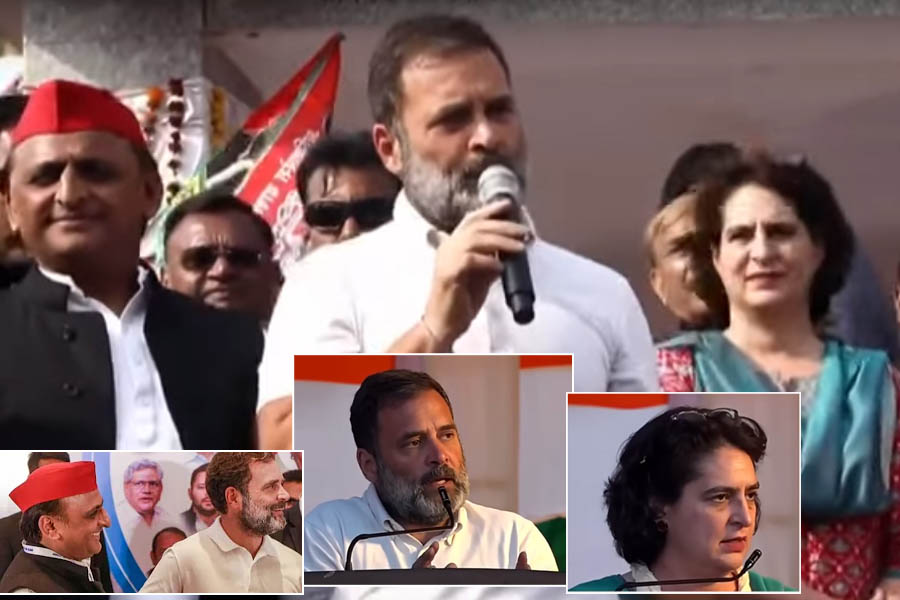
As the nation braces for the next electoral showdown, the question reverberating across the political spectrum is whether Rahul Gandhi can muster the strength to truly challenge Narendra Modi's dominance. This analysis examines the political landscape, Gandhi's efforts, and the challenges ahead.
The Modi Decade: BJP's Unprecedented Dominance
Over the past decade, Narendra Modi's ascendancy and the BJP's surge have been unmistakable. From a landslide victory in 2014 with 282 seats to an even stronger performance in 2019 with 303 seats, the BJP has reshaped India's political landscape. Their rise to power has been facilitated, in part, by the fragmentation and feebleness of the opposition. The lack of a cohesive counterforce has allowed the BJP to wield authority largely unchecked, often at the expense of dissenting voices and marginalized communities.
Modi's personal popularity remains a formidable asset. His approval ratings, consistently above 70% in many polls, make him India's most popular leader since Independence. The BJP's organizational machinery, financial resources, and ability to set the national agenda have created a juggernaut that opposition parties have struggled to counter.
Opposition Unity: The INDIA Alliance and Its Fractures
In response to this political landscape, opposition parties attempted to forge a united front under the banner of the Indian National Developmental Inclusive Alliance (INDIA), recognizing the imperative of presenting a unified challenge to Modi's hegemony. However, fissures within this coalition have begun to emerge, with key allies defecting and internal squabbles overshadowing collective objectives.
Seat-sharing disagreements, ideological differences, and leadership ambitions have strained the alliance. Regional parties like the Trinamool Congress (TMC) and the Aam Aadmi Party (AAP) have insisted on contesting solo in their strongholds, while the Congress has struggled to accommodate competing demands from partners in states like Uttar Pradesh and Maharashtra. The result is a fragmented opposition that may fail to consolidate anti-BJP votes.
- ⚠️ Seat-sharing disputes among INDIA alliance partners
- ⚠️ Lack of a singular opposition figurehead comparable to Modi
- ⚠️ Regional parties prioritizing state interests over national unity
- ⚠️ Congress's organizational weakness in key Hindi heartland states
Rahul Gandhi's Bharat Jodo Yatra and Aftermath
Amidst this disarray, the onus falls on the Indian National Congress, with Rahul Gandhi at the helm, to emerge as the principal contender against Modi and the BJP. Gandhi's recent endeavors, marked by the Bharat Jodo Yatra — a 4,000-kilometer march from Kanyakumari to Kashmir — have been a concerted effort to rekindle hope within India's opposition ranks. Travelling across the length and breadth of the country, Gandhi has sought to engage directly with voters, appealing to their aspirations and concerns.
The Yatra was widely seen as a turning point, reviving Congress's organizational morale and projecting Gandhi as a compassionate leader focused on bridging social divides. His message — emphasizing unity, tolerance, and economic justice — resonates with segments of the electorate disillusioned by the BJP's policies on religious polarization and governance. However, whether this translates into votes remains to be seen.
- 🏆 Uttar Pradesh (80 seats) — BJP's strongest state; opposition needs major gains
- 🏆 Maharashtra (48 seats) — Congress-NCP-Shiv Sena (UBT) alliance faces uphill battle
- 🏆 West Bengal (42 seats) — TMC vs BJP; Congress marginal
- 🏆 Bihar (40 seats) — Complex JD(U)-RJD-Congress dynamic
- 🏆 Karnataka (28 seats) — Congress's southern stronghold after 2023 assembly win
The Amethi Factor: A Cautionary Tale
Traditional bastions of support for the INC, such as the constituency of Amethi, have witnessed a shifting political landscape. Despite being a stronghold of the Gandhi family for decades — represented by Indira Gandhi, Rajiv Gandhi, Sonia Gandhi, and Rahul Gandhi himself — Amethi experienced a seismic electoral upset in 2019 when the BJP's Smriti Irani clinched victory. This setback underscores the urgency for Gandhi and the INC to reconnect with disenchanted voters and rebuild trust.
Gandhi's decision to contest from Rae Bareli in 2024 instead of Amethi signals a strategic recalibration. But the loss of the family's traditional seat — and the manner of defeat (by over 55,000 votes) — remains a psychological blow to Congress workers. Reclaiming Amethi and Rae Bareli is essential for any credible Congress revival narrative.
Leadership Critique: Is Gandhi Assertive Enough?
Critics argue that Gandhi's leadership lacks the assertiveness and conviction needed to galvanize widespread support. While his intentions may be noble, there is a palpable sense that more is required to invigorate the opposition and present a compelling alternative to Modi's governance. Voices from within the electorate echo these sentiments, emphasizing the need for Gandhi to articulate a clear vision and demonstrate unwavering commitment to addressing pressing issues, from unemployment to inflation, from farm distress to communal harmony.
Moreover, the absence of a singular opposition figurehead akin to Modi poses a strategic disadvantage. While Modi's persona looms large over Indian politics — his rallies draw massive crowds, his "chaiwala" to PM narrative resonates, and his social media presence is unmatched — the opposition has struggled to cultivate a comparable iconography. This void leaves a vacuum in the opposition's narrative, allowing the BJP to capitalize on Modi's cult of personality.
- 📊 "Modi remains the undisputed favorite; opposition needs a miracle" — Political analyst
- 📊 "Rahul has improved but lacks Modi's electoral machinery" — Election strategist
- 📊 "INDIA alliance could still surprise if seat-sharing works" — Opinion pollster
- 📊 "The economy and unemployment are Modi's vulnerabilities" — Economist
The Road to 2024: Scenarios and Projections
The efficacy of Gandhi's electoral gambit hinges on his ability to harness public sentiment and translate grassroots support into tangible electoral gains. As political discourse intensifies, conversations at tea stalls and street corners serve as barometers of public opinion. The demand for accountable leadership and substantive policy proposals underscores the electorate's hunger for genuine change.
Yet, Gandhi's task extends beyond mere symbolism and rhetoric. To mount a credible challenge to Modi, he must demonstrate resilience in the face of adversity, navigate the intricacies of coalition politics, and present a compelling vision for India's future. Success will require not only mobilizing support within traditional INC strongholds but also reaching out to new demographics and forging alliances across the political spectrum.
In the backdrop of escalating tensions and political maneuvering, the forthcoming elections represent a pivotal moment in India's democratic journey. As Gandhi traverses the campaign trail, the stakes are high, and the outcome remains uncertain. Whether he can emerge as a formidable adversary to Modi's dominance or fade into political obscurity will shape the contours of Indian politics for years to come. As the nation awaits the verdict of the electorate, one thing is certain – the battle for India's soul is far from over.
Global Post Headline — independent political analysis. globalpostheadline.com | Follow: India Desk | Politics Section