Israel's New Invasion of Gaza: Facing a Resilient Foe with Ties to Iran — A More Potent Hamas Than Ever Before
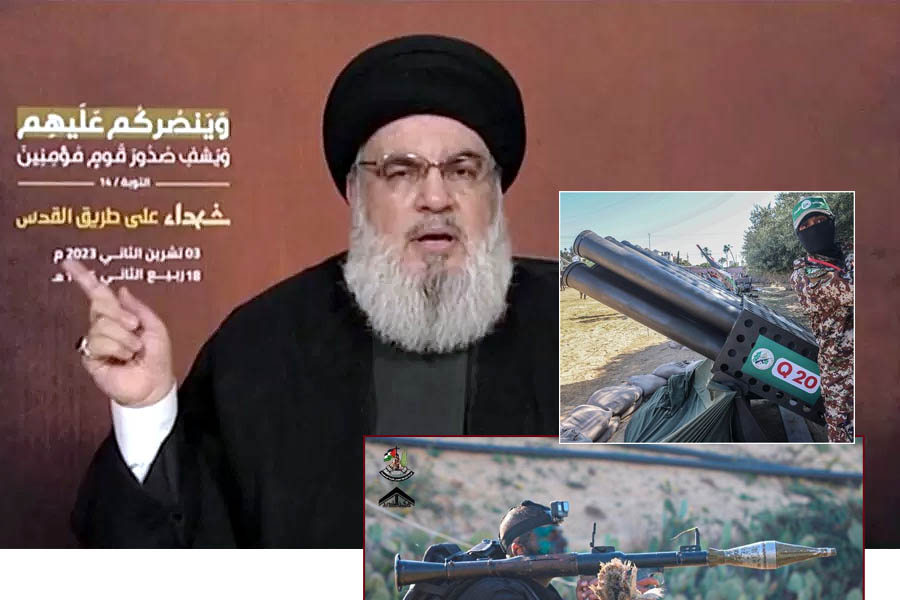
In the latest chapter of a long-standing conflict, Israel has launched a new invasion of the Gaza Strip, facing a formidable adversary in Hamas. Unlike the previous invasion nearly a decade ago (Operation Protective Edge, 2014), the Israeli military now confronts a more potent and resilient enemy, equipped with advanced weaponry and a close relationship with Iran. Since the operation began on October 27, 2023, Hamas has unleashed a barrage of attacks on the Israeli army, employing explosive-laden drones, anti-tank missiles, and high-impact rockets – the kind of weaponry that has transformed modern battlefields, reminiscent of developments in conflict zones like Ukraine.
Higher Casualty Rate: A Deadlier Conflict
The human cost of this ongoing operation is evident, with 26 Israeli soldiers killed in the first week of ground operations. Israelis are now dying at more than twice the rate seen during the 2014 invasion, where 67 lives were lost over seven weeks. The disparity reflects both Hamas's enhanced capabilities and the shift to close-quarters urban warfare. As of early November, total IDF casualties had exceeded 350 wounded, placing unprecedented strain on Israel's medical evacuation and trauma care systems.
Iran's Crucial Role: Training, Funding, Technology
At the core of Hamas' ability to respond effectively to this invasion lies its enduring relationship with Iran. Iran has continued to provide crucial financial support — estimated at $100 million annually — and technical expertise to the Palestinian militants. In the months leading up to the recent assault, hundreds of Hamas fighters reportedly traveled to Iran for military training, learning advanced guerrilla tactics and drone warfare techniques from the Islamic Revolutionary Guard Corps (IRGC). Iran has also facilitated technology transfers enabling Hamas to manufacture precision-guided rockets and anti-tank missiles locally.
Domestic Weapons Manufacturing Under Blockade
Avi Melamed, a former Israeli intelligence official, acknowledges that while he anticipates ultimate victory for Israel, the sophisticated arsenal in Hamas' possession indicates a protracted and challenging struggle. "Hamas is a military power that is significant thanks to Iran," Melamed said, emphasizing that they are "armed to the teeth." Hamas has utilized this expertise to develop domestic arms manufacturing capabilities, crafting weapons from materials available in the Gaza Strip, despite an Israeli and Egyptian blockade that has been in place since 2007. The group's rocket arsenal includes the Ayyash (250 kg warhead), the R-160 (150 km range capable of reaching Eilat), and locally produced loitering munitions ("suicide drones").
Deep-Rooted Popular Support
Hamas, unlike smaller groups like al-Qaeda, boasts deep-rooted support among the Palestinian population. Consequently, it presents a more formidable challenge for Israel. Even if a defeat deters Palestinians from joining Hamas, the Israeli offensive is likely to fuel anger and possibly lead to support for other armed groups such as Palestinian Islamic Jihad (PIJ), which also receives Iranian funding. Polls conducted in late October showed that Hamas's popularity had surged among Palestinians, with 57% expressing support for the group — a dramatic increase from pre-war levels. This popular legitimacy complicates any post-war security arrangement.
Advanced Guerrilla Tactics
Marwan Abdel-Al, a senior official in the Popular Front for the Liberation of Palestine, argues that Hamas and its allies are better prepared to counter an Israeli ground invasion than in the past. They have incorporated advanced guerrilla tactics inspired by groups like Iran's Islamic Revolutionary Guard Corps and the Russian Wagner mercenary group — including coordinated ambushes, sniper cells, and the use of improvised explosive devices (IEDs) placed in buildings rigged to collapse on entering Israeli forces. Hamas fighters have also been observed using civilian infrastructure — schools, mosques, and hospitals — as cover for launching attacks, exploiting Israeli rules of engagement designed to minimize civilian casualties.
The 'Gaza Metro': A Strategic Challenge
The extensive network of tunnels beneath Gaza is another critical aspect of Hamas' defense strategy. These tunnels, serving as underground cities, store fighters, fuel, weapons, and, since the recent invasion began, hostages. The tunnel network — estimated at 500 kilometers (310 miles) — is believed to be more sophisticated than the tunnels encountered in 2014, with concrete reinforcements, electrical systems, blast doors, and ventilation shafts. This tunnel network poses a significant challenge to Israel's military advantage, altering the dynamics of the conflict and neutralizing some of Israel's technological superiority in air power and surveillance.
Evolving Rocket Arsenal: Covering All of Israel
Hamas' ability to manufacture rockets over the past two decades has also evolved significantly. Their weaponry now includes missiles with a range of up to 150 miles (240 kilometers), effectively covering all of Israel — from Eilat in the south to Haifa in the north. While earlier efforts relied on smuggling rockets into Gaza, the recent conflict showcases their indigenous production capabilities, facilitated by Iranian technology transfers. Hamas's rocket arsenal is estimated at 15,000-30,000 projectiles before the war, including long-range rockets that can reach Tel Aviv, Jerusalem, and even Eilat.
Hezbollah on the Northern Border
Hezbollah, a powerful Iran-backed Lebanese militant group, has also been closely monitoring the conflict. Its leader, Hassan Nasrallah, has maintained a public silence but issued vague threats against Israel's actions in Gaza. Hezbollah's potential involvement could significantly escalate the situation and potentially lead to a broader regional conflict. Since October 8, Hezbollah has engaged in daily exchanges of fire with Israeli forces along the northern border, displacing over 80,000 Israelis from their homes. A full-scale Hezbollah intervention would overwhelm Israel's air defense systems and open a second front, dramatically complicating the war effort.
Humanitarian Toll and International Pressure
In response to the Israeli offensive, Hamas and its allies have engaged in a tit-for-tat exchange of fire, challenging Israel's security and contributing to the deteriorating humanitarian situation in Gaza. Over 9,000 Palestinians had been killed as of early November, according to Gaza's health ministry, with hospitals running out of fuel for generators, forcing medical staff to make heart-wrenching decisions about which lifesaving equipment can remain operational. As the death toll climbs and living conditions in Gaza deteriorate, there is growing international pressure for a ceasefire. The U.S. Secretary of State, Antony Blinken, arrived in Israel to discuss measures to minimize harm to civilians and address the dire humanitarian situation.
The situation remains highly fluid and unpredictable, with the consequences of this ongoing conflict extending well beyond the immediate battlefield. As the world watches, the hope for a peaceful resolution remains a distant aspiration, while the toll on civilians continues to mount on both sides.
Related Coverage: For ongoing updates on the Gaza war, visit our Middle East Breaking News page and Israel-Gaza War Hub.
Global Post Headline — independent Middle East coverage. globalpostheadline.com | Follow live: middle-east-breaking.php