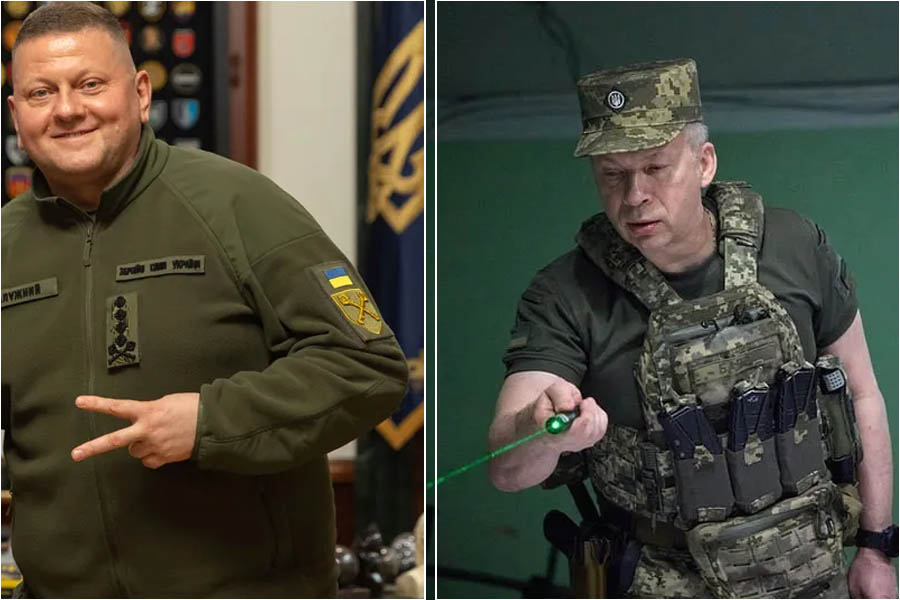
Ukraine's Military Shake-Up: President Zelensky's Bold Move Amidst Conflict — Zaluzhniy Dismissed, Syrskiy Appointed as New Commander
In a bold and decisive move amidst the escalating conflict with Russia, Ukrainian President Volodymyr Zelensky has made the monumental decision to dismiss General Valeriy Zaluzhniy, the esteemed commander-in-chief of Ukraine's armed forces. This decision, announced via video address on February 8, 2024, underscores the pressing need for military reform and strategic recalibration in the face of mounting challenges on the battlefield. The move marks the most significant leadership change in Ukraine's military since the full-scale invasion began in February 2022.
Zelensky's decision to remove Zaluzhniy reflects the recognition of systemic issues within Ukraine's military apparatus. The president highlighted the urgency for change to address the depleted manpower and equipment following a failed counteroffensive last year and increasing attacks from Russian forces. However, this bold move also carries significant political risk for Zelensky, given Zaluzhniy's widespread popularity and the perception of him as a potential political rival, despite never publicly expressing such ambitions.
In his place, Zelensky appointed Colonel General Oleksandr Syrskiy — the commander of Ukraine's ground forces who masterminded the successful defense of Kyiv in the early weeks of the 2022 invasion and the 2022 Kharkiv counteroffensive. Syrskiy, 58, is known for his aggressive tactics and willingness to take risks, characteristics that distinguish him from Zaluzhniy's more cautious approach.
⚔️ Why Zaluzhniy Was Dismissed: Strategic Differences
The president emphasized that the shake-up was not about personalities or politics but rather about effective management of the armed forces. This assertion underscores the gravity of the situation Ukraine faces and the necessity for strategic leadership in navigating the complexities of the ongoing conflict. However, reports indicate that Zelensky and Zaluzhniy had fundamental disagreements over military strategy, mobilization policy, and the pace of operations.
The most public point of tension came in November 2023, when Zaluzhniy described the war as a "stalemate" in an interview with The Economist — a characterization that Zelensky's office publicly rejected. Zelensky insisted that a breakthrough was still possible, while Zaluzhniy argued that Ukraine needed to focus on defensive operations and conserve resources. The disagreement reflected a broader divide between political and military leadership about the trajectory of the war.
Additionally, Zelensky was frustrated with what he saw as Zaluzhniy's reluctance to launch new offensives and his public criticisms of the government's mobilization efforts, which have been plagued by corruption and inefficiency. Zaluzhniy had called for the mobilization of up to 500,000 new soldiers — a politically explosive request that Zelensky resisted due to its economic and social costs.
🎖️ The New Commander: Colonel General Oleksandr Syrskiy
The appointment of Colonel General Oleksandr Syrskiy as Zaluzhniy's successor marks a critical juncture for Ukraine's defense. Syrskiy's assertive leadership style and operational experience come at a time when Ukrainian troops are facing a challenging defensive stance against Russian forces, particularly concerning artillery and manpower disadvantages. Syrskiy is widely credited with the successful defense of Kyiv in February-March 2022 and the stunning Kharkiv counteroffensive in September 2022 that recaptured thousands of square kilometers.
However, Syrskiy also oversaw the costly defense of Bakhmut, which resulted in heavy Ukrainian casualties and led to criticism from some soldiers who questioned the decision to hold the city for so long. He is known as a tough, no-nonsense commander who demands discipline and accepts high casualties to achieve objectives — a style that has both admirers and detractors within the ranks.
Concerns persist regarding potential disruptions and divisions within the military ranks following Zaluzhniy's dismissal. Zaluzhniy was beloved by soldiers and officers alike; his departure could demoralize troops who saw him as a competent leader untainted by politics. Zelensky moved quickly to reassure the military that there would be no purge of Zaluzhniy's subordinates, but the risk of fractures remains.
⚠️ Political Risks: Zaluzhniy's Popularity and the Threat of Rivalry
Moreover, the reorganization within the military hierarchy may pose challenges to operational effectiveness, particularly as Ukraine seeks to bolster its defenses against ongoing Russian aggression. As Ukraine braces for a prolonged struggle, Zelensky must navigate both military strategy and political fallout, with Zaluzhniy's departure potentially fueling further discontent or political ambitions among certain factions.
Zaluzhniy has enjoyed sky-high approval ratings throughout the war — consistently polling at 90% or higher, rivaling or even surpassing Zelensky's own popularity. Some Western analysts had speculated that Zaluzhniy could emerge as a political rival to Zelensky if the war were to end and elections were held. By dismissing him, Zelensky eliminates that potential threat but also risks creating a martyr and a focal point for opposition.
Zaluzhniy has not yet announced any political plans. In his farewell statement, he struck a conciliatory tone, thanking his soldiers and saying that "the tasks for 2024 are different from those of 2022." He has been offered the position of ambassador to the United Kingdom, which he has reportedly accepted — a move that would remove him from Ukrainian politics.
💪 Opportunities: A Strategic Recalibration
Nevertheless, amidst these challenges lies an opportunity for Zelensky to recalibrate Ukraine's approach to the war. By leveraging Zaluzhniy's dismissal to realign military objectives with broader strategic imperatives, Ukraine can enhance its resilience and determination in the face of unprecedented challenges. Syrskiy's leadership, with its emphasis on morale and operational flexibility, presents a potential catalyst for this recalibration, as Ukraine embarks on planning for the 2024 campaign.
Syrskiy has already signaled a shift in approach, emphasizing the need to "improve the quality of training" and "introduce new technologies" to compensate for manpower shortages. He is expected to focus on drone warfare, electronic warfare, and precision strikes rather than large-scale infantry assaults — a recognition that Ukraine cannot match Russia's manpower advantage.
Zelensky has also announced a broader review of military leadership, with several other commanders expected to be replaced in the coming weeks. The shake-up is designed to inject "new energy" into the armed forces and address the shortcomings that became apparent during the failed 2023 counteroffensive.
🔮 What's Next: The Path Forward
Ultimately, Zelensky's ability to navigate the complexities of war and politics will determine Ukraine's fate in the coming months. By demonstrating strategic clarity and unwavering resolve, Ukraine can emerge stronger and more resilient in the face of adversity, ready to confront the formidable challenges that lie ahead.
The leadership change comes at a critical moment. Russian forces have launched a new offensive in Kharkiv region, and the front lines are under pressure across the Donbas. Western aid is delayed, and Ukrainian troops are rationing ammunition. Syrskiy's first test will be to stabilize the front, restore morale, and make the case to Western allies that Ukraine can still win — or at least avoid defeat.
For Zelensky, the gamble is enormous. If Syrskiy succeeds, the president will be praised for making a difficult but necessary decision. If he fails, the blame will fall squarely on the president who dismissed a popular general. As the war enters its third year, Ukraine's leadership is betting that a shake-up is what the military needs to adapt to a new phase of the conflict. The coming weeks will reveal whether that bet pays off.
Related Coverage: For more on Ukraine's military and political situation, visit Ukraine's $40 Million Military Corruption Scandal and Ukraine's Winter Crisis: Damaged Power Infrastructure.
Global Post Headline — independent coverage of the Russia-Ukraine war and global geopolitics. globalpostheadline.com | Follow updates: War News | Politics

Experience the Himalayas with expert Sherpa guides. Trekking, expeditions, and cultural tours in Nepal, Tibet & Bhutan.
Plan Your Nepal Trip →
Authentic Nepali crafts, pashmina, singing bowls — worldwide shipping.