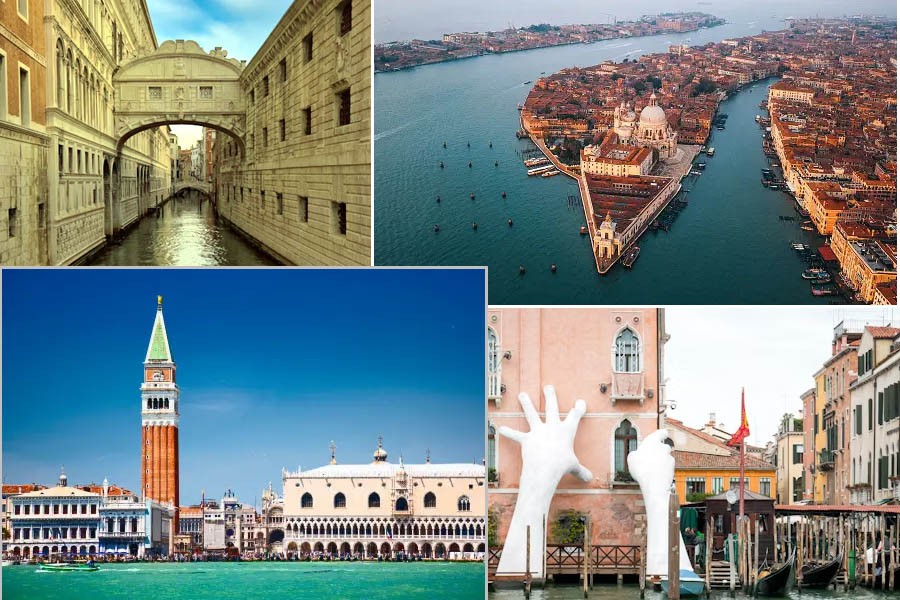
Unlocking Venice: A Bold Step Towards Preservation and Sustainability — City Launches Pioneering €5 Day-Tripper Access Fee to Combat Overtourism
Venice, Italy — April 24, 2024 — In a move that has captured the world's attention and sparked global debate about the future of tourism, Venice, the jewel of Italy, has officially launched its groundbreaking "Venice access fee" — a pioneering solution to preserve its fragile cultural heritage and combat the perils of over-tourism. As the first major city in the world to adopt such a measure for day visitors, Venice is bravely charting new territory, reminiscent of the audacious exploits of its legendary explorer, Marco Polo.
The initiative, which went into effect on April 25, 2024 (Liberation Day in Italy), requires day-trippers to pay €5 for a QR code ticket to enter the historic center on designated peak days. The pilot program, running through mid-July, applies to 29 peak days including weekends and holidays. The fee is designed not as a revenue generator (though funds will be used for city maintenance) but as a behavioral deterrent — a gentle nudge to encourage longer stays, distribute visitor traffic, and fund the preservation of the city's crumbling infrastructure.
- ✅ Cost: €5 per person for day-trippers
- ✅ Exemptions: Residents, commuters, students, overnight tourists (hotel guests), children under 14
- ✅ Booking: Online reservation via dedicated website or app
- ✅ Entry: QR code scanned at key access points (train station, bus terminal, parking lots)
- ✅ Enforcement: Random checks by 180 stewards in yellow bibs
- ✅ Fine for non-compliance: €50 to €300
🏛️ The Crisis That Forced Venice to Act
For decades, Venice has grappled with the relentless surge of visitors. On peak days, an average of 40,000 to 50,000 day-trippers flood the city's enchanting streets — far exceeding the capacity of its historic center. The pre-pandemic record was a staggering 120,000 daily visitors in July 2019. This relentless influx has not only strained the delicate ecosystem of the Venetian lagoon (which faces threats from cruise ship wakes, rising sea levels, and pollution) but also displaced locals, threatening the very essence of Venetian life.
Venice's resident population has plummeted from over 175,000 in the 1950s to just 50,000 today — a decline of more than 70%. Each year, approximately 1,000 Venetians leave the city, driven out by rising rents, the conversion of residential properties into short-term rentals (Airbnb), and the overwhelming presence of tourists. At current rates, some demographers project that Venice could lose all year-round residents by 2030, becoming a "museum city" devoid of authentic community.
Faced with the looming specter of losing its prestigious UNESCO World Heritage status (a committee had threatened to place Venice on the "in danger" list in 2023), Venice was compelled to take decisive action. The city had already banned large cruise ships from entering the Giudecca Canal in 2021, but day-tripper numbers continued to rise, necessitating a more direct intervention.
- 🏠 Resident population: 50,000 (down from 175,000 in 1950s)
- 📊 Daily day-trippers (peak): 40,000-50,000 — nearly equal to resident population
- 🚢 Cruise ship passengers (pre-ban): 1.6 million annually
- 🏨 Overnight visitors: 12 million annually (including multiple-night stays)
⚖️ The Delicate Balance: Accessibility vs. Conservation
At the heart of the Venice access fee is a simple yet profound principle: to strike a delicate balance between accessibility and conservation. Mayor Luigi Brugnaro has been the driving force behind the initiative, arguing that Venice must be saved "not from tourists, but for tourists" — ensuring that future generations can experience the same magic that has captivated travelers for centuries.
"Venice cannot become a Disneyland," Brugnaro said at a press conference announcing the fee. "We need to protect the city for Venetians first, but also for the millions who dream of visiting. The access fee is not about making money — it's about changing behavior, encouraging longer stays, and raising awareness that Venice is a living city, not just a backdrop for photos."
Importantly, the fee is designed to be unobtrusive. Day-trippers can book their ticket online in minutes, receiving a QR code to their phone. For those without mobile access, 180 stewards — a mix of volunteer guides and city officials — are stationed at key entry points (Santa Lucia train station, Piazzale Roma bus terminal, and parking lots) to assist with on-site purchases. The stewards also provide information about responsible tourism practices, helping to educate visitors rather than merely enforce rules.
Random checks by stewards wearing distinctive yellow bibs serve as a gentle reminder of the city's commitment to accountability, ensuring that all who wander Venice's labyrinthine alleys do so with reverence and respect. The fine for non-compliance ranges from €50 to €300 — but officials emphasize that the goal is educational, not punitive.
🌍 Global Context: The Rise of Sustainable Tourism Measures
Venice is not alone in grappling with overtourism, but its access fee is the most ambitious experiment to date. Across Europe, popular destinations are adopting similar measures:
- Barcelona, Spain: Increased tourist tax to €4 per night + surcharge for cruise passengers
- Amsterdam, Netherlands: Raised tourist tax to 12.5% of hotel room rate (highest in Europe)
- Dubrovnik, Croatia: Introduced "Respect the City" plan with visitor caps and surveillance cameras
- Cinque Terre, Italy: Requires trail pass + limits daily hikers to 1.5 million
- Mallorca, Spain: Restricts alcohol sales and all-inclusive resorts in certain zones
- Mount Fuji, Japan: Imposed entry fee + daily climber limit (2024)
What sets Venice apart is its direct per-visitor charge for day-trippers, rather than a hotel tax or general tourism levy. The model has been studied by other heritage cities, including Dubrovnik, Bruges, and Kyoto, as a potential template for managing visitor flows without discouraging overnight stays (which generate significantly more economic benefit).
🏺 Preserving the Lagoon: Environmental and Cultural Stakes
The access fee is part of a broader strategy to preserve the entire Venetian lagoon ecosystem, which has been deteriorating for decades. Rising sea levels (acqua alta) have become more frequent and severe, with St. Mark's Square flooding over 100 times annually compared to just 10 times in the 1960s. The MOSE flood barrier system, completed in 2020 after decades of delays, has reduced the most severe flooding but cannot address the underlying threats of subsidence and sea-level rise.
Beyond physical preservation, the fee aims to reverse the exodus of residents. The city has launched affordable housing initiatives using tourism tax revenue and offers incentives for young families to move to the historic center. "A city without Venetians is not Venice," Brugnaro said. "We are fighting for the soul of this place."
Early data from the first weeks of the access fee pilot shows mixed results. Day-tripper numbers on peak weekends declined by approximately 10-15% compared to the same period in 2023 — a modest but meaningful reduction. Overnight stays, meanwhile, increased by 5%, suggesting that some day-trippers are extending their visits to avoid the fee. City officials consider this a success, as overnight visitors spend three to five times more per day than day-trippers.
- ⚠️ "The fee discriminates against budget travelers and locals from the Veneto region."
- ⚠️ "€5 is too low to meaningfully deter visitors — should be higher."
- ⚠️ "The real problem is cruise ships and Airbnb, not day-trippers."
- ⚠️ "Enforcement is lax; many visitors will simply avoid the fee."
What Supporters Say: "It's a first step — a cultural shift that raises awareness. Perfection is the enemy of progress."
🔮 What's Next: A Global Experiment in Sustainable Tourism
As Venice embarks on this audacious journey towards sustainability, the world watches with bated breath. The pilot program will run through July 14, 2024, with officials collecting data on compliance, visitor behavior, and economic impacts. A full evaluation will be presented to the city council in September 2024, potentially leading to a permanent system in 2025, possibly with higher fees on peak days and lower fees on off-peak days.
UNESCO has signaled its support for the initiative, stating that "innovative management solutions" are critical to preserving World Heritage sites. If successful, Venice's model could be replicated in other heritage cities facing similar pressures — from Dubrovnik to Angkor Wat to Machu Picchu.
Will the Venice access fee succeed in safeguarding this timeless marvel? Only time will tell. Yet, one thing remains certain: in daring to innovate, Venice reaffirms its status not just as a city of unparalleled beauty, but as a beacon of resilience and stewardship in an ever-changing world. The floating city refuses to sink — and with the help of responsible travelers, it may just float long into the future.
Travel Note: Visitors planning a trip to Venice should check the official access fee website for dates of enforcement. Overnight guests staying in hotels, B&Bs, or rental apartments are exempt, as the tourist tax (already paid) covers the access fee. Day-trippers should book online at least 24 hours in advance to avoid lines at entry points.
Original Reporting: This analysis was first published on 24 April 2024. Continuous coverage at Global Post Headline Europe Desk.
Global Post Headline — independent coverage of sustainable travel and European news. globalpostheadline.com | Follow: Europe Desk | Travel Section


Authentic Nepali handicrafts, pashmina, singing bowls.